
Tourism in the Spotlight for Cuba
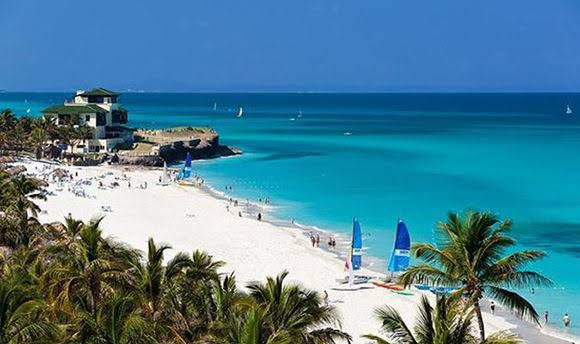
Tomado de internet
Amid difficult economic and trade circumstances, Cuba is aiming today to recover its travel industry at all costs, relying on new measures and the natural beauty of the island.
Consequently, tour operators and travel agents are paying close attention to recent statements by Cuban Tourism Minister Juan Carlos García, who expressed optimism regarding solutions for one of the country's most significant sectors.
Economic transformations within the Cuban tourism industry serve as a cornerstone in efforts to modify business management models, expand investment and business modalities, incorporate new economic actors, and grant greater autonomy to service-providing entities.
This process is underpinned by the so-called Axis 17 of the country's economic and social transformations, stemming from 13 measures categorized not as isolated actions, but as part of an integrated system of changes encompassing corporate structure, foreign investment, and the participation of both state and private management.
The minister's update noted that after achieving notable results in previous years, Cuban tourism succeeded in diversifying its source markets, with a significant presence of visitors from Canada, Europe, and Latin America.
In 2018, the country recorded a milestone exceeding 4.7 million international visitors amid a context of greater easing in relations with the United States. However, the 243 measures adopted during Donald Trump's first term progressively undermined that momentum.
Along those lines, performance in January 2026 offered a different outlook. During that month, 456 weekly flights operated to Cuba, providing a seat capacity close to 79,000, which represented growth exceeding 20 percent compared to the previous year.
On that basis, the sector's forecast was to reach 2.2 million international visitors over the course of the year. Subsequent reality proved different.
The withdrawal of airlines—particularly Canadian carriers—considerably impacted Cuba's primary tourist source market at a time when Canada was already contributing more than 800,000 visitors and realistic prospects existed to approach one million, a trajectory thwarted by external pressures.
Through November, Cuba received roughly half a million international visitors, forcing the sector to deploy its adaptive capacity with a pivot toward domestic tourism. The impact of the situation is also reflected in employment. At the close of 2025, the sector employed 103,000 tourism workers, whereas currently there are approximately 83,000.
This reflects an impact on roughly 22,000 workers, many of whom maintain their ties to tourism even while temporarily reassigning to other activities and sectors, including hospitals and industrial facilities. Prior to the pandemic, the sector employed between 140,000 and 150,000 personnel.
The restructuring process also reaches the Ministry of Tourism (Mintur), following the approval of a new organizational design that reduces its staff to 145 employees.
Regarding these adaptations, Mintur's Director General of Development, José Alberto Pérez, explained that Axis 17 comprises 13 transformations with their respective approved legal frameworks.
The measures carry an integrative character, as they directly link to other ongoing economic reform processes, including corporate restructuring and foreign investment policy.
The broad portfolio of changes includes ongoing work to establish an online bank for the tourism sector, among many other key initiatives—a slate of updates spanning the entire country and the business ecosystem connected to tourism.
From the perspective of the Cubasol business group, the transformations also represent an opportunity to modify structures and refine management.
The assessment of its president, Liubersy Pérez Guillén, points to the scope of measures addressing the diverse activities encompassing hospitality, non-hotel services, transportation, retail trade, gastronomy, recreation, and marine activities.
At the close of October this year, only 506,074 visitors arrived on the island out of the 1,757,480 projected in the annual plan, representing a shortfall of 71.2 percent—meaning barely 28.8 percent of the target was met.
From January through September of this year, Cuba accumulated 477,707 international visitors, a drop of approximately 65 percent compared to the same period in 2025, according to official reports from the National Office of Statistics and Information (ONEI).
In 2025, the target was 2.6 million, though only 1,810,663 arrivals were achieved, according to the same source.
Despite these figures, tourism authorities and workers have repeatedly expressed optimism in their statements that not only plans and adaptations, but above all the beauty and conservation of nature, scenic settings, and recreational offerings will help slow the downturn and spur recovery.
This appears to be the central thrust of the most recent reports, including above all the statements by Tourism Minister Juan Carlos García and other national officials.
Add new comment