
Cuban Economy: The 176 Transformations Require Architecture
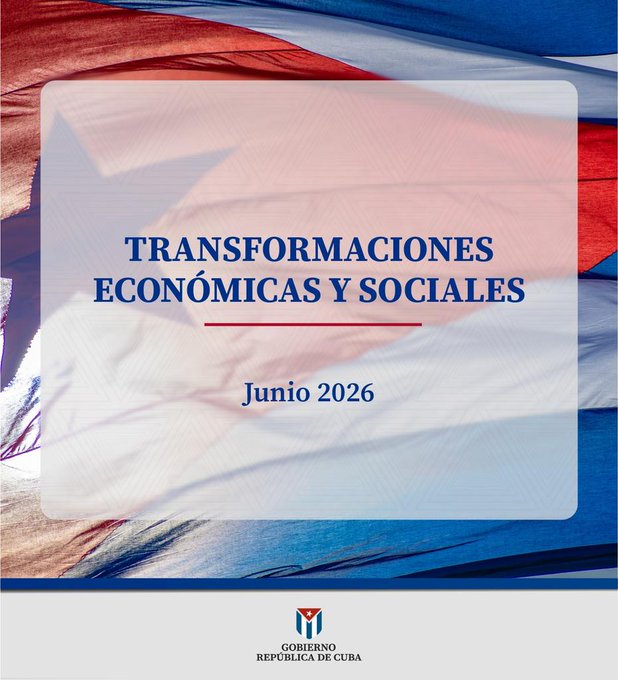
"They are very important and carry much greater depth than any program presented before," he stated in an interview with Prensa Latina. "The package includes the necessary instruments to carry out the reform that some of us have considered for a long time. In my case, for 30 years," he asserted.
Yet they are still like a bag of Legos: all the pieces are there, but the final result will depend on how they are assembled, reflects Carranza Valdés, who holds a doctorate in Economic Sciences from the University of Havana and has an extensive track record studying the Cuban economy.
To become a cohesive program, they require an architecture that establishes a timeline and carefully accounts for principles such as sequencing, simultaneity, coordination among measures, and core areas, evaluates the current full professor at the Center for the Study of the Cuban Economy (CEEC) at the University of Havana.
In his conversation with Prensa Latina, Carranza Valdés distinguished between immediate urgencies and strategic transformation regarding the implementation of the 176 measures.
The country lacks the necessary financing to back the transformation process with resources, he underscored. The first urgency concerns "the issue of energy, the issue of food, the issue of health, infrastructure, and water."
And the financial issue involves exploring every existing alternative, despite the current situation, to unlock or begin unlocking the external debt problem, added the former deputy director of the Center for Studies on America (CEA), who also served for several years as a UNESCO advisor in various Latin American and Caribbean countries, as well as director and representative of that organization in Central America and the Andean nations.
Cuba faces a serious default problem with many creditors. As a result, it is very difficult to open new lines of credit and foster greater foreign investment—all without overlooking the war of aggression from the United States, which can never be forgotten, the economist insisted.
The Path to Macroeconomic Stabilization
Every process of economic transformation presupposes establishing certain levels of macroeconomic equilibrium beforehand; however, the Cuban economy is currently affected by a notable imbalance, Carranza Valdés analyzed.
In his view, although some progress had been made in reducing the fiscal deficit about a year ago, projections for 2026 indicate it will rise again to 11 percent, "which makes sense," he noted.
On one hand, tax collection remains very weak, with significant tax evasion, particularly in the private sector. On the other hand, state-owned enterprises have very low profitability—some are operating at a loss—resulting in lower tax contributions, he added.
As a third point, the analyst indicated that billions of dollars circulate annually outside the banking system. Consequently, the state lacks sufficient resources to finance fundamental activities.
Faced with massive social needs and the state's responsibility to protect the population, it becomes necessary to expand the budget through the only remaining avenue: monetizing and printing money.
This inevitably increases the deficit in the medium term, drives up inflation, and makes macroeconomic balance impossible, he warned.
Regarding the monitoring of the 176 measures, Carranza cautioned against measuring progress in a fragmented manner or comparing which agency is further ahead, as doing so creates sequencing problems.
"The first thing—I insist—is to turn them into an economic transformation program with clearly defined stages, objectives, areas of action, and sequencing. It is a very technical discussion, yet fundamental to begin monitoring progress."
The monetary overhaul, he recalled, was a fairly ambitious program, but it was not implemented at the right time and suffered from a sequencing flaw. That triggered a surge in demand without the conditions to increase supply, leading to deeper imbalances.
Putting the Population at the Center
In a demographic context like Cuba's—where the only growing age group is 60 and older, migration among people of working and reproductive age is rising, and fewer workers support a growing number of dependents—one of Carranza's primary concerns is that demographics are given too little consideration when designing economic policies.
The Cuban population has fallen from 11 million to just over nine million; not only has it shrunk in number, it has also aged, faces greater health challenges, and has become less skilled due to migration, which has primarily affected young and qualified sectors, he assessed.
Asked whether it is viable to coordinate the entire economic ecosystem in the current context, Carranza insisted that beyond being viable, it is essential. The challenge is how to address emergencies without stalling strategic transformation, even if its pace is affected, he said.
The primary responsibility of any government, especially one like Cuba's, is to protect its population. That sometimes requires adopting centralizing measures to channel resources to vulnerable, impoverished, or precarious segments of society. That must be taken into account, he explained.
A Very Complex Yet Possible Path
Carranza acknowledged that the economy is decapitalized, has lost growth capacity, and exhibits imbalances reflected in processes such as inflation, which carry severe social impacts.
Added to this are decades of the economic, commercial, and financial blockade imposed by the United States, now intensified by the oil siege and the aggressive enforcement of extraterritorial measures.
Nevertheless, the country has no alternative other than to pursue these transformations, the economist affirmed. The path is uncertain and highly complex, yet it is a viable one. Much depends on leadership, the design of the implementation, and the ability to meet timelines, as time is a variable working against the country, he emphasized.
Still, there are sufficient reasons to wage the fight, Carranza insists.
"I always say—and this stems from a political conviction—that the option, under no circumstances, can be to surrender the country to a power opposed to the fundamental principles of this nation that have taken so much effort to bring this far: national sovereignty, social justice, and our own alternative for economic and democratic development."
Add new comment