
 English
 Español
Ruins and Devastation: The Shattered Lives of Gazans Returning to Their Homes
especiales
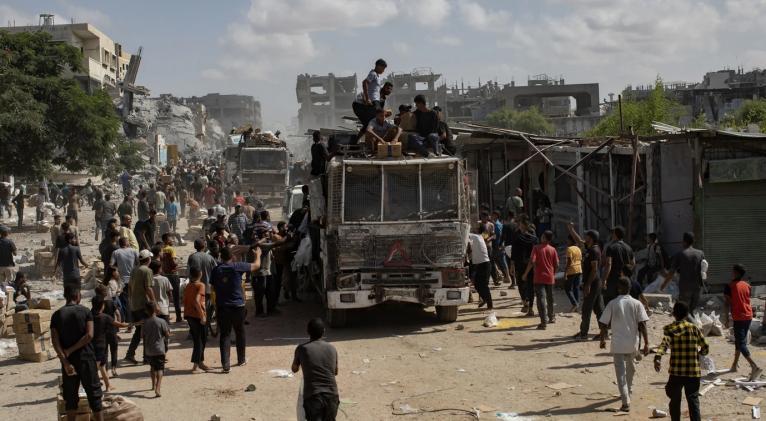
The ruins and rubble that flooded the streets of Gaza City this Sunday presented a desolate panorama for the thousands of people returning to their homes from exile in the south of the enclave, hoping to find some vestige of their life before the Israeli offensive still standing.
This is the case for Samar and her family, who managed to reach their former home in the Gazan capital last night. The house, which had been under siege by the Israeli army until two days ago, is now little more than a few dust-covered walls barely standing.
"My daughter started to cry when we arrived last night," this 44-year-old Gazan mother told EFE, confessing she did not expect to find such destruction upon returning to Al Jalaa Street, where her home is located and where Israeli troops advanced in their offensive to take the city.
When the bombardment to invade the city began in late August, Samar fled Gaza City with her seven children toward the south, a journey they had to make on foot.
She explains that her daughter, who clings to her mother's skirts, asked to return to the beach where they had taken refuge after seeing the devastation of their home yesterday. "But I told her that the next day we were going to clean everything up," she adds.
She does not want to return to the south because her family does not have a tent, and with winter approaching, she had hoped to find warm clothing for her daughters among the remains of their home, but she has found "nothing," she laments.
Today is the first day it has rained in Gaza in months, and what should be good news is just another worry for Samar, who can find no shelter for her family.
A Refuge Amid Mountains of Rubble
Following the cessation of Israeli attacks, the incessant explosion of bombs has given way to the noise of shovels diligently working to clear the streets of rubble and debris falling from the buildings.
Some search through the wreckage for the few objects that survived the projectiles. A girl rummages through a pile of clothes until she finds some books and papers. Another man hands his son some cushions that were once part of a sofa.
Amid the ocean of destruction that Gaza is now, an elderly man watches impassively from a blue plastic chair—the only note of color among the gray remains of buildings—as Palestinians strive to bring life back to their city.
"Imagine that after three weeks you return to your neighborhood and you find all this destruction," Haizam Hani Mohamed el Farran lamented to EFE.
Sitting on the ruins of his house in the Sheij Raduan neighborhood of the capital, he explains that his father and uncles built the home "stone by stone" over forty years: "And in the end, in seconds, the house came down."
Several of his relatives remain in the south, in Khan Yunis and Zawaida, until Haizam can find a place to take shelter among the tons of destroyed buildings.
"Where are people going to live? Look at how the work of so many years is gone!" he asks while walking through a street flooded with rubble, which neighbors, including children, are trying to clear with their bare hands.
"No Life"
Many of the displaced, upon returning, find impassable roads, where rubble is piled up creating barriers several meters high.
Basic services such as water supply and sewage are also not functioning, leading them to return to their shelters in the south—makeshift tents in the vast majority of cases—with the hope that, at some point, their neighborhoods and homes will become habitable again.
Samar walks through an alley full of chunks of concrete and iron, until the debris blocks her path. "We did not expect a situation like this. Look, we cannot walk through these streets," she complains.
Although "there is no life" in Gaza City, the woman resists leaving her home again and pleads: "I can resist as long as they bring us water and the basics. Just that they bring us water and that people help us a little."









Add new comment