
 English
 Español
The Dollar Challenge: Why Cuba Seeks to Regain Control of the Currency Market?
especiales
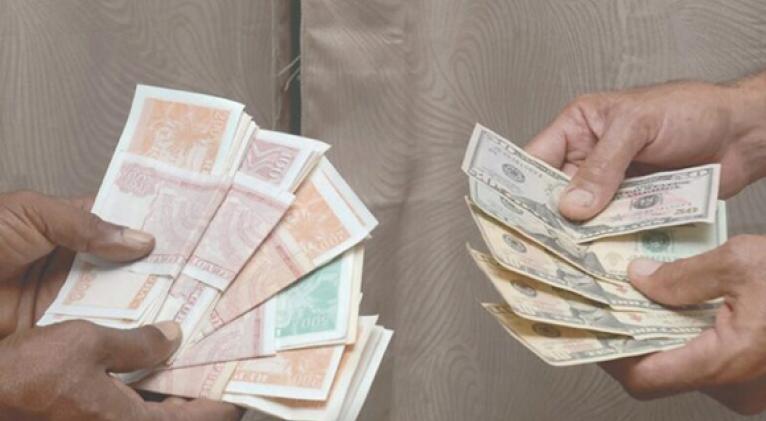
Transcript of the program Cuadrando la Caja, November 23, 2025
Dr. C. Marxlenin Pérez: Hello, how are you? It's good to greet you again on Cuadrando la Caja, a television program to debate, question, and reach consensus from Cuban socialism. Today we are going to talk about the currency market in Cuba and we are joined by Doctor of Economic Sciences Ayuban Gutiérrez, professor of Economics at the University of Havana and first vice-president of the ANEC; Licentiate Ian Pedro Carbonell, director of macroeconomic policies at the Central Bank of Cuba, deputy to the National Assembly of People's Power; and also deputy Carlos Miguel Pérez, president of the private MSME Dofleini.
To start the debate… It might seem obvious, but it isn't, and it's very important to start with this question: why is it necessary to relaunch the official market in our country?
Lic. Ian Pedro Carbonell Karell: An economy like Cuba's, which is open, depends heavily on its relations with the exterior, and the mechanism to connect the internal economy with the external one are the operations of exchanging national currency for foreign currency. This is done through the institutions of the financial system or what is known as a currency market. In an economy like Cuba's, it is important to have a functioning official currency market that gives convertibility to the national currency, so that companies and other economic actors can close their productive cycles legally and, therefore, develop their economic activity in the best possible way, based on those mechanisms functioning and flowing adequately. We know that currently this is not the case.
Dr. C. Marxlenin Pérez: Why is it necessary that we also forcefully resume that official market?
Dr. C. Ayuban Gutiérrez Quintanilla: There are issues associated with the way the Government, the State, as is done all over the world, regulates the economy. It is very difficult to regulate an economy of the type Ian explains: open, without a functioning currency market, and above all, one that functions reflecting economic reality. We were joking outside, waiting to enter the studio: if one dreams of scoring a goal in a soccer game, the first thing is to be in the game, to participate in the soccer game. We must advance in recovering that currency market that today exists in an informal, illegal manner; we must give it the necessary official status to be able to regulate it, so that it serves the country's economic and social development.
Dr. C. Marxlenin Pérez: Carlos, how do you see it?
Carlos Miguel Pérez Reyes: From the point of view of the non-state sector, I see it in two or three practical scenarios. One, I am working with a currency that is volatile, fluctuating, and to protect myself I almost always end up increasing the price a little, because the dollar might have another value tomorrow. That is a first distortion I believe this situation is bringing. The second relates to long-term contracts, forecasting how much I will charge a company a year from now: considering that that referential and illegal value of the informal market varies so much, I wouldn't make that type of contract. But we can also see it, for example, in exports. If I make an export today, with a reference rate that is 1×120 at this moment, which is different from the one in the informal market, I will not feel motivated to export through legally established channels and will look for other ways. Or I won't export. That is a vicious circle, because if I don't export, the foreign currency that would allow me to have a currency market does not enter the country.
Those three examples, from daily practice, exemplify the importance of having a currency market. But I would also like to talk about what happens in daily life. We go to a restaurant and, although it is not legal to charge in dollars, they tell you: "I don't charge in dollars, but I will make an exception and charge you at 400, at 360." There is no established legal reference based on a currency market that we don't have.
Dr. C. Marxlenin Pérez: Well, yes there is, but another thing is that it reflects what you economists say, economically real. A real exchange rate.
Carlos Miguel Pérez Reyes: It's that the referential or informal exchange rate that exists today in the country I do not consider real.
Dr. C. Marxlenin Pérez: I'm talking about the legal one.
Carlos Miguel Pérez Reyes: The legal one at 120… Everyone in each restaurant or each place or each transaction puts the amount they want. Therefore, that also makes it quite complicated. These are some very practical examples from the life of entrepreneurs in particular. Not all entrepreneurs are dedicated to buying and selling, but many entrepreneurs need inputs in foreign currency and transfer this instability and volatility to prices.
Dr. C. Marxlenin Pérez: When you talk about entrepreneurs, are you referring to private companies?
Carlos Miguel Pérez Reyes: To private companies.
Dr. C. Marxlenin Pérez: By the way, it is also often said that for private entities it is easier, not so much for the state enterprise, the fact that there is no rate that officially reflects the exchange. Is that so?
Carlos Miguel Pérez Reyes: Assuming, of course, the illegality of resorting to an informal or illegal currency market. That doesn't make it easier. First, it turns you into a delinquent. Operating in an economy where, to access essential goods, raw materials to produce or provide a service, you resort to an illegal currency market, does not make it simpler. I don't think anyone in Cuba likes being a delinquent. Hence the importance of having a legal currency market.
Dr. C. Marxlenin Pérez: Now, Ayuban.
Dr. C. Ayuban Gutiérrez Quintanilla: Having an official currency market allows a sector of the public economy, which to operate must function according to the laws, to participate in that currency market. In the future, the longer-term objective of the State's intervention in the market, if the recovery of the currency market is achieved, is to move towards monetary unification with currency convertibility. The first thing, as I was saying with the soccer game example, is to take the first step and enter the playing field. And that first step is the one I think is now being taken. It was announced in the Assembly, addressed in the government program, it is one of the objectives in the macroeconomic area of the government program: to begin the process of officially recovering the currency market. It would allow, in the long run, that state business sector to connect with this market, which initially was thought or is thought for households and non-state actors. To create the bases for that connection and move towards monetary unification, which is a much longer-term objective.
Dr. C. Marxlenin Pérez: This is the first of two programs we will dedicate to the currency market. You were talking about taking a first step and in these two programs we will talk about those steps that must be connected little by little. Why has it been so complex to take those first steps and achieve an official currency market in our country?
Lic. Ian Pedro Carbonell Karell: Establishing a currency market that is truly functional and gives convertibility to the currency is complex. It's not new for us. Our financial system did it for a long time, starting in the 90s, and faced many of the challenges that arose then. It is not a simple task, especially due to external conditions and also due to the accumulation of internal imbalances in the Cuban economy. The Cuban economy has gone through very tense episodes such as the covid pandemic; it has suffered the increase in sanctions from the US government, which surgically target everything related to the Cuban financial system abroad, preventing transactions, even our ability to collect payment for our exports. All this configures a very complex scenario, where it is difficult to defend an exchange rate by constantly injecting foreign currency to defend prices. I believe the decision the Government has taken, which has been announced, to move towards a flexible exchange regime, allows at least recovering that official currency market. So that those companies and all economic actors engaged in legitimate productive activities do not have to go to an illegal market to close their productive cycle; that they do it officially, transparently.
Dr. C. Marxlenin Pérez: Like what Carlos was saying.
Lic. Ian Pedro Carbonell Karell: Exactly. I think that should be the first step, as Ayuban rightly said: to enter that playing field to play, not to be an observer, but to interact and recover the intermediation role that the financial system has through the currency market to connect all the country's economic activity with the exterior, which is something we need very much. Also, to promote other fronts, like remittances. That the rate is attractive so that people who receive remittances can exchange them for pesos; that people who receive some income in foreign currency have a safe place to exchange that currency and don't have to resort to someone on the street or through unsafe channels. It is important for the country to achieve this to be in better conditions to, even, take other measures in the future.
Dr. C. Marxlenin Pérez: How do you see it, Carlos? Why do you think it has been so complex? Evidently, it is complex, it's not doing a couple of calculations and going out on the street with a currency market.
Carlos Miguel Pérez Reyes: You have to talk to the neighbors, ask the neighbors, and they will tell you "but if the country comes out now with the same exchange rate that other platforms have with an informal rate, then we haven't done anything." It is complex starting from that principle, to come up with an exchange rate that allows people to access that dollar with their salary, and having to do it with a floating rate in the middle of such a complex economic war, in a scenario where our exports have declined. Tourism has declined, we lived through the pandemic and everything else that has happened nationally and worldwide. I think it is very brave that we understand we need to take the bull by the horns. Even if in this first stage we don't come out with that dollar at the price people want, let's start taking the baton and say: "We are the ones who should do this, we must do it well and eventually try to achieve a fairer exchange rate for our population."
Dr. C. Marxlenin Pérez: Ayuban, why is it so complex?
Dr. C. Ayuban Gutiérrez Quintanilla: Carlos said something that is important to me. In all these policy decisions, people's opinion is important. One hears it a lot on the streets, in debates with neighbors. Really, it is a complex decision to say "I'm going to start the currency market," for example, using as a rate the same informal reference rate we know, which is a very high rate. What happens is that, by doing that, we are giving ourselves the opportunity for the real transactions of a currency market to define for us whether the currency will appreciate or depreciate, and not depend on other communicative, external elements, nor on other countries. As it was before with Cadeca, it was the daily transactions that gave us the exchange rate. Because, as it was a fixed exchange rate, to sustain it, how many reserves had to be injected or collected from the currency market. That can only be done if we have the flow of those transactions registered, accounted for, and there is transparency, there is a way to have that information, which was how Cadeca and the Central Bank did it. That is a very big gain for business activity, but also for households, for people, because it can lay the groundwork for the exchange rate to approach and improve.
Dr. C. Marxlenin Pérez: Let's take a break and go to the street to see what the people think about this topic.
[REPORT WITH OPINIONS FROM THE POPULATION]
Dr. C. Marxlenin Pérez: There we heard some opinions from our people. I think there is a kind of consensus about that illegal rate, which is manipulated, and the need for the State, the Government, to take the initiative to finally establish an official currency market that functions with rigor and organization in our economy.
Carlos Miguel Pérez Reyes: I think there is a vital theme in all this, which is the non-state form of management. I am one of them and more or less understand what we experience every day. It is very difficult to reflect economic facts in a company's accounting or to evaluate how expensive a product is. If we do not have an official exchange rate by which everyone can be governed and establish that accounting fact, that economic fact in our accounting, it is complex. You say "why is this expensive, if we compare it with a 120 rate?" Your profit could be 300%, but if you compare it with the reference rate used by the buyer, it gives you another profit margin. Even for tax evasion this is important, because in this fight we have against abusive prices, which is not the same as high prices, we have to be able to distinguish very well when a price is high and when it is abusive. In that sense, an exchange rate is the common factor to face many of the problems we have, tax evasion, economic transparency, accounting transparency. To have a true clock that marks where our economy is going.
Dr. C. Marxlenin Pérez: On this topic, Ayuban, anything to add?
Dr. C. Ayuban Gutiérrez Quintanilla: Carlos touches on an important topic, tax evasion. One of the problems we have today is that economic activity, the economic contribution made by the private sector in Cuba, is not fully reflected in the country's statistics, among other things because there are elements of economic measurement, of accounting record, that due to an important part of their transactions passing through a market that is illegal, they cannot record them in their statistical and accounting information. That is an element that adds to others that cause tax evasion, but which in Cuba's case is very important, it is not the only one. But it is a fundamental element. Therefore, having an official currency market with an exchange rate that truly reflects the relationship, that flow between the exterior and interior of the country's economy, also helps to normalize that tax and statistical process of the country for decision-making, to increase State revenues, etc.
Dr. C. Marxlenin Pérez: Having reached this point, where we have made a diagnosis in this first program on the currency market, a question that imposes itself is: what conditions do we need in our economy and in general to, definitively, establish an official currency market in a rigorous manner? What are the stages? You, the economists, always talk about the sequence. And it is important to respect that sequentiality for it to go well. What do we need to do?
Lic. Ian Pedro Carbonell Karell: Definitely, the current conditions of our economy are very complex. We are in a situation where the gross domestic product is declining, there is monetary issuance of Cuban pesos to finance the State budget deficit; there is, even, an important level of partial dollarization in the economy, which generates a demand for foreign currency higher than normal or desired. It is complicated to combine all these elements to fulfill the mandate to implement a functional official currency market that meets the sought objectives.
Dr. C. Marxlenin Pérez: It's quite a challenge.
Lic. Ian Pedro Carbonell Karell: It's quite a challenge, that's why there is gradualism. We cannot go suddenly to a currency unification because it would be…
Dr. C. Marxlenin Pérez: Suicide.
Lic. Ian Pedro Carbonell Karell: Very difficult to achieve and, moreover, a good part of the business system could not assimilate it at this moment. But we can gradually create the conditions to reach that strategic objective.
Dr. C. Marxlenin Pérez: And I remember what Carlos said about that price with which the official rate will come out. It probably won't be at the one we definitively want to reach, but it has to do with what you mention, gradualism, sequentiality, the steps that must be taken.
Lic. Ian Pedro Carbonell Karell: It is a process that will occur through successive approximations. The important thing is the criterion with which we opened the program. That is to say, we must enter to play. And when one enters to play, the warm-up part passes, one acclimatizes. Because one is going to enter to play and compete with an entire illegal market that exists and is operating. There the State has to gain ground and go with the added value of being a legal market, a safe market, with an official rate that truly reflects the supply and demand relations between foreign currency and national currency. To gain ground in that market to be able to take other important steps. Access to a currency market, that is, access to foreign currency via a currency market for companies in the economy, is also important to revive an entire sector that has been excluded from access to foreign currency from the market point of view, because they cannot go to the illegal market, as was well said initially. And there we have many state enterprises. Many ask, well, why don't we have state stores that sell in pesos? They need a currency market to, with those pesos, restock, through access to foreign currency, many of the products that can be there. This is strategically important, not only for the own objectives of having a national currency that is convertible and allows us to communicate with the exterior; but also to dedollarize the economy, as a strategic objective within economic policy.
Dr. C. Marxlenin Pérez: Ayuban.
Dr. C. Ayuban Gutiérrez Quintanilla: It is a complex process, but gradualism is necessary, because really today we do not have the conditions to do it. Notice how in many countries this problem has been solved. They negotiate with the IMF and ask for a stabilization fund and the IMF gives the fund, but that check generally…
Dr. C. Marxlenin Pérez: Can we do that?
Dr. C. Ayuban Gutiérrez Quintanilla: No. We are founders of the IMF, but we left that, because the IMF has a way of functioning that really attacks the sovereignty of nations. For example, there is a very famous book by Stiglitz that deals with this topic with real examples, of how the IMF has conditioned countries that had economic difficulties, how it simply destroyed them due to the conditions. So we…
Dr. C. Marxlenin Pérez: That check… When I interrupted you with irony, you were going to say what came with that check.
Dr. C. Ayuban Gutiérrez Quintanilla: That check has behind it a bunch of things that must be done. And those things, most of the time, are not in function of the real improvement of the country's economy, but of interests that are transnational. I repeat, there is a lot of bibliography on this topic. We do not have access. We also have to remember that the United States placed us on a list of countries that, according to them, sponsor terrorism. That complicates any access to the international financial system. We also cannot access the mechanisms that exist, as a result of this situation. Therefore, there is no other remedy than to try to start moving the machinery of the Cuban economy with our own efforts. We have to start with the currency market, with what we can do today. If you told me what is ideal, 600 million dollars every year for three years, and we have the capacity to defend an exchange rate with all the benefits of having a fixed exchange rate economically defended, but that is not possible under these conditions. So, in this balance of the positive, the risks of converting a market that is informal or illegal into an official market, the balance I believe has to take into account that the benefits are greater than the costs, above all because it gives us the possibility to fight one more day. It gives us the possibility to enter that field and say "we are going to play and we are going to score a goal against the best team in the world." That opportunity is what we are gaining, I think, with this currency market. We must learn from past lessons. In the 90s we did important things, we managed to stabilize the currency sphere. Recently an attempt was made and I believe it is clear what must be done.
Dr. C. Marxlenin Pérez: We learned the lesson.
Dr. C. Ayuban Gutiérrez Quintanilla: One of those lessons is the flexible exchange rate, right? That is very important. Ian gave the example of commercial activity, but in the end what I have to achieve is that it is not only commercial activity, but that the producer who is in a production chain can also access those elements that can only be acquired through import, because they are not produced in the country. And that can only be done if there is a market that functions, officially, with the required regulation. That is why the currency market is so important and to start with a first step of this type.
Dr. C. Marxlenin Pérez: Carlos, how do you see it?
Carlos Miguel Pérez Reyes: The currency market, for us, is going to be the referee of the soccer game you have mentioned. We need in some way to say: "This is the stability I need to produce more, to generate more goods, to generate more service, to have a more robust economy." Because, in essence, the currency market, the base of any currency market, is to have the foreign currency that an open economy needs to be able to offer it and start exchanging. As exporters, moreover, we would be very motivated to export more and contribute to that market, to exchange immediately.
Dr. C. Marxlenin Pérez: Now, about the stages, because this undoubtedly requires steps, sequentiality. What can be known already about what are the stages of this currency market process?
Lic. Ian Pedro Carbonell Karell: I believe that in a first stage the important thing is to be able to participate in that currency market that already exists, although it has an illegal character because it occurs outside the institutions of the banking and financial system. The first thing is to enter to play in that market and entering to play implies that our banking and financial institutions can carry out currency operations, buying and selling foreign currency for national currency. That those real operations, which will no longer be intentions to buy and sell, which will no longer be something opaque, but will be objective and verifiable operations, determine where the exchange rate really is. That process is not something from one day to the next; that is reached with gradualism. That is the first step to, then, go to a second step which is, with the support of other measures of a fiscal, monetary nature, guarantee stability to that exchange rate so that it can become the price anchor for the economy and can serve the monetary authority of the Central Bank as an instrument of economic policy to control inflation. Because many of the prices in the Cuban economy today depend on the exchange rate. The final objective, currency unification and, also, with dedollarization, monetary unification as well, is that our entire economy functions in national currency. Those, in broad strokes, are the objectives, but it is a long path and not without risks and difficulties that must be traveled.
Dr. C. Marxlenin Pérez: In another program we said there are no magic measures. Let's go now with our fourth panelist, the Guru of Jatibonico:
Gurú de Jatibonico
The white ball gives a shock
to another ball and to roll:
that's how billiards works,
and so does El Toque.
To hit so that the price
in merchandise is traded.
That is our day to day
that does not wait for later.
We must end that "game"
for the good of the economy.
Dr. C. Marxlenin Pérez: And I stay with this verse from the Guru: "We must end that game." If we are talking about the currency market, it is because it is very clear to us that there is a game by a certain player, enemy, that has opened one of the strategic fields against Cuba. That economic war that is waged against us from our historic enemy, which is to attack the Cuban economy, and has found a niche there with that illegal rate from El Toque. What influences does that illegal reference rate have on our economy? How does it affect us?
Lic. Ian Pedro Carbonell Karell: I think the definitive solution to that problem is to have a functional official currency market that gives convertibility to the national currency. In the times when that functioned in our Cuban economy, El Toque did not exist. It's true they are other times, other technologies, but really when you manage to satisfy your needs in the official space, you don't need to look for a reference to see at what price you are going to make a currency operation or something like that. That is the mandate that from the government program all institutions have, including the Central Bank, to build a functional official currency market and, therefore, prevent actors like El Toque, which has even been a platform openly hostile to our country, from positioning themselves as expectation formers. Because, really, the risk is that that reference they publish is taken as a reference by people and economic agents, and by assuming it as a reference they execute transactions based more or less on that reference. And it is an influence that from a strategic point of view should not be. It is dangerous that there is that level of influence over the country's economic activity.
Dr. C. Marxlenin Pérez: Why is it dangerous?
Lic. Ian Pedro Carbonell Karell: Because from measuring, I don't know, 200, 300, 400 daily messages of intentions to buy and sell, where it is not very clear what the filtering of those messages is, they can impose what the rate at which an entire country will operate is. It is the capacity for influence or to influence reality that they have outside State control, regulatory responsibility and transparency, outside supervision, because no one can be held accountable for that rate or its formation. I believe it is the responsibility of the State and the Government to build an official currency market that eliminates the influence that rate has today on the country's economy.
Dr. C. Marxlenin Pérez: I think that, except for the puppeteers behind this Toque, it benefits no one else. Well, and two or three speculators who take advantage, to speculate precisely with that illegal market. It benefits no one else. Not the people. How is it affecting our economy?
Carlos Miguel Pérez Reyes: Let me first speak to you as a mathematician, as a computer engineer, as a programmer. I have never seen a median, an average that has whole numbers without a decimal. When El Toque tells me "the dollar is at 390" and doesn't put a 390.17942, it already gives me an idea that the first rounding it is doing there is a first stage of manipulation of what could be a well-formed reference rate. The other thing is that they are purchase intentions, as Ian Pedro already said, and purchase intentions have a problem. In fact, on El Toque today, if we analyze the data that is public, some of that data that has been public, historically public, we see that 70% are offerors. What does this mean? Offerors are those seeking to maximize their profit and, therefore, the rate they put and publish is above what the market is really willing to assimilate, but they publish it to try to catch whoever takes it.
For me, a true currency market is a currency market where operations are based on real transactions, not on manipulation nor on parsing messages. And those same messages can be part of the campaign to discredit the Cuban currency and diminish the purchasing power of the worker and the Cuban. Therefore, the challenge of the banking system and IT companies, of everyone, is to have a banking system capable of adapting also to this new world of fintech, to this new world of transactions, of auctions.
Dr. C. Marxlenin Pérez: Is fintech financial technology?
Carlos Miguel Pérez Reyes: Financial-type companies based on technology, which allow having these wallets, which allow making these operations with crypto. I believe Cuban banking is also moving towards that, to modernize, and that we can do things as novel as what El Toque was able to do.
We have talent in Cuba to do it better. We have the ability to make a much superior website, we have the ability to also put those same statistics, to make much more efficient forms transparent. For example, how exports influence, our gross domestic product, the prices being set today in restaurants, a possible investigative work… And all the other real variables in our economy, not little messages from Facebook or Revolico. The difference between what an institution can do, what a country can do with all its institutions, and what a few guys playing at being IT people, reading messages on Facebook, can do, is abysmal. We must take the baton of that and start doing it. And it is essential that it be done soon.
Dr. C. Marxlenin Pérez: Ayuban.
Dr. C. Ayuban Gutiérrez Quintanilla: Different things are mixed here. Of an economic nature, but also of a civic nature, etc. If you asked me as a citizen, I would tell you that the enemy is not ignored, he is fought. And El Toque, its director, have publicly declared that they have among their objectives to subvert the Revolution.
Dr. C. Marxlenin Pérez: And that, it's good to clarify, we are not saying it, he said it.
Dr. C. Ayuban Gutiérrez Quintanilla: Technology has good things and bad things, right? But access to communication also allows you to know that type of thing. That is something that is not up for discussion. No person, no patriotic citizen sides with someone who attacks their country or tries to subvert the constitutional order of the country. Generally, this type of subversion does not do more damage to the Government; it does more damage to the population. Because, in the end, what is attempted to be sold is that the damage is being done by the Government to the population.
That is to say, one, when wanting to see how the price of the dollar is, what one does is go to that site. That increases the risk and vulnerability over our economy in a context of economic war against the country, where all those things are articulated and well thought out. In that context, there is only one way to combat that: to steer that currency market towards an official currency market. For all the reasons we are mentioning. It is not the magic solution to the problems of the Cuban economy. I believe it is important and its long-term objectives are objectives that will be achieved little by little. But there is something I always like to say as a professor: the long term begins today. That is, what you want to have an effect within 10 years, you have to start doing today. If you start within two years, that effect will arrive within 12 years. To create the bases for the country's economic recovery, for production, we must normalize Cuba's currency scenario. And do it with the tools that exist and that are in the hands of the State to do it.
Carlos Miguel Pérez Reyes: There is a detail in all this, El Toque may have an approach aimed at destabilizing, but behind the legal currency market there is a mafia-type business that operates both in the United States and in Cuba, of actors that launder money, of people who charge commissions for making transfers that they never make between one country and the other.
Dr. C. Marxlenin Pérez: Yes, speculators.
Carlos Miguel Pérez Reyes: That is a big business that I imagine our authorities will have the capacity to dismantle as soon as possible. What really happens is that in the United States money moves and in Cuba money moves, but money is not passed from one side to the other and here they are charging commissions on one side and charging commissions on the other. In that game of commissions and things, a business is created in which, moreover, the exchange rate plays an important role, because I am going to be selling and buying and playing with that market. If I were the one dedicated to that, I would have 40 people on Facebook putting ads about how I want to sell the dollar. It must be understood that this is a mafia and El Toque is representing that mafia and those interests. Those actors, whether or not they are part of the El Toque team, are playing under that rule and under the shelter of that platform.
Dr. C. Marxlenin Pérez: Ian, some final ideas to close our program.
Lic. Ian Pedro Carbonell Karell: There is much to talk about on this topic. We must state the commitment the country has, the Government. I share that idea, it must be something of everyone, the effort to retake the reins of the currency market, to build a true currency market that is functional to the country's economic development. Our people also need to count on that.
Dr. C. Marxlenin Pérez: I thank you three for having participated in this first program dedicated to the currency market. You, who follow us, remember that this is the first part, we will come with another. But, above all, remember that it is not enough to interpret, describe, comment, but that together we must participate, the private sector, the state enterprise, the people in general, to transform our reality. I count on you to do it from Cuban socialism. See you soon.






Add new comment