
 English
 Español
BRICS Summit Enters Its Second and Final Day in Brazil
especiales
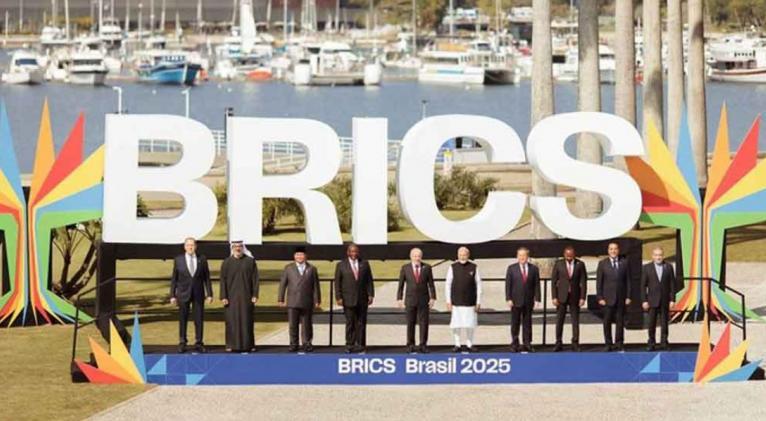
The 17th BRICS Summit enters its second and final day here today, amid an unprecedented collapse of the multilateral system, with the bloc focused on working toward its renewal.
According to the official schedule, the agenda begins at 8:45 a.m. local time with a family photo of the heads of state and government of the member countries, partners, and external stakeholders. At 9:00 a.m., the plenary session titled “Environment, COP30 (United Nations Climate Change Conference), and Global Health” will open.
Yesterday, the forum concluded its first day with an extensive final communiqué comprising 126 articles. The document addresses U.S. President Donald Trump’s trade war, ongoing violence in the Middle East, and the urgent need to reform the United Nations, the World Bank, and the International Monetary Fund.
By adopting the so-called Rio de Janeiro Declaration, the leaders of the 11 BRICS countries reaffirmed their support for multilateralism and called for greater representation for the Global South.
The text summarizes the bloc’s year-long diplomatic discussions and outlines key positions on pressing international issues, including the reform of the global governance system and the pursuit of a negotiated solution to the Israeli-Palestinian conflict.
A central element of the document is a call for a “comprehensive reform” of the United Nations, with particular emphasis on modernizing the Security Council.
The stated goal is to make the Council more democratic, representative, and effective by incorporating greater participation from developing nations—especially those in Africa, Latin America, and the Caribbean.
On matters of international security, the bloc reiterated its commitment to a two-state solution for Israel and Palestine, based on recognized borders and peaceful dialogue.
It described this path as the “only means” to achieve lasting peace and stability.
Economically, the summit highlighted efforts to increase the use of local currencies in transactions among member states, as well as to strengthen the New Development Bank (NDB, or BRICS Bank) and the Contingent Reserve Arrangement—key financial instruments developed within the BRICS framework.
Amid the growing climate emergency, the summit reaffirmed its support for the Forever Tropical Forests Fund, aimed at preserving biodiversity and supporting a just ecological transition through shared climate financing.
In the realm of technological innovation, member countries agreed to step up cooperation in artificial intelligence, science, cybersecurity, and digital infrastructure.
Originally formed in 2009 by Brazil, Russia, India, China, and South Africa (and later expanded), the declaration reaffirms BRICS as a collective force advocating for a more just, inclusive, and multipolar international order—one that addresses global challenges from a cooperative perspective.







Add new comment