
Haitian Dilemma
Haiti, the first free nation in the Americas, has never truly been free, despite having fought so hard to make it a reality.
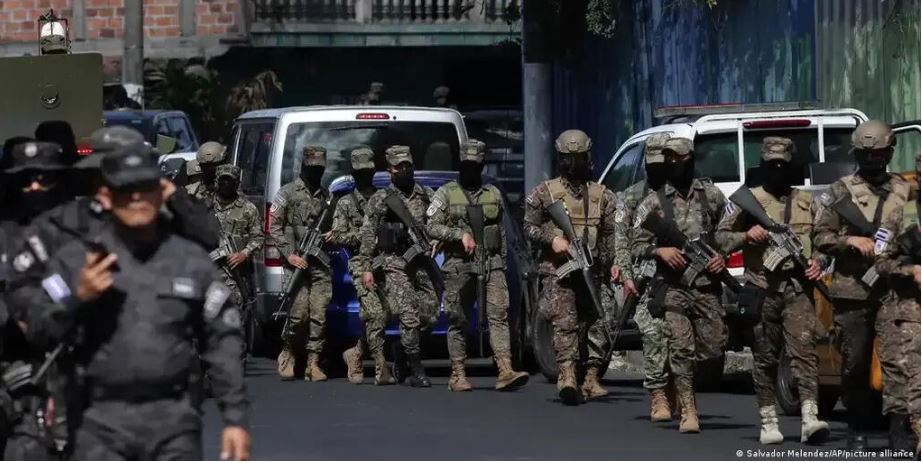
The past proves it and the present confirms it, with so many military interventions before and internal paramilitary and police forces now, in addition to the more recent presence of El Salvador, with Washington's consent and "blessing," all of which leaves scars of pain on the suffering population.
For several years, Haiti has been plunged into a socioeconomic, political, and humanitarian crisis that reached critical levels in mid-September 2022 due to rising armed violence and gang control. In 2025, widespread insecurity continued to escalate, drastically affecting the country's access to essential goods and services—such as food, water and sanitation, and medical care—and forcing hundreds of thousands of people to flee their homes.
At the same time, a cholera outbreak resurged in October 2022 after three years with no cases and spread rapidly throughout the country. Conditions remain conducive to an increased risk of the spread of this and other diseases, especially in Internally Displaced Persons (IDP) sites.
Security issues have also impacted the health sector's capacity to deliver humanitarian aid to the communities that need it most.
Nationwide, 26 percent of inpatient health facilities are fully operational, 49 percent are partially operational, 21 percent are non-functional, and 4 percent have been destroyed.
In the Port-au-Prince metropolitan area, 37 percent of inpatient health facilities are fully operational, 13 percent are partially operational, 40 percent are non-functional, and 10 percent have been destroyed.
The cholera response, epidemiological surveillance for outbreak detection and control—including dengue—and vaccination efforts for diseases such as polio, measles, tuberculosis, and diphtheria are severely restricted.
What Is Known?
Romain Le Cour Grandmaison, director of the Haiti Observatory at the Global Initiative Against Transnational Organized Crime (GI-TOC), commented on the arrival of Salvadoran troops and the disappearance of four soldiers, as well as the gangs that control the area where they went missing, how they compare to Mara Salvatrucha (MS-13) and Barrio 18—under whose yoke El Salvador lived for decades—and what Bukele risks and could gain.
Bukele warned the leaders of criminal organizations in Haiti that, just as he wiped out the gangs in his country, he can do the same to them—a statement of great political impact, though two things should be distinguished.
What is marketed as the "Bukele model" is what was done in El Salvador: a process of mass incarceration in a prison system created for that purpose. What he is doing in Haiti so far is something else. It is a military deployment and operation in another country.
It is very rare, in decades, for a Latin American country to deploy forces for combat operations in another country in the hemisphere outside of a United Nations peacekeeping mission. What is happening is truly unusual, Romain explained.
As for the gangs in both countries, they share territorial control, extortion, and violence against the population, but the differences are profound. The most powerful Haitian criminal groups, around 20 in total, resemble armed militias.
They are large groups equipped with semi-automatic weapons, and they control vast territories: hundreds of square kilometers, nearly 90 percent of the capital according to the UN, and parts of the provinces. In some of these areas, public security forces have not entered for five years.
They govern these territories, collect taxes, control highways and the country's main port infrastructure, and are embedded in political and economic networks that sustain them.
Their origins are also different. MS-13 and Barrio 18 were born in Los Angeles and arrived in El Salvador with the deportations of the 1990s following the civil war.
In Haiti, many of these groups were born or grew alongside political and economic actors who used them for their own interests.
According to some observers, if the Salvadoran deployment manages to reclaim certain territories and arrest or neutralize specific leaders, two scenarios could unfold: the first option is what we see in Latin America in general—when a criminal group is decapitated, two emerge. There was one problem, and now there are two. The second is that the deployment achieves real security improvements. Even so, the politico-economic criminality that sustains these groups would remain intact.
Therein Lies the Rub
And therein lies the problem with grand hardline rhetoric about the war on crime, in Haiti and elsewhere: it is framed as a war, about killing people. Yet if that worked, after 60 years of the war on drugs, Latin America would not be in its current state.
According to estimates, they bring together a total of between 15,000 and 20,000 members, though the figure varies depending on the groups and alliances of the moment.
In five years, they went from small-caliber weapons and hunting rifles to 5.56 mm and, increasingly, 7.62 mm semi-automatic rifles in large quantities.
A significant portion comes from purchases in the United States that are subsequently trafficked to Haiti. Another substantial share comes from the diversion of official stockpiles from the Haitian police, the Haitian army, and Dominican security forces, with the complicity of corruption networks on both sides of the border.
Against a formal army, theoretically superior in every respect, the criminal groups' advantage is their intimate knowledge of the terrain, street by street and neighborhood by neighborhood.
They have built trenches, walls, barricades, and traps. They are mobile, knowing how to move, hide, and retreat into allied territories, only to return once pressure subsides.
Tactically, it resembles urban guerrilla warfare—a type of combat that is extremely difficult even for the most sophisticated armies, in densely populated neighborhoods where civilians remain trapped.
Security forces, meanwhile, have little intelligence, and what they do have is often of poor quality.
However, the true capacity of these groups remains largely untested. They have almost never faced intense, coordinated operations sustained over weeks. The police briefly attempted this in late 2025, and the Gang Suppression Force (GSF)—the multilateral force to which the missing Salvadoran soldiers belong—is just getting started. No one knows for sure how they would react to prolonged pressure.
Even so, they control much of the capital and its surroundings due to the collapse of the state—with an overwhelmed police force, a paralyzed justice system, prisons emptied in 2024, and an absence of public authority across wide areas—as well as the backing of political, economic, and, in some cases, security actors who have turned to these groups to serve their interests, as documented in the latest report by the UN Panel of Experts.
Added to this is a steady flow of weapons and ammunition and a delayed international response that was insufficient for years.
Necessary Dialogue
Dialogue should not be taboo: in Haiti, contacts with gang leaders happen every day, always denied, but they serve primarily to resolve logistical matters rather than to solve the crisis or deliver justice.
Engaging in dialogue does not mean impunity or amnesty. It requires justice, precisely, and a real framework led by Haitian authorities.
Translated by Sergio A. Paneque Díaz / CubaSí Translation Staff
Add new comment