
“Epstein Was Murdered, Not a Suicide,” Forensic Analysis Reignites Mystery
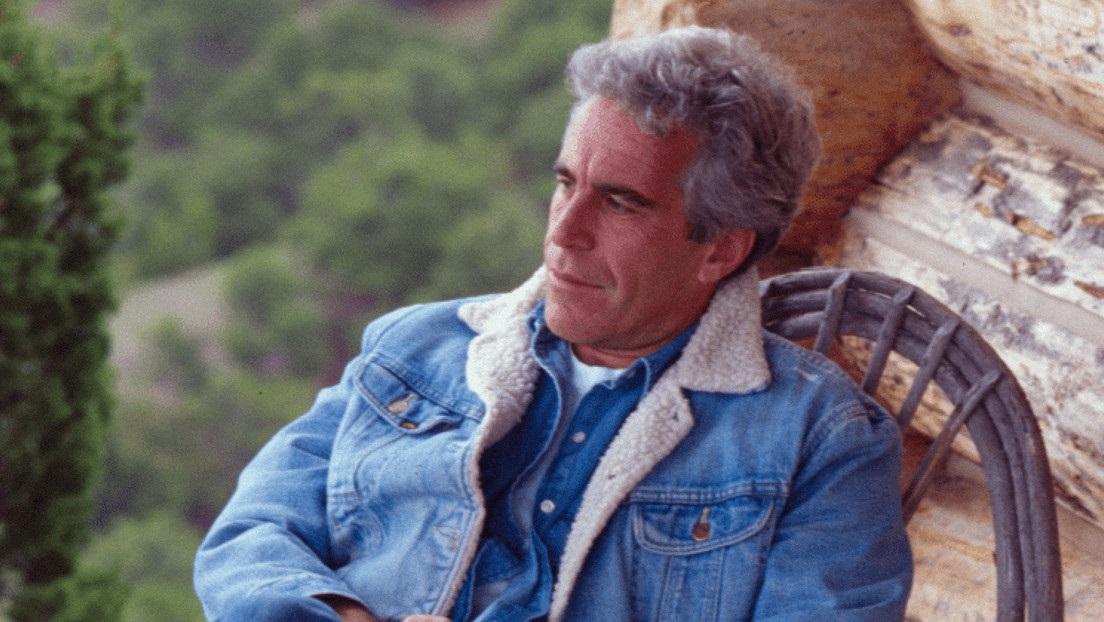
Imagen tomada de https://actualidad.rt.com
Autopsy photographs reportedly show injuries consistent with a possible struggle and strangulation.
That was the assertion made today by Michael Freeman, one of the world’s leading experts in forensic medicine, who believes the marks found on the detainee’s neck do not match the typical characteristics of a hanging.
According to Freeman, the furrow allegedly left by the noose made from bedsheets does not show the regular, uniform mark that slopes upward to a point, a hallmark of a typical hanging. Instead, he describes a deep, irregular injury that forks on one side of the neck, taking the shape of a “Y.”
The specialist analyzed autopsy photographs that were provided to Mark Epstein, the financier’s brother and one of the few people to have had access to the complete file. Freeman is currently attempting, so far without success, to publish the results of his research in a scientific journal.
The expert presented his conclusions in London before an audience gathered at Middle Temple, one of the four historic professional associations of barristers and jurists in England, where he defended the hypothesis that Epstein was strangled inside the prison.
Among the injuries he considers signs of a possible struggle before the killing are fingernail marks above the furrow left by the alleged ligature, an abrasion at the base of the neck, and a recent hemorrhage in the left shoulder muscle.
Epstein’s death occurred in 2019. This week, the New York City medical examiner’s office once again affirmed that the financier died by suicide. However, Freeman’s analysis could reignite the debate over the circumstances of his death.
Other forensic pathology specialists who examined some of the photographs also consider the neck marks unusual for a hanging. Nevertheless, some maintain that the images remain consistent with suicide and caution that the injuries alone do not allow investigators to reconstruct what happened.
A series of serious institutional deficiencies and instances of negligence has so far made it difficult to establish with absolute certainty what happened on August 10, 2019, at the Metropolitan Correctional Center in Manhattan, where Epstein, 66, was being held pending trial on sex trafficking charges involving minors.
The financier maintained ties with numerous influential figures around the world, including U.S. President Donald Trump.
Among the irregularities noted is that Dr. Kristin Romans, the physician who performed the autopsy, was not authorized to inspect the cell where Epstein was found dead.
In an interview with The New York Times, Freeman said he has no idea who may have killed the financier and is not interested in finding out. He explained that his focus is solely on the omissions and anomalies of the investigation.
“The only thing I am interested in understanding is how it was possible for everything to go so wrong,” he said.
Add new comment