
The Work of Mario Fabelo
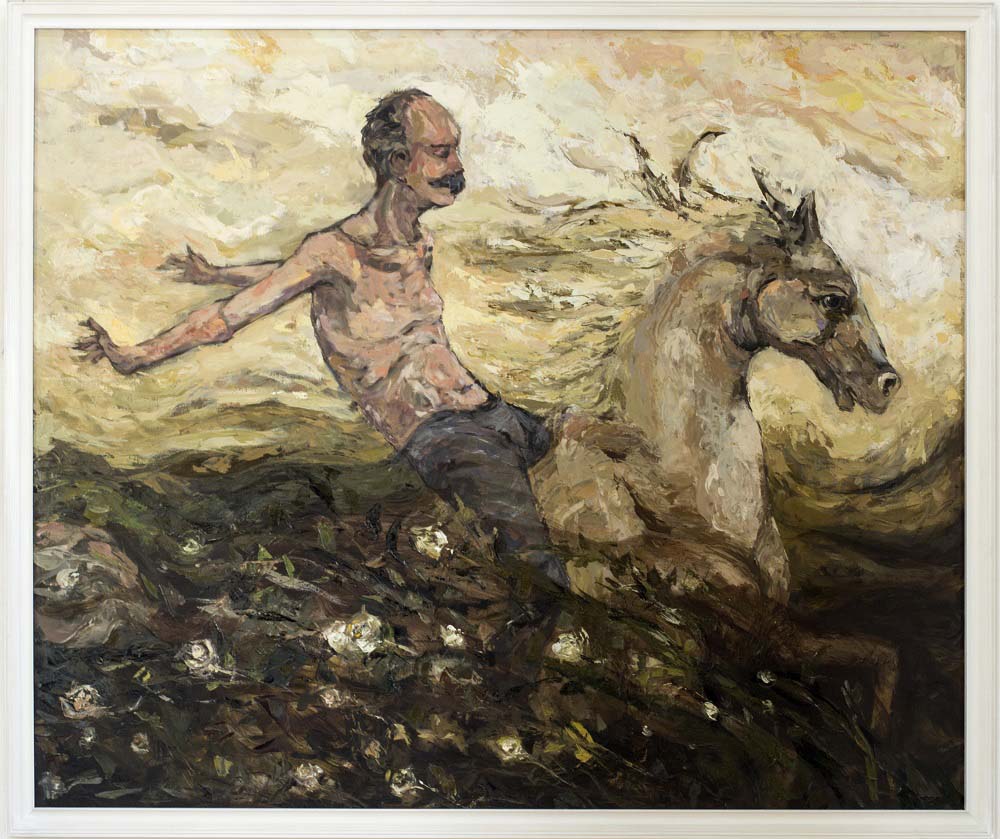
Martí de Mario Fabelo. Su interpretación de José Martí se afinca en conceptos propios y universales. Foto tomada de La Jiribilla
Mario Fabelo’s work is something that marks Santa Clara’s landscape. Anyone who visits the city will notice the sculptures scattered across corners, parks, and sidewalks. They function almost as conceptual installations, reminders of something larger. Mayito, as we friends call him, possesses a deep sensitivity. His home-workshop hosts gatherings where ideas are born that later take form in matter. This is why he has worked powerfully with the image of José Martí. Debates around national identity, the role of intellectuals and artists, and the construction of creative spaces have all been fruitful. Mayito has been able to strengthen Santa Clara’s identity, transforming its physiognomy forever. Perhaps Henry Moore is one of his references, yet I believe more in an imprint born from internal formative processes, from confronting formalism, and from giving light a chance amid darkness. Mayito has created his work during the worst years, when materials have been scarce—hence he uses discarded pieces, rusted iron, what seems lifeless.
So, when we walk along Cuba and Carretera Central streets, we encounter a sculptural complex that mimics a house’s inhabitants. Indeed, Mayito based the work on a family that once lived there, now said to be ghosts. The small park reclaimed an area that had defaced public ornament, but more than that, it rescued social narratives, gave life to things that existed in the imagination, and represented figures with internal vitality.
Mario Fabelo has created works for institutions; his paintings have traveled thousands of miles across the world. His interpretation of José Martí is rooted in both personal and universal concepts. The Apostle’s image has not been the same after passing through this artist’s refined filter. Surely, because the gaze is not of marble but of materials that perish—irons that lose and oxidize. In a corner of Havana, a figure called “Counterweight” holds a metal sphere. The nearby sea, rain, and wind have bent it to the point of falling. Mario Fabelo conceives the whole degradation process as part of a concept that continues to speak to us. Perhaps because art must live with us and transcend us. Maybe because the creator feels the need for his atoms to be made of something more than matter. When Mayito’s sculptures dissolve, they continue to exist; they only change their materiality, taking on another garment. The concept has taken its destiny.
In the case of “Counterweight”—located on the Malecón—it has drawn both criticism and admiration, as the work reinterprets the current crisis, but without Manichaeism. Mayito possesses the ability to give the harshest truths the most tender and profound forms. That is something only someone more than a skilled artist can do. His bridge is built of dreams, but also intelligence and creative power. The creator knows that the path is deconstruction through sensitivity, but he does not stop there; instead, he offers as a solution the use of those despised, everyday, simple spaces: a corner, a sidewalk, a crumbling wall, a piece of matter.
Perhaps the greatest bond linking Mayito to Santa Clara is his connection with the province’s writers. His friendship with Yamil Díaz has sparked reflections on Martí’s work. The Apostle, who was never in the province, has inhabited us through his representation in the artist’s works. It is like a historical debt paid drop by drop through pieces of exquisite craftmanship. Mayito is a symbolist who knows that images are more than paint on canvas—they are the power to speak without words, to move audiences toward zones they did not know, even uncomfortable parts of themselves. There is a disdain for facile solutions, a gesture that transcends simple verses and settles into free verse. That is Mario Fabelo’s Martí: one who challenges, one who participates.
This author’s work will continue to occupy more than galleries: the popular imagination. It is the family sitting in the park, the mother embracing her child, the solitary man bending over a bench. Mayito carries the personalities of all of them within; he is like an encyclopedia of identities. There, in that journey, the creator knows he has an advantage. His capacity is not measured by prosperity or presence in the market, but by the power of the image.
Translated by Sergio A. Paneque Díaz / CubaSí Translation Staff
Añadir nuevo comentario