
The Annexationists on Social Media and the Aggression Against Cuba
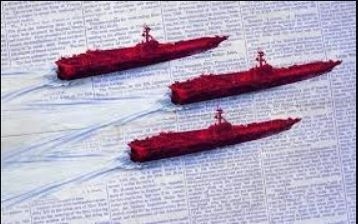
The new annexationists flooding social media—as part of the psychological war unleashed against the Island—are celebrating following the kidnapping of Venezuelan President Nicolás Maduro. Now "it's Cuba's turn," they predict, echoing their masters' frustrations, calling for naval blockades, bombings, and invasions against Cuba. They repeat, over and over, the old yearning of the anti-Cuban Miami mafia that "now Cuba will finally be free."
Blinded by hatred and perfidy, they overlook with the utmost shamelessness the paradox of their statements. Will Cuba be free thanks to the intervention of the military might of a foreign power, coincidentally the most powerful in the world?
Undoubtedly, at best, the stipend they receive as media terrorists clouds their judgment, if they ever had any to begin with.
The United States has never cared about Cuba's independence—these social media charlatans should know. They did not care when, during the times of the Island under Spanish yoke, they did everything possible to prevent its independence, whether to avoid a slave uprising that could spread to the plantations of the Southern states or to patiently wait for the weakness of the Iberian lion to precipitate the "ripe fruit" that the "manifest destiny" of the nascent empire's hemispheric superiority would, in time, let fall into its hands.
Nor did they care at the end of the so-called Spanish-Cuban-American War in 1898, when they snatched victory from the Liberation Army and barred its entry into Santiago de Cuba, and even less so when they turned the Island into a pseudo-republic, shackled by amendments and under the command of the proconsuls of the time, the Yankee ambassadors.
Cuba became free after '59, when, following the triumph of the Revolution, Cubans took their destiny into their own hands, despite invasions, bacteriological warfare, acts of terrorism, media campaigns, and the dictates of the Lester Mallory memorandum, which decreed that the United States should, through economic war, eliminate popular support for the triumphant revolutionary government through hunger and misery. The same government that they now accuse of oppressing the people of the Island, despite having already removed, with threats of naval blockade and invasions, the false mask of the embargo.
According to the new McKinley inhabiting the White House today, Cuba must be free because there are many good people in Florida who have been mistreated by the current Cuban government and whom he would like to help.
These new social media annexationists should know that if Cuba, despite the commercial interests at stake, never came to be annexed by the United States, it was thanks to the Teller Amendment, adopted on the eve of the Spanish-Cuban-American War. It was supported by figures like Redfield Proctor, who, to ensure its approval, gave a famous speech in the Senate declaring his opposition to annexation, as "it was not an intelligent policy to incorporate any people of foreign language and experiences and lacking a strong American element to guide them," making it clear he was referring to the black Cubans.
As Fidel expressed years ago in a journalistic interview with Kennedy's daughter, cited from memory: the Cuban emigrants in Miami should thank him and the Revolution for all the advantages they had enjoyed compared to other emigrant groups.
Distinctions that, by the way, now seem to be fading, due to the betrayal by representatives of the anti-Cuban mafia and their submission to the new immigration policy of the "affectionate" Donald Trump, which, due to its blatantly racist character, has nothing to envy from the reasons of the anti-annexationist Senator Redfield Proctor.
Añadir nuevo comentario