
Elpidio Valdés: The Animated Face of Cuban Cinema and Television
Elpidio Valdés, the iconic animated mambí created by cartoonist and filmmaker Juan Padrón in 1970, remains one of Cuba's most enduring cultural symbols. Experts are now calling for the character's return to regular television programming so that new generations can connect with the patriotic values he embodies.
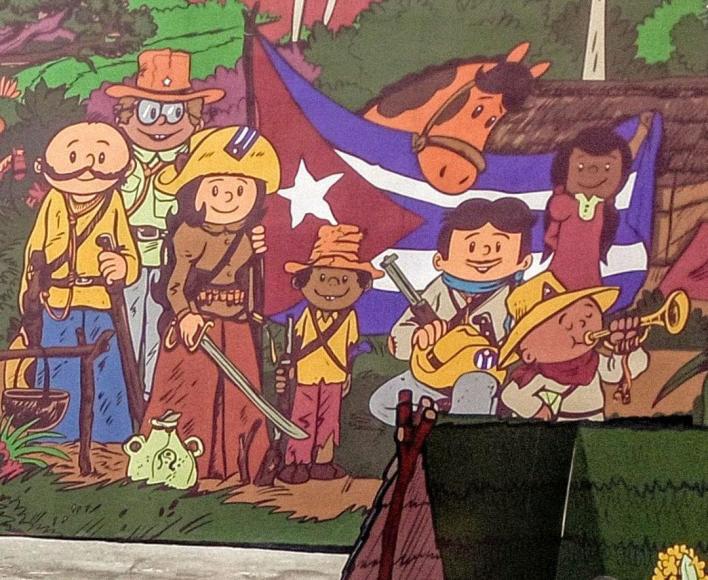
More than a cartoon character, Elpidio Valdés is a symbol of the Cuban nation. Created in 1970 by cartoonist and filmmaker Juan Padrón, the young mambí officer who raises his machete in the name of independence transcended the pages of the children's magazines Pionero and Zunzún to enter homes across the entire country, carried there by two powerful mass media: cinema and television.
From the Page to the Hearts of the People
When Elpidio Valdés first appeared in children's comic strips during the 1970s, Cuba was navigating a period of cultural consolidation. Padrón, already recognized for his comic talent, built a universe where national history merged with popular epic storytelling and rural humor. Elpidio was born of a clear intention: to recount Cuba's independence struggle from the perspective of ordinary people, not of celebrated historical figures.
The animated character was an everyday Cuban — brave, loyal, and witty, yet also a dreamer. His figure embodies core values: patriotism, camaraderie, a sense of duty, and an unshakeable joy in the face of adversity. Generations of children and adults alike saw themselves in him and embraced him as part of their collective identity.
Produced by the ICAIC Animation Studios, Elpidio Valdés made the leap to the big screen in the late 1970s through animated short films and feature-length productions. From that point on, his mambí silhouette and unmistakable voice became fixtures of the audiovisual memory of an entire era.
"Television played a fundamental role in his popularity," affirms curator Sachie Hernández. "It was the medium that allowed Elpidio to reach every Cuban household, even the most remote places where cinema never arrived. Every time a short was broadcast, it was an event."
Throughout the 1980s and 1990s, the character became a staple of school vacations and children's programming on Cuban television. Through stories filled with humor, action, and patriotism, Elpidio accompanied children, adolescents, and young people who learned — amid laughter and adventure — the values embodied by Cuba's independence fighters.
A Call to Restore His Regular Presence
Today, as television competes with digital platforms and social media, the specialist insists on the need to revive that intergenerational dialogue.
"We would like," says curator Hernández, "for the Elpidio Valdés animated films to be broadcast more regularly, not only on commemorative dates. This character still has a great deal to say to the children of today."
For the curator, a consistent return of Elpidio to children's programming would be more than a nostalgic gesture — it would be a way of reconnecting with essential values: independence, solidarity, and confidence in Cuban ingenuity.
"Padrón's humor carries historical depth and a unique tenderness," she adds. "It teaches without moralizing, it entertains without oversimplifying. And that is cultural education of the highest quality."
A Hero With No Expiration Date
Five decades after his creation, Juan Padrón's little mambí remains far more than a drawing: he is a living lesson in history, ethics, and sensibility. Through his adventures, Cubans are reminded of those who launched the wars of independence.
Hernández underscores the point: "Unfortunately, his shorts are no longer broadcast as frequently, or they air in isolation — not as before, when Elpidio Valdés was part of the animated universe that those of my generation watched on Saturdays and Sundays on television."
New generations deserve to discover — and laugh again — with the mambí who taught patriotism through humor and tenderness.
That is why one of the central objectives of the recently inaugurated Centro Cultural La Manigua — located on Calle 35 between Paseo and 2, in Havana's El Vedado neighborhood — will be to maintain a steady programming schedule of Elpidio Valdés short films and feature productions, so that every member of the Cuban family may enjoy them.
Añadir nuevo comentario