
Raquel Revuelta: A Milestone of the Cuban Stage
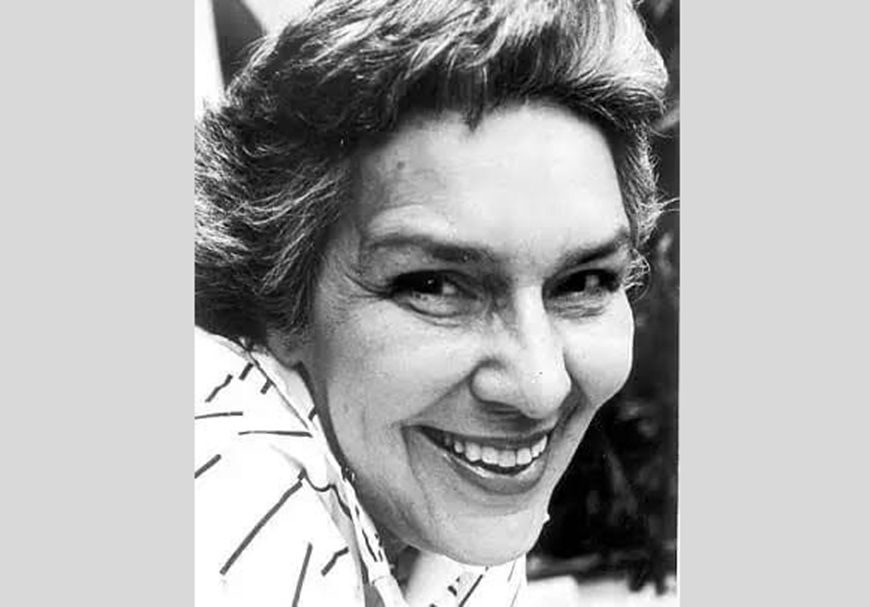
There are artists whose stature is measured not only by the characters they portrayed, but also by the paths they opened for those who followed. To that lineage belongs Raquel Revuelta, whose career spanning nearly seven decades left an indelible mark on Cuban theater, film, radio, and television.
Born in Havana on November 14, 1925, she began her artistic career as a teenager, participating in the amateur talent competitions La Corte Suprema del Arte and La Escala de la Fama. Those early steps foreshadowed a vocation that would soon find a place in major theater companies and radio stations.
The Teatro Popular and the Nuestro Tiempo Cultural Society—spaces of encounter and intellectual renewal that brought together prominent Cuban creators of the mid-20th century—played a particularly important role in her artistic training and development.
Yet one of the milestones that best captures her historical significance occurred in 1958, when, alongside her brother Vicente Revuelta and other artists, she founded the Teatro Estudio ensemble.
The group was born with the purpose of advancing a national theater of greater artistic rigor, distanced from commercial formulas and committed to researching new forms of scenic expression.
The collective became one of the primary benchmarks for theatrical modernization in Cuba. Its repertoire incorporated works of universal and national dramaturgy while fostering the emergence of new playwrights, directors, and actors. Experimentation, systematic study, and professional training formed the pillars of its work.
Raquel was not merely one of its founders; she took on responsibilities as an actress, director, and general director—a role she held for more than 35 years. From that position, she helped consolidate a vision of theater as a space for creation, learning, and dialogue with society.
Her acting talent also found expression in roles that remain etched in Cuban cultural memory. Prominent among them is the first Lucía in Humberto Solás's eponymous 1968 film, where she starred in one of the segments comprising that landmark work of national cinema.
She also achieved widespread popularity with her portrayal of Doña Bárbara in the television adaptation of Rómulo Gallegos's novel.
Her screen career further included performances in films such as Cecilia and A Successful Man (Un hombre de éxito), both directed by Humberto Solás, as well as Enrique Pineda Barnet's That Long Night (Aquella larga noche). She moved effortlessly across different media without losing the intensity and rigor that characterized her work on stage.
Training new performers was among her most essential contributions. As a professor at the Higher Institute of Art (ISA), she passed down knowledge and experience to generations of actors and actresses, convinced that the craft demanded discipline, exploration, and a permanent willingness to learn.
In recognition of her career, she received the National Theater Award in 1999, which she shared with her brother Vicente, alongside other honors including the Alejo Carpentier Medal, the Félix Varela Order, and the Distinction for National Culture.
Raquel Revuelta passed away in Havana on January 24, 2004, yet her legacy remains alive in the history of Cuban performing arts. Remembering her every November 14 is also a way of revisiting a decisive era in Cuban theater and honoring a creator who was not content with merely occupying a place on stage, but helped transform the very space from which several generations learned to practice and understand the theatrical arts.
Translated by Sergio A. Paneque Díaz / CubaSí Translation Staff
Añadir nuevo comentario