
COP31: Climate Justice Can No Longer Wait
The climate crisis has an unequal geography. It also has those responsible, accumulated debts, and victims. Yet those who have polluted the least often face some of the most devastating consequences of that pollution.
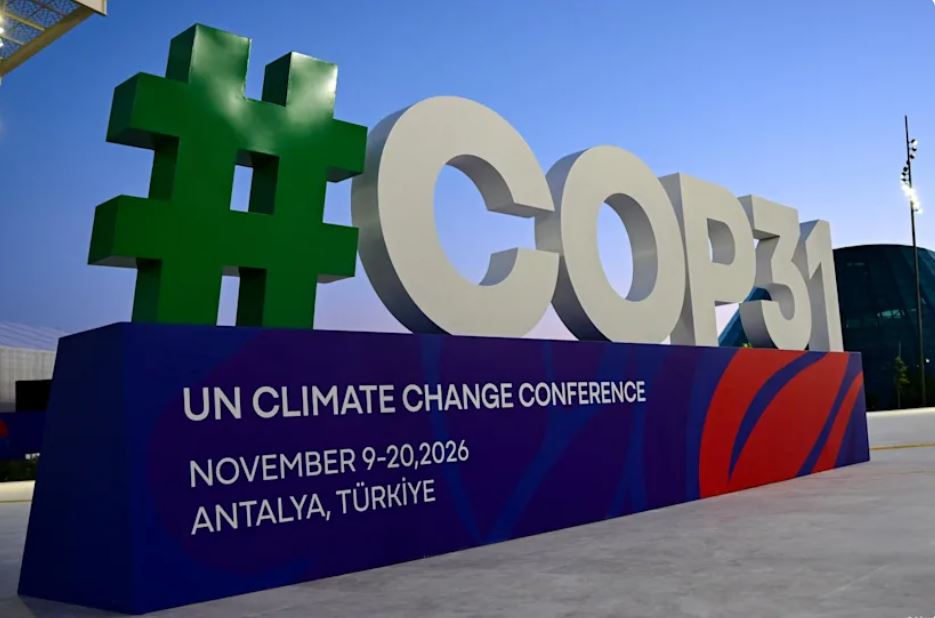
Such a contradiction lies at the heart of the discussions at the 31st United Nations Climate Change Conference (COP31)—taking place in Antalya, Türkiye, from November 9 to 20—and explains the significance of UN Secretary-General António Guterres's call to establish a new global pact for climate justice.
On November 11, before the leaders gathered at the summit, Guterres demanded an agreement that allows for a fairer distribution of the responsibilities and resources needed to confront the emergency.
Among his proposals is taxing fossil fuel companies to help finance the protection of the countries hardest hit by a crisis they did not cause in equal proportion. It is not merely a moral appeal, but a matter of survival, historical responsibility, and international cooperation.
A Summit Between Urgencies and Debts
COP31 arrives at a particularly delicate moment. The possibility of temporarily exceeding the 1.5 °C warming limit established in the Paris Agreement has ceased to be a distant warning and become a current imperative.
And every fraction of a degree matters, because it determines risks to food production, water availability, human health, ecosystems, and the habitability of numerous regions.
Therefore, the challenge lies in transforming international commitments into funded, measurable, and verifiable actions.
The agenda of this COP31 addresses emissions reductions, adaptation, climate finance, and a just energy transition. It also incorporates issues such as electrification, ocean protection, food security, and the reduction of non-carbon dioxide pollutants.
Among the priorities set are increasing global electrification to 35 percent by 2035, promoting clean energy, and accelerating the transformation of production systems. The energy crisis, food insecurity, ecosystem degradation, and social inequalities are all part of the same reality.
New Signals in the Negotiations
Since the opening of the conference, elements have emerged that allow for a better assessment of its possibilities and contradictions.
The discussion on fossil fuels once again reveals the difficulties of these summits, where while numerous countries demand an international roadmap to accelerate their phase-out, others resist accepting commitments that could affect their economic interests.
The insufficiency of adaptation financing has gained prominence. In his address to the conference, the President of the United Nations General Assembly, Khalilur Rahman, noted that developing countries need up to $305 billion annually to adapt to climate change, yet currently receive only around $26 billion.
The gap is especially concerning for island states and lower-income nations. Without accessible and sufficient financing, their ability to protect populations, infrastructure, and economies remains severely limited.
The conference has recorded concrete progress in the fight against so-called super-pollutants. During the high-level summit on non-CO₂ greenhouse gases, more than $480 million in new philanthropic commitments was announced to reduce emissions of methane and other pollutants. Another $25 million was added to support national actions in seven countries.
Reducing methane is particularly important because it helps limit near-term warming. The initiative represents a positive signal. However, these financial commitments do not replace government obligations nor do they alone solve the need to reduce emissions from fossil fuels.
From Proposals to Deeds
Guterres's proposal raises a fundamental question: it is not enough to ask all countries to reduce their emissions. It is essential to recognize that not all share the same historical responsibility, economic capacity, or technological means to do so.
A new climate justice pact must guarantee that industrialized nations provide sufficient resources to support developing nations. It would also have to ensure an energy transition that does not shift its costs onto the most vulnerable workers and communities. Added to this is the transfer of clean technologies and knowledge, without creating new economic dependencies.
These demands are linked to previous commitments and decisions adopted at successive climate conferences; the difficulty lies in turning them into binding financial obligations and verifiable mechanisms.
Cuba with a Defined Position
Cuba is participating in COP31 and has championed the need for developed countries to fulfill their commitments regarding financing and technology transfer.
Its position is rooted in the principle of common but differentiated responsibilities, which recognizes that all states must contribute to confronting the crisis, though not to an identical degree, as their historical responsibilities and capacities differ.
The Cuban delegation also spoke out in favor of open and non-discriminatory international trade as a condition for advancing toward a just energy transition.
Such stances hold great significance for an archipelago like Cuba, where rising sea levels, coastal erosion, extreme weather events, and the vulnerability of human settlements make prevention a national priority.
Is a Climate Justice Pact Viable?
A pact of this nature is necessary; its viability, however, faces considerable obstacles.
The first is the distribution of costs. Economies that have historically relied on fossil fuels must undergo profound transformations. Yet their governments are not always willing to accept additional financial obligations or commitments that affect specific economic interests.
The second obstacle is the architecture of climate finance itself. Announcing large figures is not enough; what matters is how much money actually reaches the countries in need, under what conditions, and with what level of accessibility.
Furthermore, technological inequality stands as another barrier because the energy transition requires investments, power grids, storage, research, and specialized personnel—expenses that not all countries can afford.
Another contradiction should not go unnoticed. While calls grow to accelerate the phase-out of fossil fuels, numerous countries continue to rely on them to sustain their economies. And there are those that need to expand their access to energy before they can transform their production systems.
A transition that ignores these differences will hardly be fair. Yet using them as an argument to indefinitely postpone emissions reductions is equally unacceptable.
The solution requires differentiated commitments, realistic timelines, and sufficient resources—neither a permanent exemption for major polluters nor disproportionate sacrifices for poor countries.
And climate justice demands changing that relationship. It does not mean indiscriminately dividing responsibilities or ignoring differences between economies, but recognizing that the right to development, energy, water, food, and a habitable environment cannot depend on birthplace or a nation's economic capacity.
Guterres's appeal once again places this discussion at the center of the international agenda. COP31 has until November 20 to attempt breakthroughs. The conference cannot by itself resolve a crisis built over decades, but it can help change the rules by which the world seeks to confront it.
Because climate justice does not solely imply preventing the planet from warming further; it also means preventing the price of saving it from falling precisely on those who have contributed least to putting it in danger. That will likely be the most demanding measure of success for this summit in Antalya.
Translated by Sergio A. Paneque Díaz / CubaSí Translation Staff
Añadir nuevo comentario