
Researchers Pinpoint When Van Gogh Saw the Sky of "The Starry Night"
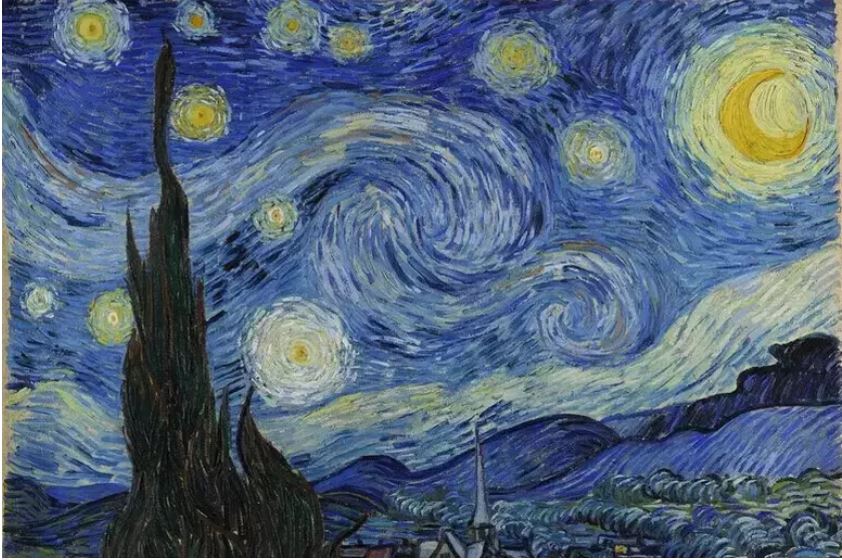
La noche estrellada (1889) – Vincent van Gogh. Óleo sobre lienzo. Colección del MoMA. ANSA
The sky depicted in "The Starry Night," the famous work by Dutch painter Vincent van Gogh, would not be the product of pure imagination, but of a real observation made shortly before dawn on July 22, 1889, over the French town of Saint-Rémy.
This is indicated by a new astronomical study that could lead to a revision of the painting's creation date, traditionally placed in June 1889.
The results of the research were published in the journal Scientific Reports by the School of Space Research at Kyung Hee University in Seoul, in collaboration with the South Korean company Sllab, specialized in space sciences.
Until now, the dating of the work was conventionally based on a letter Van Gogh wrote to his brother Theo around June 18, 1889. However, the lunar phase of that period, corresponding to a waning gibbous moon, does not match the thin crescent represented in the painting.
To address this discrepancy, the researchers developed a method combining astronomical simulations, measurements of star positions, historical weather data, and analysis of the artist's letters.
Based on earlier sketches of the landscape, the authors reconstructed the narrow visual field represented in "The Starry Night." They discovered that, during the dawn of July 22, 1889, the waning Moon, Venus, and the Hyades star cluster were visible in a configuration that broadly matches the one represented in the painting.
Historical weather records further indicate that the night sky of that time must have been clear enough to allow observation. Added to this are the frequent references to cicadas in Van Gogh's letters, which suggest warm conditions more compatible with July temperatures than with those of June.
The researchers also identified in Saint-Rémy the point from which the painter would have observed the landscape and reconstructed the perspective used to create the work.
Finally, a geometric analysis of the shapes confirmed the correspondence between the five central stars of the painting and the Hyades cluster.
Taken together, the results support the hypothesis that the sky of "The Starry Night" was inspired by a real astronomical observation and could help pinpoint the date on which Van Gogh created one of the most recognized works in art history.
Añadir nuevo comentario