
Terror in Florida
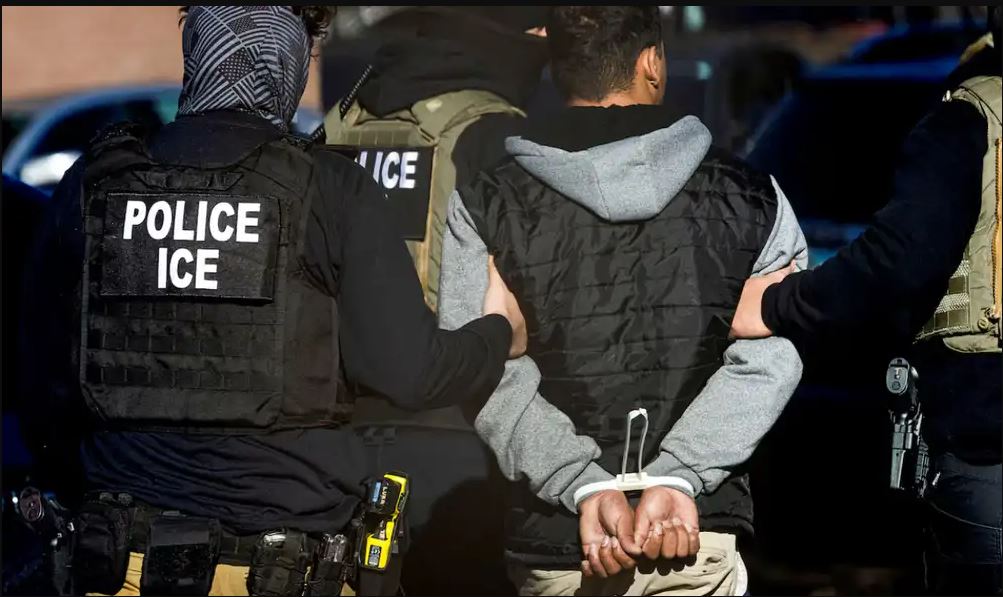
ICE en Miami lidera arrestos migratorios en EE.UU. con 120 detenciones diarias
They claim that prisons like Alcatraz are disappearing to keep allegedly undocumented migrants locked up, but the truth is that other overcrowded facilities are emerging in Florida that go unreported, holding people who were even in the process of legalization but do not have the luck of having the appropriate white skin.
Although competition in this regard is among several states, Florida presents the worst omens because it has a motley crowd of Cuban-Americans controlling enormous wealth and a pack of white legislators of lamentable Cuban origin who have become the main enemies of their compatriots, as well as having at the helm of the so-called Sunshine State a governor like Ron DeSantis, relentless in tightening the noose against migrants with a package of new laws that would include everything from a de facto presumption of guilt in traffic accidents to criminal sanctions for companies that hire them, in addition to restrictions on access to financial services, licenses, and the sending of remittances abroad.
In short, Republican Ron DeSantis has placed himself at the national forefront of the anti-immigrant offensive promoted by President Donald Trump.
Florida has already required for two years that companies with more than 25 employees use the E-Verify system to verify the immigration status of their workers. The new proposed law would establish harsher penalties, including one-year license revocation and fines of up to $10,000 for businesses that violate the measure for the first time, up to five years and $100,000 for a second offense, and permanent license loss and penalties of up to a quarter of a million dollars in case of recidivism.
Companies that hire more than 50 employees in an irregular immigration status would incur a crime that could be punishable by prison and the complete loss of the business license.
It also establishes restrictions on sending remittances to other countries from Florida, one of the largest migration enclaves in Latin America. Remittance businesses would have to verify the immigration status of those sending money and could lose their license if they fail to comply.
In the financial sphere, banks and other institutions are prohibited from granting mortgage loans or home purchase assistance to people in irregular immigration status. They would also be excluded from the state program for first-time buyers, which allows home purchases with a lower down payment and obtaining loans at better interest rates.
Under DeSantis's leadership, Florida has become a kind of laboratory to test the legal limits of Trump's immigration agenda. The state has set up immigrant detention centers administered by the State Division of Emergency Management —including the infamous Alligator Alcatraz in the Everglades, which they claim has been closed— and has pressured municipal governments to sign agreements with federal authorities to arrest migrants, among other initiatives.
Last year, Florida passed a law seeking to prevent people in irregular immigration status from entering the state. The legislation was challenged in court by civil and human rights organizations, arguing that it violated constitutional rights and that state law cannot supersede federal immigration laws. Federal District Judge Kathleen Williams ruled in their favor and prohibited Florida from enforcing the law. The state appealed the decision and even requested the Supreme Court to lift the injunction, without success, while plaintiffs argued that Florida already collaborates extensively with federal authorities and cannot "enforce its own immigration system."
Another initiative seeks to prevent undocumented migrants from accessing public universities or participating in state-funded adult education programs, including English as a second language classes. The proposal would expand a law passed last year that eliminated in-state tuition benefits for undocumented students.
YESTERDAY LIKE TODAY
Not-so-progressive human rights organizations such as Human Rights Watch, along with governmental and non-governmental expert and monitoring entities, have conducted numerous investigations into migrant detention conditions in the United States. This report documents how, although the second Trump administration is using abusive practices similar to those of its first term, its effects are worsened by severe overcrowding caused by new state and local policies, including in Florida, where this report focuses.
While these latest findings in Florida serve as the basis for some of the public policy recommendations in this report, the recommendations are also based on years of research and documentation.
Thus, it documents how staff at three detention centers subjected detainees to dangerously deficient medical care, overcrowding, abusive treatment, and restrictions on access to legal and psychosocial assistance. Officials denied detainees essential medications, and some were held in solitary confinement as apparent punishment for requesting mental health care.
Detention center officials returned some detainees directly from hospitals where they had been treated without providing follow-up treatments. Others were held in isolation or transferred without notice, which hindered their legal representation. Detainees were forced to sleep on cold cement floors without bedding and received food that was sometimes of poor quality. On many occasions, officials ignored detainees' medical needs. Some officials treated detainees inhumanely.
These findings coincide with those of a report by Americans for Immigrant Justice (AIJ) before the UN Human Rights Council. In its report, AIJ documented serious and systematic human rights violations at Krome. Along with years of investigations by Human Rights Watch and other independent experts and organizations in the United States, they show the picture of a migrant detention system that degrades, intimidates, and punishes migrants.
This report reveals that the Krome and BTC detention centers are operated by private contractors, who stated that "we cannot publicly comment on the details of our engagement."
SHAMEFUL VANGUARD
President Donald Trump's immigration campaign has faced strong resistance in Democratic-run sanctuary cities, where police are prohibited from collaborating, elected officials have responded firmly, and local residents have tried to defend their migrant neighbors by sounding alarms with whistles, recording videos on cell phones, and scolding masked federal agents, considered by many as an invading force.
However, that has not been the case in Republican-governed Florida, where 347 state and local agencies have joined the campaign and unleashed a wave of immigration arrests. Among them are police departments, the Florida National Guard, and the Highway Patrol, but also apparently improbable ones such as the state's Fish and Wildlife Conservation Commission and the Florida Lottery.
The increase in immigration arrests in Florida during Trump's second term has gone largely unnoticed by the public, as many begin as routine traffic stops, civilian support for the initiative appears to be growing, and participating state and municipal agencies are flatly denying requests for arrest records and body camera footage, at the direction of the Department of Homeland Security.
Translated by Sergio A. Paneque Díaz / CubaSí Translation Staff
Añadir nuevo comentario