
“The Data Are Facts, Not Fantasy,” Scientist Warns as 2026 Heads Toward Being “One of the Warmest” on Record
"Los datos son hechos, no fantasía", avisa científica ante un 2026 "de los más cálidos"
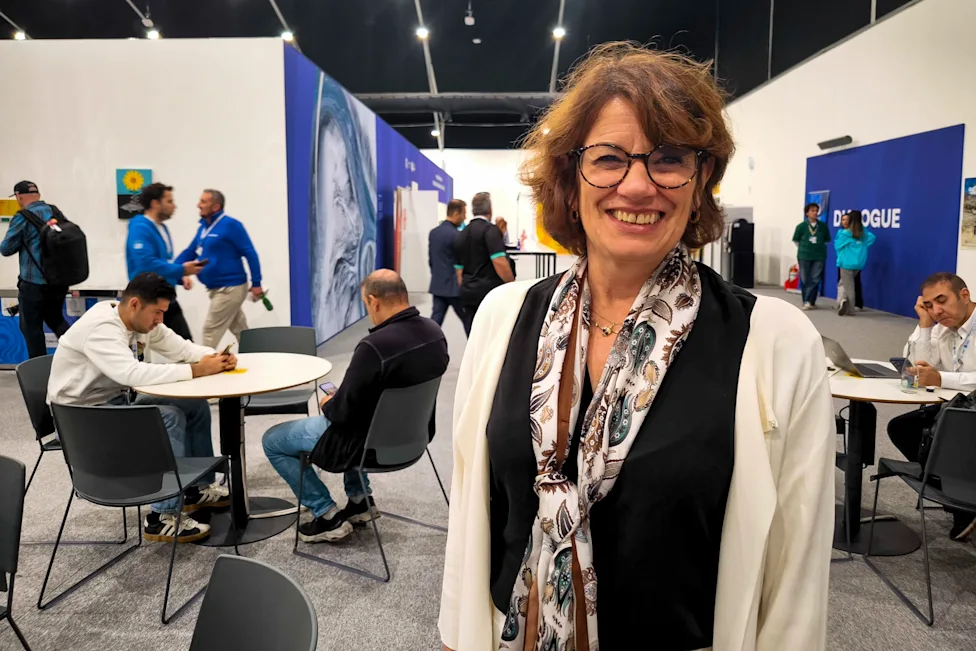
Laurence Rouil, director of the Copernicus Atmosphere Monitoring Service (CAMS), warned in an interview with EFE that 2026 is on its way to becoming “one of the warmest years ever recorded,” while rejecting climate skepticism by asserting that scientific evidence rests on the fact that the “data are facts, not fantasy.”
“We must wait for the year to end, but it will be a very, very warm year. Yes, one of the warmest in comparison... without a doubt,” said the French mathematician and Copernicus scientist, speaking at the COP31 climate summit, held this year in the Mediterranean Turkish city of Antalya. Copernicus is the European Union’s Earth observation and monitoring program.
Right at the start of the UN conference on November 9, the Copernicus Climate Change Service reported that last month was the warmest October on record worldwide, with the global average surface air temperature reaching 15.35°C (59.63°F). That is 0.90°C above the 1991-2020 average and 1.75°C above the estimated preindustrial level (1850-1900).
October was also the third consecutive month with temperatures more than 1.5°C above the preindustrial level.
A Message to Climate Deniers
Faced with the rise of denialist rhetoric in European countries such as Spain and France, which argues that the climate has always changed naturally, Rouil was categorical.
“My answer is very simple. We have the data, we have the evidence. Climate and atmospheric variables have been monitored for a long time, for several decades. And we know that the increase in greenhouse gas emissions affects climate change and global warming,” she stated.
Therefore, “the data are the data, and it is not a fantasy or something we created out of nothing,” she said, recalling that the Earth system and the impact of anthropogenic emissions follow “physical equations” validated in thousands of publications.
“What more can I say? This is science,” exclaimed the director of CAMS, which is part of the European Centre for Medium-Range Weather Forecasts (ECMWF).
Lessons From the Wildfires in Spain and France
The 2025 wildfire season left more than one million hectares burned across Europe, more than double the annual average of the past 18 years and a record figure concentrated especially on the Iberian Peninsula, where 63 percent of the burned territory (forests, scrubland, and farmland) was located.
In addition, Spain’s 2026 wildfire season closed as one of the worst years so far this century, with roughly 275,000 hectares scorched. It was surpassed only by 2025, when nearly 355,000 hectares burned, according to data from Civil Protection and the Ministry for the Ecological Transition and the Demographic Challenge (Miteco).
Against this backdrop, Rouil explained that Copernicus monitors both the fires and their impact on air pollution in real time, while also working closely with national weather services and civil protection agencies.
“From a scientific perspective, what we have learned, and what we will do to continue supporting in the coming years, is our ability to forecast, especially together with the services in charge of civil protection and the countries’ weather services, providing information to help them know what may happen,” she said.
However, she cautioned that prevention goes beyond atmospheric science and requires a review of land and forest management.
The Ozone Success Story
Despite this pessimism, Rouil underscored the need to communicate environmental “success stories” to show that international cooperation and regulations work.
She cited as an example the recovery of the stratospheric ozone layer thanks to the Montreal Protocol, despite annual natural variations linked to the polar vortex, and the drastic reduction of harmful particles and nitrogen dioxide in Europe following the tightening of air quality laws.
Nevertheless, she warned that the work is not finished, pointing to the problem of tropospheric ozone (the kind breathed at ground level) and the impact of large wildfires in southern Europe, such as those suffered in Spain, France, and Greece.
“Reducing emissions, mitigation strategies, and international agreements lead to good results. It works,” she concluded.
Añadir nuevo comentario