
OPINION: Desperate Far Right in Colombia
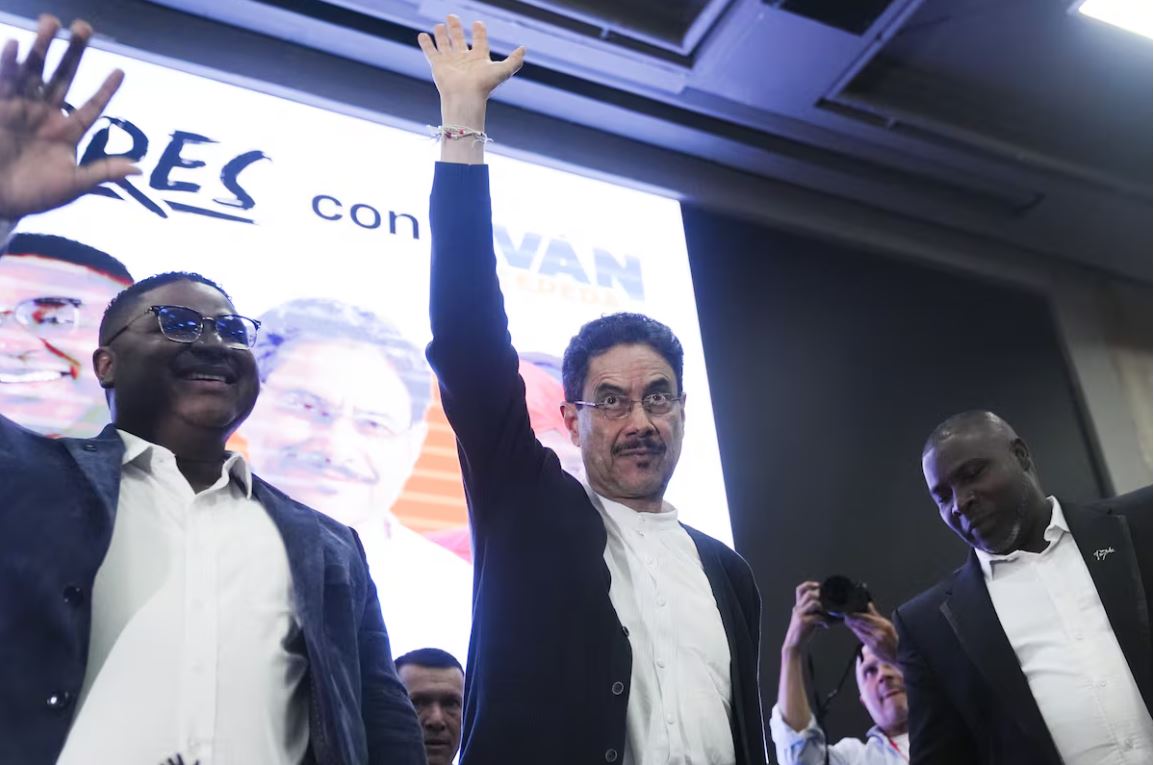
Anxious about the possibility of Iván Cepeda winning the presidential elections on May 31, the far right has launched a plan to physically eliminate him and prevent the continuation and deepening of the progressive governance plans of the current Colombian president, Gustavo Petro, some of which have been sabotaged by the reactionary forces that wield significant influence in the legislature.
This time, the opposition has been unable to refute this type of accusation because the information comes from the United States Central Intelligence Agency.
“The CIA already has real and concrete data on a possible attack against candidate Iván Cepeda. Threats are everywhere in Colombia, but information about real plans must be neutralized beforehand,” the head of state stated, while the ruling party candidate also encouraged the population to participate in the elections and support him, revealing that he has received similar threats before.
But this is not the only attempt by the opposition to subvert the results of the upcoming presidential elections, as the president has again warned about the possibility of electoral fraud being used to impose a right-wing candidate.
“There is evidence of the persistence of electoral fraud in Colombia,” wrote Petro, who questioned the vote pre-counting system operated by the private company ASD, a subsidiary of Thomas Greg & Sons, a state contractor that has also been in charge of passport production.
Let's recall that in the 2022 elections, ASD used hundreds of contractors who filled out forms with data transmitted by phone, even before the polls closed. This casts doubt on the transparency of the results and cost the Historical Pact, the coalition that brought Petro to power that same year, some 400,000 votes.
In this context, Petro requested full access to the source code of the electoral software—that is, the computer program that processes the results—so that independent experts could audit it. This request, which was approved by the Council of State, has not been granted.
REMINDER
Part of the debate dates back to the 2014 legislative elections, when the Council of State partially annulled the Senate election results after determining that the MIRA party had lost seats due to irregularities in the vote count.
That process used software developed by the Spanish multinational Indra, which for years provided technological services to the Colombian electoral system.
As a result of that court decision, the vote-counting software—which determines the final results—became state property in 2021 and has since been operated exclusively by the National Electoral Council (CNE), according to authorities.
For her part, the Ombudsman, Iris Marín, called for any electoral complaints to be filed through institutional channels and asserted that “this does not mean there cannot be complaints or grievances about the electoral process. These can be valid, legitimate, and must be processed.”
SERIOUS FLAWS
During the legislative elections last March, campaign teams failed to pay poll watchers, which intensified criticism of the national voting system.
Regarding this, Petro declared: “Of course there are thousands of people crying out because they aren't being paid for their votes or their work as poll workers for candidates,” and insisted that the electoral system faces serious flaws, beyond the recent allegations of poll worker manipulation and unpaid votes.
He expanded his accusation, stating that there are greater risks linked to the management of the software responsible for counting and pre-counting votes.
He accused certain officials of having access to the computer systems and altering vote counts: “My criticism goes beyond the poll worker fraud that has already occurred, and beyond the registrars who access the software and change a thousand votes into 100 million.” These statements increased political tension at a time when public trust in electoral institutions is being questioned.
In his remarks, Petro directly targeted Thomas Greg & Sons, the company currently responsible for the preliminary vote count and scrutiny, and linked it to the passport issuance contract with the Portuguese Mint. The president questioned the decision by the Attorney General's Office and the National Registrar to request the annulment of the contract with the Portuguese firm.
"Who benefits if the passport contract with Portugal is annulled by a few judges? Thomas Greg & Sons benefits. The current company handling the preliminary vote count and scrutiny benefits," the president emphasized.
The head of state went beyond to link the alleged attempt to legally censor him to the awarding of public funds to the same company that, according to him, had already been implicated in previous irregularities: “The Attorney General’s Office wants to silence me by court order so that I don’t speak about this company and its unaudited election software.”
The president hinted at the existence of an agreement between a presidential candidate and the owners of the firm in charge of the vote count. The accusation connects these events to the election campaign, increasing the pressure on oversight bodies and raising concerns about the fairness of the elections.
Gustavo Petro asserted that there is an attempt to legally censor him – credit @petrogustavo. In his message, Petro publicly asked: “What is the purpose of seeking to censor the President of Colombia, which violates all my rights, even as a citizen?” He also asserted that “a deal has already been struck between a candidate, who is determined to win at all costs, regardless of the means, and the owners of the election counting company,” after which he concluded:
“We are facing a fraudulent agreement, even if the Attorney General is unaware of it. It is immoral to benefit the company conducting the vote count with hundreds of millions of dollars of public funds during the elections. The people and the world must safeguard the popular vote in Colombia.”
Translated by Amilkal Labañino / CubaSí Translation Staff
Add new comment