
Nicolás Guillén Returns: Cuba Debates His Legacy
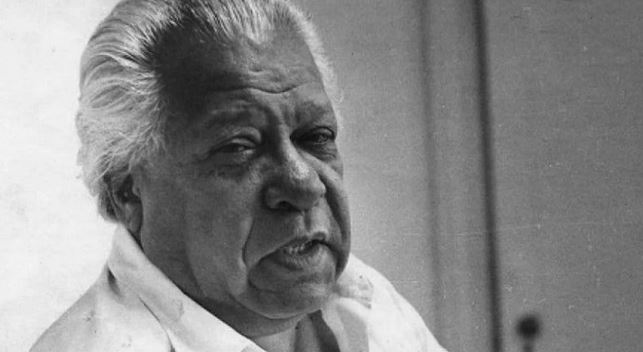
On May 13 and 14, Havana will host a space for conversation that few cities in the world can offer: a colloquium that stems from poetry to reach politics, starting in the 20th century and concluding in the present day.
The 15th Nicolás Guillén Colloquium and Festival will be held at the headquarters of the National Union of Writers and Artists of Cuba (Uneac). The program combines literary analysis, political debate, and cultural identity centered on the figure of Cuba's National Poet.
This encounter is not merely another commemorative act. Its program, constructed over two intense days, aims for something more ambitious: to demonstrate that Guillén's work remains a living tool for thinking about Cuba, its tensions, and its future.
The Opening Sets the Tone
The opening of the colloquium will be led by Nicolás Hernández Guillén, who will emphasize the continuity of a legacy that transcends the literary to insert itself into the political and social life of the country. The inaugural act will feature a lecture by Spanish poet Luis García Montero, focused on “the human commitments of poetry,” an intervention that positions poetic creation as an ethical act and a tool for interpreting reality, in full harmony with the Guillenian tradition.
The performance by the National Choir of Cuba will provide an aesthetic dimension that connects the word with musicality—an inseparable element in the poet's work.
Culture and Politics: Inseparable
The afternoon of the first day will bring to the table one of the most relevant axes of the colloquium: the link between culture and politics in Cuban history. A panel dedicated to Fidel Castro will address his role in the construction of an anti-racist policy and the dialogue between the revolution and religious institutions. The presentations will be led by young researchers, making the space a concrete example of the continuity of critical thinking within Cuban universities.
Following this, the panel “Poetic Confluences and Inquiries” will delve into literary analysis with papers examining the poetic architecture of Sóngoro Cosongo, vanguardist connections with Mariano Brull, and links with Emilio Ballagas, as well as dialogues with figures such as María Zambrano and Fina García Marruz. This space will allow for an understanding of Guillén not as an isolated author, but as part of a network of aesthetic influences that defined 20th-century Hispanic American poetry.
Second Day: The Archive as a Political Act
May 14 will reinforce the academic character of the meeting with a particular emphasis on editorial circulation and the recovery of fundamental texts.
New editions of works such as Sóngoro Cosongo and Spain: Poems and Chronicles of an Anti-Fascist War will be presented, evidencing the importance of maintaining access to these materials. Lectures will broaden the historical perspective, ranging from Guillén's relationship with the Spanish Republican exile to his connection with Cuban political processes.
One of the most anticipated moments of the second day will be the lecture on “Fidel and culture in times of crisis,” which will connect revolutionary tradition with current challenges and propose culture as a space of resistance and symbolic construction. The premise is clear and runs throughout the colloquium program: culture in Cuba is not a decorative sphere but a strategic component of the nation.
The Closing: The Popular Roots Guillén Never Abandoned
The event will conclude with a gala by the National Folkloric Ensemble of Cuba, a finale that returns the audience to the popular roots the poet always defended. Music, dance, and oral tradition will serve as a reminder that Cuban identity is built from mixture, memory, and cultural resistance—the exact same elements that Guillén transformed into poetic material throughout his life.
The Nicolás Guillén Colloquium and Festival reaches its fifteenth edition with a question that has sustained it from the beginning: what makes a 20th-century poet still necessary today? The answer, according to the program Havana will display during these two days, is not found only in the verses. It is found in what those verses are still capable of moving.
Add new comment