
Listening to Our Elders
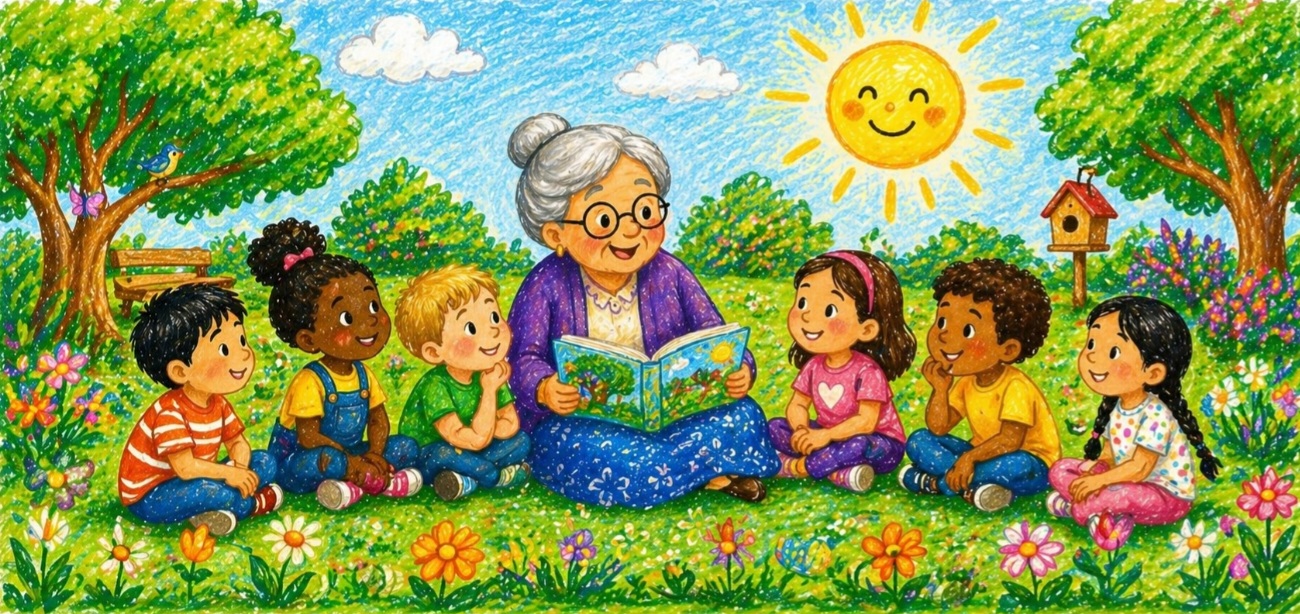
Centuries ago, even decades ago, the key to the vitality of certain values was listening to the elderly. The voice of experience, it was said. Now, for some, it seems enough to focus on their screens. But intergenerational dialogue offers learning opportunities that are not always taken advantage of.
This exchange plays an essential role in human cohesion, the continuity of knowledge, and a deep understanding of the world.
Respect and appreciation are key to this dialogue. It’s not a superficial courtesy or an automatic gesture, but a conscious attitude that recognizes in the other—in the elder—a life marked by challenges, lessons learned, and decisions.
Listening involves pausing, giving time, making space for stories that don't always keep pace with the accelerated rhythm of modern life, but that contain a depth rarely found in other contexts.
Moreover, this respect doesn't always arise spontaneously: it must be instilled early on, within the family. It’s at home that children learn to see their grandparents—or any older adult in their lives—not as distant figures, but as sources of affection, knowledge, and memory.
When daily dialogue is encouraged, when questions are prompted and stories are validated, a bridge is built that can then extend to the neighborhood, the school, and life in society.
Young people, often immersed in fast-paced lifestyles, may find surprisingly enriching moments in this exchange. It's not just about listening to anecdotes from the past, but about discovering different perspectives on current problems, alternative ways of dealing with conflicts, or even stories that help to put the present into perspective.
In this exchange, young people can also share their codes, their languages, their technological tools, generating a two-way flow.
For older adults, this interaction is equally vital. It allows them to feel useful, active, and engaged with their community. In a world that often marginalizes or renders old age invisible, the simple act of being listened to can become a profoundly restorative gesture.
It's not just an emotional matter: it's also a form of social integration that contributes to their well-being and sense of belonging.
The old tradition of the "wise elder" shouldn't disappear; it should be reinvented. In times of constant technological renewal and the expansion of artificial intelligence, this figure can find new spaces, integrate into contemporary dynamics, and engage with them.
It's not about opposing generations, but about bringing them together: allowing experience to contribute nuances, memory to dialogue with innovation, and, in that encounter, for us all to be more fulfilled.
Translated by Amilkal Labañino / CubaSí Translation Staff
Add new comment