
Gaviota Award for Eslinda Núñez: It Was About Time
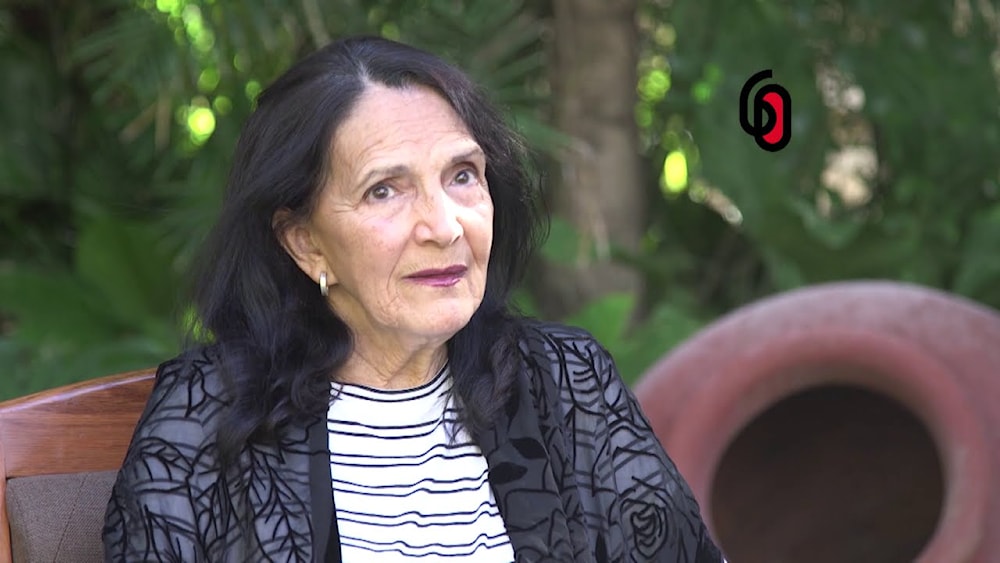
Premio Gaviota para Eslinda Núñez.
There are actresses who do not need many words to earn a place in a country’s memory. Eslinda Núñez is one of them.
Born in Santa Clara, in the heart of Cuba, she built over the years a filmography that today forms part of the island’s cinematic canon, which the Latin Awards Academy has just recognized with the International Gaviota Award in a ceremony held in Mexico City.
The award comes at age 75—or close to it—not as a belated caress, but as confirmation of what Cuban audiences have known for decades: that her face and voice are part of the island’s affective heritage.
From Lucía to Barrio Cuba: A Filmography Made of History
Cuban cinema in the 1960s and 1970s had an urgency that few film industries in the world could match: the need to tell, from the newly established revolution, who Cubans were and where they came from. Eslinda Núñez arrived at that moment with a presence that was not improvised.
In Lucía (1968) by Humberto Solás, she portrayed one of the three eras of a film that Latin American film historians still study as a masterpiece. She was not just any young actress: she was a voice that could synthesize, in a single shot, the violence and tenderness of an era.
Then came the titles that would consolidate her place on the altar. Amada (1983), again by Humberto Solás, a story of spiritualism and passion where Núñez proved she could navigate between the real and the supernatural without losing an ounce of truth.
And more recently, Barrio Cuba (2005) by Humberto Solás, where she returned to show that time does not extinguish the fire of certain performers but rather fans it.
The Cuban Institute of Cinematographic Art and Industry (ICAIC) underscored, when announcing the award, that the distinction summarizes the gratitude toward an artist who contributed to the most genuine quests of Cuban cinema. It is not a routine phrase.
In an industry that has suffered the onslaught of the blockade and resource scarcity, remaining a reference for more than half a century is a feat that can only be explained by talent and an almost obstinate dedication.
Television, Theater, and a Familiar Face
If cinema made her a legend, television made her a neighbor. For decades, Eslinda Núñez was a familiar face in Cuban homes, appearing in series that are now part of the collective memory of several generations.
That duality—the big screen and the small screen—is not always welcomed by critics, but in Núñez’s case, it functioned as a natural extension of her vocation: she made no distinctions between genres, only between interpretive truth and falsehood.
In theater, her work in plays such as La casa de Bernarda Alba and Santa Camila de La Habana Vieja demonstrated that she could handle verse, tragedy, and restraint with the same authority with which she handled the cinematic close-up. Those who saw her on stage speak of a stage presence that did not need to shout to impose itself.
An Award with Deep Roots
The International Gaviota Award is no minor recognition. Since 1995, the Latin Awards Academy has granted it to figures whose work transcends borders and strengthens the cultural ties of the Ibero-American region. Its most notable recipient, according to records, was Pope John Paul II.
That Eslinda Núñez becomes part of that list is not only a personal honor: it is a sign that Cuban cinema remains visible in the Latin American concert.
It is not, moreover, her first national or international award. In 2011, she had already received Cuba’s National Film Prize, a distinction the island owed her and which then recognized what is now reaffirmed in Mexico. The Gaviota, in that sense, functions as an echo: what Cuba saw first, Latin America later confirms.
In the Company of Cuban Seagulls
Eslinda Núñez is not alone in the firmament of awardees. The Gaviota Award has previously recognized other Cubans who, from different fields, have carried the island’s name to unexpected places. Historian Eusebio Leal, the soul of Old Havana’s restoration, received it.
Composer Edesio Alejandro, whose music is the soundtrack for several generations, also received it. Daniel Martín, president of the Latin Institute of Music and singer-songwriter, and Carlos Alberto Cremata, theater creator and director of the company La Colmenita, also appear on the same roster.
In other words, the Gaviota does not only reward names: it rewards a way of being Cuban in the world, a way of resisting and creating that Núñez has embodied for more than fifty years.
In Mexico City, far from the island but close to its roots, the actress received the statuette with the same elegance with which she has always received applause: without fanfare, with the certainty that her work had already spoken for her.
And so, between the nostalgia of those who grew up watching her and the discovery of those who now vindicate her, Eslinda Núñez remains what she always was: a voice from Santa Clara that Cuban cinema, fortunately, never forgot.
In the end, the International Gaviota Award that Eslinda Núñez received is not just another statuette on a shelf. It is a reminder that Cuban cinema—despite blackouts and the cruel blockade that seeks to stop it—continues to produce voices that the world hears. That there are actresses who do not need large budgets to be unforgettable. That affective memories are not erased by time.
When the Latin Awards Academy presented her with the award, it did so in the name of several generations of viewers who grew up watching her on television, who fell in love in movie theaters, who wept with her characters.
And it did so, also, in the name of a future where Cuban culture continues to have a place in the Latin American concert. Because seagulls, as we know, fly far. But they always return to the place where they were born.
Add new comment