
“Dos Gardenias”: Fragrance for a Legend
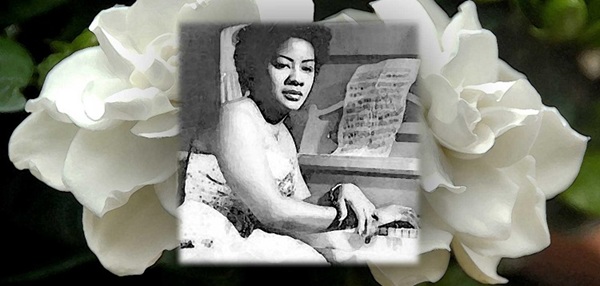
Foto: tomada de CubaPlus magazine
“Two gardenias for you
With them I want to say
I love you, I adore you, my life
Give them all your attention
Because they are your heart and mine
Two gardenias for you
That will carry all the warmth of a kiss
Of those I gave you
And that you will never find
In the warmth of another love…”
Havana, April 23, 1948. On that day, the Society of Authors of Cuba registered not only another work by Isolina Carrillo (Havana, December 9, 1907 – February 21, 1996), but also one of the most legendary and internationally celebrated boleros in the island’s musical heritage.
With “Dos Gardenias,” a sentimental code was born that, nearly eight decades later, still preserves its legendary fragrance, its sense of testament, and its universal legacy. Its lyrics remain, without a doubt, a defining expression of the essence of Cuban romantic song.
The piece was first performed by Guillermo Arronte on Havana’s RHC Cadena Azul radio station and later gained worldwide popularity through Puerto Rican singer Daniel Santos with Pérez Prado’s Orchestra. From that moment on, the song became surrounded by mystery and urban legends.
It is said that the composition emerged with astonishing simplicity, almost like a breath, capturing the feeling of loving deeply and passionately. However, popular imagination added an elegant drama that resonated strongly in an era when the bolero served as the official language of the heart.
People say that Isolina would smile subtly whenever she heard one of the many supposed reasons behind the creation of her “Dos Gardenias.” The song became a staple in the repertoires of renowned artists such as Toña la Negra, Pedro Vargas, Elena Burke, Omara Portuondo, Nat King Cole, Antonio Machín, Fernando Álvarez, and more recently Ibrahim Ferrer through the Buena Vista Social Club phenomenon, as well as Diego El Cigala.
According to the composer herself, the song was recorded by nearly 100 orchestras across several continents, becoming a true musical phenomenon that continues to enchant lovers like a declaration of absolute devotion.
The truth behind every petal, however, was far less dramatic.
In 1988, journalist Mayra A. Martínez interviewed Isolina Carrillo for her book “Cubanos en la música,” an important compilation of celebrated composers and performers published by Editorial Letras Cubanas in 1993.
Among all possible questions, there was one that could not be avoided: what had inspired “Dos Gardenias”?
Martínez recounts that the composer’s first response was a smile—one that only made the conversation more mysterious. In that intimate setting at Carrillo’s home, the writer quickly realized that neither “Dos Gardenias” nor the rest of her compositions had been inspired by a passionate love story.
In fact, Isolina admitted she felt sorry for disappointing journalists and readers. She even confessed that the song was not her personal favorite.
“Knowing my fondness for flowers, one of my students gave me two gardenias, and instantly the title came to me. Could two flowers be the protagonists of love verses? I composed the song right there in the RHC studio. Honestly, I did not like it very much when I finished it.”
And that was the real story—simple, delicate, and without drama.
Isolina Carrillo was a woman who broke barriers as a pianist, composer, orchestra conductor, teacher, and creator of an immense body of work. Today, she continues to win over hearts with a bolero that is probably the most covered song in Cuban musical history.
The piece does not demand technical virtuosity, but it does require complete emotional surrender.
“By your side they will live and speak to you
As when you are with me
And you will even believe
That they will tell you I love you.
But if one evening
The gardenias of my love die
It is because they have discovered
That your love has faded
Because another love exists.
Two gardenias… for you.”
Translated by Sergio A. Paneque Díaz / CubaSí Translation Staff
Add new comment