
Díaz-Canel Praised the Work of Public Health Workers
El político Alejandro “Pacha” Sánchez respondió a las críticas afirmando: “Nosotros obedecemos al pueblo uruguayo, no a Estados Unidos”. Foto: EFE/Archivo
Miguel Díaz-Canel Bermúdez, First Secretary of the Central Committee of the Communist Party of Cuba and President of the Republic, stated that health is a central social achievement that admits no neglect, during the closing of the visit to the Ministry of Public Health (Minsap).
The visit, as specified today by Presidency sources, took place over several days and encompassed primary, secondary, and tertiary care institutions, as well as business system entities, featuring exchanges among managers, specialists, workers, patients, and family members.
Such tours are part of the Party leadership's work system to monitor Economic and Social Transformations and advise grassroots organizations.
In dialogue with Party members and management councils, the Head of State stressed that health in Cuba is defended as a universal right, describing it as "a fundamental human right, an achievement of the Revolution, and neither a commodity nor a privilege."
He recognized the altruism, ethics, and professionalism of the sector's workers, who face the same shortages as the rest of the population.
Before the attendees, he recalled that the closing took place just hours after Cuba's victory at the United Nations for the 34th consecutive time, where the majority of countries ratified their condemnation of the United States economic, commercial, and financial blockade against Cuba, exacerbated by the energy siege and coercive measures.
That support constitutes recognition of the creative resistance of the people, of which health personnel are a part, he expressed.
The meeting was attended by Political Bureau members Roberto Morales Ojeda, Secretary of Organization of the Central Committee, and Manuel Marrero Cruz, Prime Minister, along with Deputy Prime Minister Eduardo Martínez Díaz.
The Minister of Public Health, José Ángel Portal Miranda, explained that the complex situation in the sector generates limitations affecting the performance of the National Health System and leads to "the population's justified dissatisfaction with the services we provide."
Among the impacts, he mentioned the lack of sensitive medications, disposable materials, reagents, and high-technology equipment, along with issues regarding engineering systems, elevators, boilers, generator sets, water, and medical transport.
Despite this, the minister assured that no institution has closed and that all hospitals and polyclinics remain working, maintaining high levels of consultations and surgeries.
The President specified that over 90,000 people are waiting for surgical operations, tens of thousands have had their radiotherapy, chemotherapy, and dialysis treatments affected, and more than 34,000 pregnant women are not receiving all required treatments or follow-ups.
The vaccination program, one of the most robust in the world, stands at a 95 percent (%) application rate, and the country maintains an allocation of 24% of the State Budget to public health, exceeding 76 billion pesos.
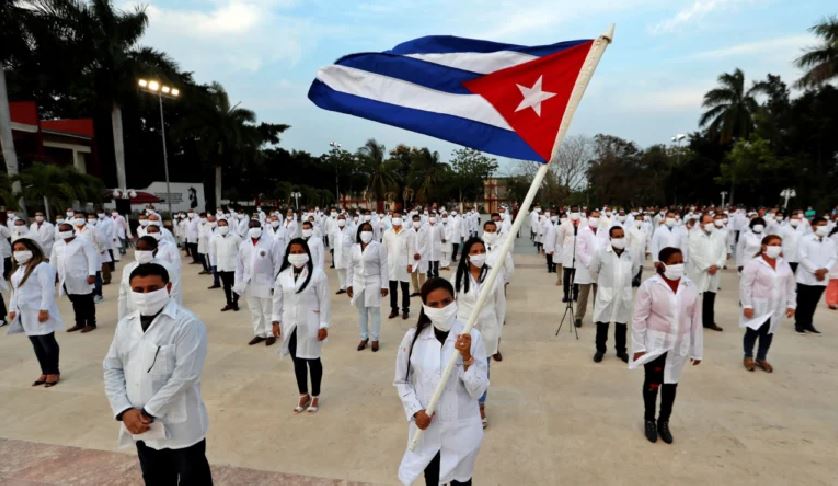
Díaz-Canel denounced the media campaign presenting Cuban medical brigades as a form of human trafficking, as well as the pressure on governments to renounce their presence, although most nations have retained them.
He reiterated the country's admiration and gratitude to doctors, nurses, and support staff who, after long blackouts and without transportation, arrive at their posts every day and sustain fundamental health services.
Add new comment