
 English
 Español
Maya and the U.S. Blockade
especiales
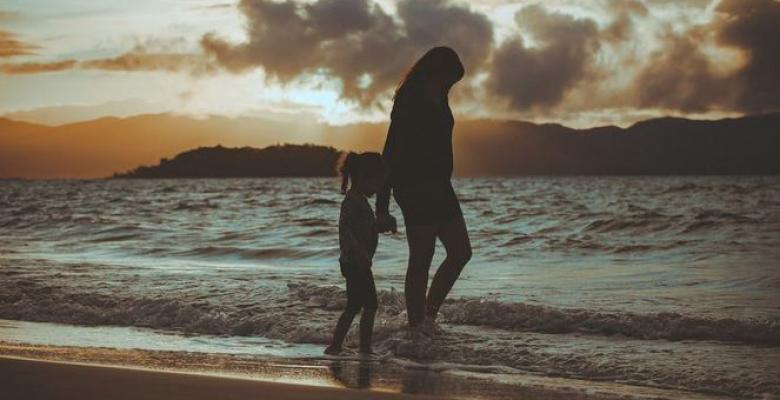
Maya is one of the many resilient women living in Cuba, an island someone once renamed the "Big Island," precisely because it has women like Maya. That name is associated with one of the most advanced pre-Columbian civilizations, which covered almost all of southern Mexico and northern Central America; stories so distant in time, yet simultaneously close, in the "Nuestro Americano" feelings of Maya's parents.
Maya has a daughter, Lucía; the girl is eight years old and very talented, with a fondness for reading, not on a mobile phone, but in traditional books, of ink and paper. During the Covid pandemic, Lucía fell ill and her small lungs were on the verge of collapse because there was not enough oxygen to handle thousands of cases like hers.
It will surely be remembered that in the midst of such an emergency, the Cuban government requested help from third countries, and the U.S. refused it outright, citing the sanctions they themselves impose—namely, the blockade against Cuba, which has existed since 1962.
Of course, Maya was already aware of this ruthless siege, classified as the most prolonged in recent civilized history, which has accumulated damages exceeding 170 billion USD. In the last annual period alone, March 2024 to February 2025, it added 7.556 billion USD in losses.
Maya has also read that the blockade has become more sophisticated over time, as the revolutionary government has found ways to circumvent it. They call them "surgically applied measures," turning the siege into a veritable spiderweb, overreaching due to the host of extraterritorial sanctions—a redundancy worth making.
This policy, which viciously pursues and punishes those who, in their natural right, decide to do business with Cuba, generates a sort of terror in the financial sphere, causing permanent changes in the banking entities that manage the normal financial flow to and from the Island.
This monetary confinement includes the prohibition of using U.S. dollars, the currency used in at least 55% of all monetary transactions in the world. To impose this, U.S. authorities invented a justification, placing Cuba on a spurious, unilateral list—like the sanctions themselves—that serves to punish countries that support terrorism, which practically prohibits any bank from exchanging with Cuban counterparts.
Maya doesn't quite understand this invention of the aforementioned list; she does know that there are no terrorists in Cuba, nor would anyone dream of promoting that—quite the opposite.
At the beginning of the Revolution, an uncle of her father's was murdered, set on fire alive, in a terrorist act promoted, organized, and financed from Miami. No one can tell her tales; the crime is in her family's records, with first and last names. She also remembers that notorious murderers of civilians, like that Posada Carriles, the one who conceived the blowing up of a civilian airliner in mid-flight, die peacefully in some comfortable residential area in that city in southern Florida.
The extraterritorial aspect is unbelievable. Maya's father told her about a friend from Havana, to be precise, who went to live in Egypt about 15 years ago. The man makes a living managing a tourist business with camels; it even makes her laugh because what could a person born in Luyanó know about such a noble animal? But the point is that last year, the "camel driver" friend of her father tried to send about 300 USD to an acquaintance in Lebanon, and along the way, the money was confiscated from the poor man, simply because he identified himself with his Cuban passport.
Let's agree that the U.S. is far from Cairo, where the "camel driver" from Luyanó has lived for 15 years. And the clarification is relevant, as Maya explained to a coworker, because the Americans' argument is that the embargo—they perfidiously call it that—only prevents Cuba from selling or buying something in the U.S.
Incidentally, it must be highlighted that Maya is a teacher, a profession especially impacted by the blockade; imagine that, according to available data, this economic war generates losses equivalent, in just five hours, to what is needed to acquire the teaching materials for all the círculos infantiles (daycares) in the country, or in 21 hours, what it would cost to replace the deteriorated technological resources of Cuban educational institutions. Incredible—that is, one day without the blockade would notably impact educational processes in the country.
In this context, Lucía faces another particular danger: in theory, she could lose the building that currently houses her school. Yes, Lucía's school is located in the Vedado neighborhood, in a majestic house that once belonged to some manager linked to the Bacardí family, of the famous rum brand.
Well, it turns out that the Bacardís, when they had the chance, financed a law in the U.S. Congress that brazenly regulates the extraterritoriality of the blockade—the known Helms-Burton Act of 1996. According to this legislation, the aforementioned manager or his descendants can file a lawsuit in U.S. courts to recover the property of the house where Lucía studies. Of course, she can rest easy; that will never happen.
Like any Cuban woman, Maya also has to deal with the critical situation of the national Cuban electrical system; there is much to discuss to expose how the blockade impacts the production of electrical energy in the country, both for maintenance management and modernization through the installation of renewable energy, to cite just two aspects.
In that sense, a few days ago she learned about the situation of the system's main unit block, the famous Antonio Guiteras thermoelectric plant; initially acquired from a French company, the latter ended up being purchased by the U.S. transnational General Electric in 2015, and since then, due to the blockade, financing, spare parts, and technical advice were cut off.
Of course, Maya cannot quantify how many atrocities, how much impact, how much misery, how much stress this sordid war—without bombs or cannon fire—generates in ordinary, common people.
But there is something that especially irritates Maya because it eventually affects the health of Lucía, her parents, her acquaintances, and neighbors. Certainly, because the blockade prevents, for example, the low-cost acquisition, or at least at the price set by the international market, of insulin for an entire year, or supplies to treat pathologies in cardiology, neurology, or cancer; not to mention the importation of wheelchairs and other technical means.
As if that were not enough, the State Department, with the crusader Mr. Rubio at the helm, redoubled its cruel bet to dismantle Cuba's extensive medical cooperation program throughout the globe. This is something Maya does not understand, no matter how they try to spin it, and she finds it, at the very least, perverse that the pretext is that the involved medical personnel are "slaves"; it is a gratuitous offense to those doctors, thinks Maya, who sees these people as the example she would like her daughter Lucía to follow.
Lucía's mother and the girl herself were born, like the vast majority of the Cuban people, in the midst of this colossal siege, and it is very likely that the small group of neo-Batistianos, who for so many decades have promoted such aggression from the U.S., can never be forgiven.
These promoters of the economic war against Cuba fail to understand the capacity for resistance of people like Maya, or her parents, or even of Lucía, who could be saved when her lungs were about to fail, thanks only to the stature of the medical services and the prevailing social system in Cuba.
And the Cuban Revolution has no other option but to continue evading the blockade; not even to hope that tomorrow some U.S. political leader will have enough courage and strength to tear down this antiquated wall of ignominy. And of course, as Maya rightly believes, when that time comes, Cuba has nothing to offer in return; the wall must be torn down, period.
Clarification: The characters in this chronicle are fictitious; the facts are the harsh reality of U.S. aggression against its neighbors, across the Florida Strait.
Translated by Sergio A. Paneque / CubaSí Translation Staff





Add new comment