
Trump, Carney, and the New International Order
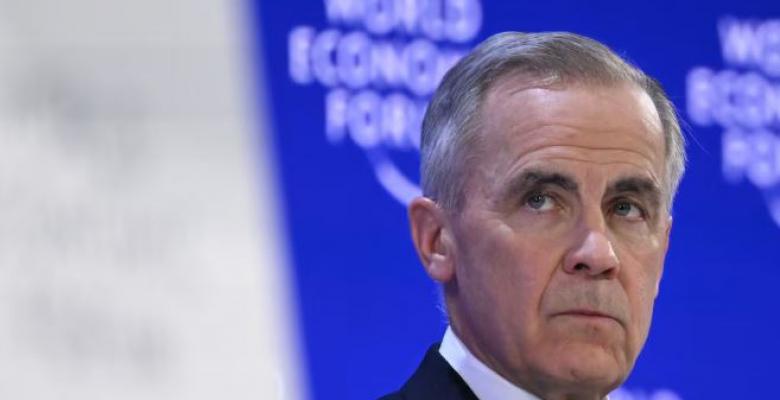
The reflections of Mark Carney and the actions of Donald Trump bring to light a more serious issue. Will humanity remain trapped in a vicious cycle marked by the law of the strongest, or can it leap forward to achieve higher levels of humanism?
The U.S. government (under both Biden and Trump) provided weapons to Israel and vetoed any condemnation or ceasefire proposal in the Security Council, supporting its decision to exterminate the Palestinian people. Trump went further, suggesting that once the Gazans were gone (killed or expelled), his administration would take over the Strip to turn it into a luxurious and lucrative tourist zone—the so-called Gaza Masterplan, designed by his son-in-law, envisions it as a Mediterranean Dubai, which translates to beaches and skyscrapers built over corpses. He even disseminated an AI-generated video showing Netanyahu and himself lounging on deck chairs by the sea. Many, however, did not feel implicated: they were not Palestinian, and getting along with the empire and its guardian in the Middle East was advisable, profitable, even if they were left out of the deal.
When Trump spoke of reclaiming his "backyard" and dusted off the Monroe Doctrine with a Corollary bearing his stamp, shamelessly declaring that the Panama Canal would be his again, when he imposed a naval blockade, bombed, and kidnapped the president of Venezuela because—he stated frankly—he wanted its oil, and threatened to proceed similarly in Cuba and Nicaragua, but also in Mexico, Colombia, and Brazil, Europe understood that the issue was actually against Chinese and Russian interference in the U.S. "national" security area. The portentous garden of civility was to abstain if imperial voracity was directed toward what Borrell, inspired, called the jungle. But then Trump declared he would seize vast Canadian territory and the icy, rich Greenland, currently under Danish sovereignty. They laughed nervously, but their astute analysts speculated incredulously: the emperor makes absurd threats to then negotiate convenient results under pressure (a thesis shattered in Caracas on January 3rd).
By this point in the game, Europe had already been deprived of the Russian pipeline that supplied it with cheap gas (mysterious divers had placed powerful explosives to ensure sanctions could not be reversed) and forced to buy much more expensive and polluting liquefied gas from the United States, transported since then in large tanker ships. But the emperor's hunger grew with every human bite, and his old partners felt offended (though they commented in hushed tones, not wanting to give offense either) when he began literally buying the greed of major European companies with subsidies not all states in the garden could match, causing them to emigrate to U.S. territory, and using the application of capricious tariffs to punish or reward competitors or political adversaries.
From the first months of his second term, Trump spoke clearly (and that much must be acknowledged), but that clarity became increasingly greater, in a way shameless, alien to the long tradition of sophisticated lies the empire always wielded to start wars of conquest or assassinate inconvenient presidents. Academics even feared losing their university chairs, partly because they were expelled if they did not support the abuses, but above all because it was no longer necessary to elaborate conspiracy theories or deduce, with greater or lesser success, future behavior and its hidden reasons: Trump laid them out with the sincerity of spoiled rich children. Bertolt Brecht's warning, describing the complicit attitude of the West toward the emergence of Nazi-fascism in the 1930s, had regained relevance, until the balloon of convenience burst:
First they came for the communists, and I did not speak out because I was not a communist. Then they came for the socialists and the trade unionists, and I did not speak out because I was neither. Then they came for the Jews (my God, how is it possible that the Zionists turned so quickly from victims into victimizers regarding the Palestinians!), and I did not speak out because I was not a Jew. Then they came for me, and by then there was no one left to speak for me.
The emperor had already been sufficiently explicit and persistent in his demands, blackmail, and punishments when Mark J. Carney, Prime Minister of Canada—one of the threatened nations, a conservative and respectable man, but lucid enough to understand the threat was real—repeated what his bellicose neighbor had already declared: "Today I will talk about the rupture of the world order," he expressed, "the end of the pleasant fiction and the dawn of a brutal reality in which great power geopolitics has no brakes." Carney used a quote from Václav Havel, the Czech anticommunist—which he accepts as valid, though I disagree, as I will later explain—to establish a curious simile:
"For decades, countries like Canada prospered under what we call the rules-based international order. (...) We knew the story of the rules-based international order was partly false. That the strong would exempt themselves when it suited them. That trade rules were applied asymmetrically. And that international law was applied with varying rigor depending on the identity of the accused or the victim. This fiction was useful, and U.S. hegemony, in particular, helped provide public goods: open sea lanes, a stable financial system, collective security, and support for frameworks to resolve disputes."
This confession, especially valuable for the peoples of the Global South, was something they already knew, had already suffered, but had never been accepted so clearly by a beneficiary. But Carney, dragged irremediably by Trump's cynical honesty, declares the old international order finished (does anyone remember the insistent demand of Third World countries for a more just New International Order? What we are dealing with now is the opposite) and, incapable of conceiving a better world, especially an anti-capitalist one, he sentences:
The strong do what they can, and the weak suffer what they must. This aphorism from Thucydides is presented as inevitable: the natural logic of international relations reimposing itself.
The natural logic? Let us leave this question open for now. Because Carney reiterates a truth we must learn: "In the face of that logic, there is a strong tendency for countries to adapt to fit in. To accommodate. To avoid trouble. To hope that compliance buys security. It will not." What is the solution? The Canadian premier spoke from the podium of a middle-power state, and although he acquiesced to the new non-rules, his proposal was directed at other states like his own that can and must build exclusive economic alliances capable of protecting them: "When the rules no longer protect you, you must protect yourself," he said. Every man for himself, and those who can will be saved. But the multilateralism to which we aspire should not lead to the fragmentation and confrontation of all countries into blocks of opposing interests. The self-proclaimed emperor abandons all international treaties, the conventions of coexistence born after the Second World War, to drag humanity back to the years that preceded it, and attempts to found an organization parallel to the United Nations to execute his will.
And what should poor nations do, which are the majority of the world's nations? What about colonized and neocolonized peoples, plundered by a few countries, transnational corporations, and a handful of insatiable rich? Some try to bow down, to accept imperial supremacy. The Mileis and the Noboas, servile waiters at a banquet where pieces of their own countries are served, are pitiful. Not even their assets are safer for it. Ernesto Che Guevara warned: "You cannot trust imperialism, not even a little bit, nothing." The starting signal cannot mean the beginning of a race where loyalty, solidarity, and moral principles are worthless.
Yes, Carney's reflection and Trump's actions bring to light a more serious matter. Will humanity remain trapped in a vicious cycle marked by the law of the strongest, or can it leap forward to achieve higher levels of humanism? Is a just, equitable, and solidarity-driven world, where brotherhood and collaboration prevail, a utopia? A poetic dream lacking real substance, ignorant of the facts of stubborn reality? Must the historical confrontation between those who dedicate their lives, and often give them, for a concept of social justice that concerns not only the interior of each country but the relationship between all countries, and those who wield the power of force (military or economic) to impose their particular interests—the maximization of profits, the conquest of markets and territories—at the expense of other peoples and their own, be settled in favor of the latter by natural law? Do we revolutionaries wave the flag of a beautiful world, sustained by morality, but unreal, ignorant of the objective, "natural" laws that proclaim the triumph of the strong over the weak, as in the animal kingdom? Jungle behavior, contrary to what Borrell thinks, is exported by "the garden." We are imposed the pseudoscience of colonization, racism, exploitation, xenophobia. But our path is another: we must unite, interrelate our economies, complement them, and if necessary, confront the oppressor with courage, even unto death if required. Until the world is different, only then will we be respected. The 32 Cubans who fell fighting in Caracas are our paradigm. Capitalism, imperialism, fascism are enemies of humanity. Let us remember Bertolt Brecht again:
Fascism is a historical phase that capitalism has entered, and therefore something new and at the same time something old. (...) How can anyone who opposes fascism want to tell the truth about it if they don't want to say anything against capitalism, which is what causes it? How can their truth be made practical?
And I return now to Václav Havel's idea, for whom socialism was sustained because everyone repeated phrases they did not believe:
Every morning, this shopkeeper puts a sign in his window: "Workers of the world, unite!" He doesn't believe it. No one believes it. But he puts it up anyway: to avoid trouble, to signal conformity, to get along. And because every shopkeeper on every street does the same, the system persists.
It is something I have verified in decades of ideological debates: everyone who stops believing, or never believed, assumes no one else does—they say, for example, that in Cuba people are forced to attend massive public rallies in support of the Revolution or condemning imperialism. But people do not give their lives for something they do not believe in. Both Havel and Carney obviously did not believe, do not believe (and were not interested or it was not convenient for them to believe, choose your verb) that a just international order is possible. It will not happen by itself, of course; we will make it happen among all of us, especially among those workers and peoples who have the least to lose. So yes, then, let us raise the banner: Workers, peoples of all countries, unite!
Add new comment