
Nobel Laureate Pillay Denounces Global Inaction in Gaza and Calls to Defend International Justice
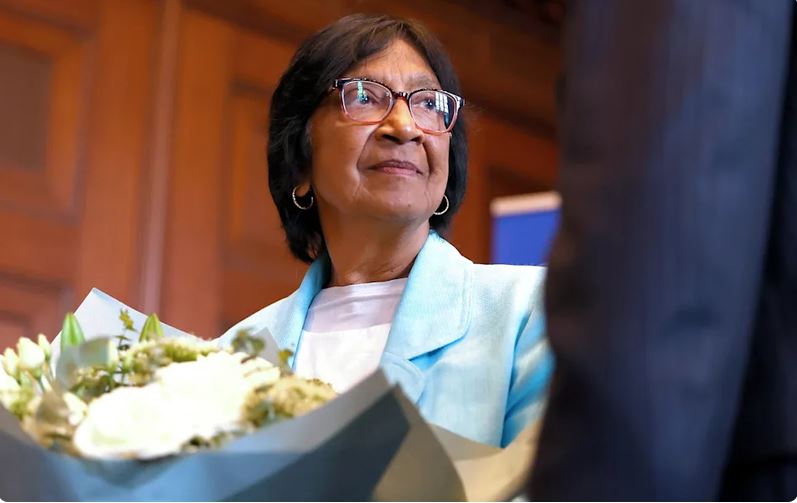
South African jurist Navi Pillay, awarded this year's Nobel Peace Prize, denounced the international community's inaction regarding the war in Gaza and demanded that countries defend international justice and execute arrest warrants issued by the International Criminal Court (ICC).
In an interview with Radio France Internationale (RFI) broadcast on Wednesday, Pillay maintained that the international community possesses the tools to intervene but has failed to use them in Gaza due, in her view, to United States support for Israel.
“I am disappointed by the failure of the international community,” confessed Pillay, former United Nations High Commissioner for Human Rights and former president of the International Criminal Tribunal for Rwanda.
The jurist chaired an independent UN commission of inquiry that concluded in a report published in 2025 that Israel had committed genocide in the Gaza Strip. Pillay maintained that their findings were based on evidence and a methodology similar to that of a court, although the commission lacked judicial jurisdiction.
The investigation examined on-the-ground testimonies and statements from senior Israeli officials, including Prime Minister Benjamin Netanyahu and then-Defense Minister Yoav Gallant, finding evidence of the specific intent required to determine the existence of genocide, she stated.
Pillay was equally firm in describing the imposition of U.S. sanctions against the ICC—announced hours after her award was made public—as “illegal and completely unacceptable.”
She affirmed that these measures seek to prevent the court from fulfilling its mandate to investigate and prosecute severe crimes. The ICC has been subject to pressure over its investigations and arrest warrants issued against Netanyahu and Gallant for alleged war crimes and crimes against humanity in Gaza.
The Nobel Peace laureate also called on all state parties to the Rome Statute to fulfill their obligations to arrest and surrender suspects wanted by the tribunal.
“International justice and the fight against impunity for grave crimes must not be selective,” she said.
In this regard, she criticized the use of the veto power in the UN Security Council and advocated for a reform of the body to reduce the ability of major powers to protect themselves and their allies.
“Do More to Prevent Genocide”
Pillay, who chaired the tribunal responsible for judging crimes committed during the 1994 Rwandan genocide, stated that the international community must act before mass killings occur.
“The international community should do more to prevent genocide,” she stated, recalling that approximately 800,000 people were killed during the Rwandan genocide in around 100 days, and emphasizing that the presence of the United Nations and peacekeepers failed to prevent the tragedy.
The South African also highlighted that international sanctions and boycotts contributed to the end of apartheid in her country, maintaining that such mechanisms can be utilized to respond to other crises.
Gender Equality and the Future of the UN
Among her current priorities, Pillay cited the fight against violence against women and gender inequality, as well as support for the initiative to have a woman serve as Secretary-General of the United Nations for the first time.
“In almost 100 years of history we have never had a female Secretary-General. And why? There is no other explanation than gender discrimination,” she concluded.
Add new comment