
Mexico, Stronger Than Ever: How Trump’s Pressure Backfired
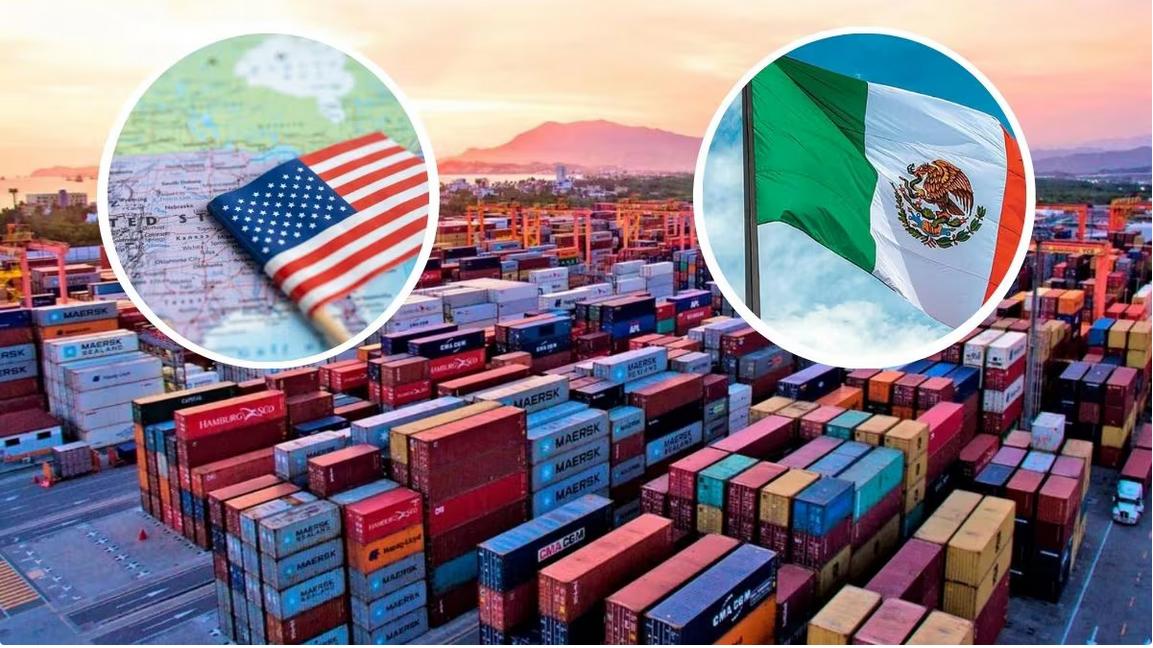
There is a supreme, almost theatrical irony coursing through the halls of the White House at this precise moment. Donald Trump returned to power with the promise of making America great again through the most virulent protectionism, wielding it like a magic hammer against those who dissent. However, what the United States fails to comprehend, due to its imperial arrogance, is that each blow it strikes against global trade is not subduing Mexico; paradoxically, it is strengthening it.
Mexico is not merely resisting the Trump storm; it is reorganizing to fortify its position within global capitalism and reducing its historical structural dependence on the U.S. market in a way that Washington has yet to process. Forget the border crisis and the avocado dispute. What is at stake is the reconfiguration of the value chain across North America.
Mexico has deployed a strategy of three simultaneous moves. First, it has mathematically positioned itself as the sole viable beneficiary of the U.S.-declared holy war against the People's Republic of China. Second, and most brilliantly, it has begun to copy Trump’s own tariff blueprint but applied against Asia to force those powers to convert physical capital within Mexican territory. Third, it has initiated a silent but lethal diversification of its energy and commercial partners, opening valves toward Europe and the Pacific that were previously welded shut by exclusive dependence on Uncle Sam.
For Richard Wolff, a Marxist economist, the United States remains the sun around which the Mexican economy orbits. That is undeniable. But the orbit has changed. Mexico is ceasing to be a passive satellite and is transforming into a celestial body capable of altering the tides in Washington. To understand the depth of this shift, we must immerse ourselves in the toxic context of total trade war under the Trump era.
The Mexican economy still depends on the United States. The threat of 25% tariffs was a bluff to turn Mexico into its border wall and anti-narcotics gendarme. Trump’s logic is linear and brutal, threatening to destroy the U.S.-Mexico-Canada trade agreement and raising tariffs on Chinese, Indian, and Vietnamese products to dismantle dependence on those Asian markets.
In response, Mexico is diversifying its trade. This year, China lowered its tariffs on products Mexico needs. In short, it is high-level geopolitics: Mexico is increasing trade with China, exploring options in Europe, and managing trade blocs in South America, all while diminishing its dependence on Washington.
By 2025, Mexican President Claudia Sheinbaum was already exposing the fraud behind the tariffs Trump imposed without congressional approval, as constitutionally required. She pointed out that the trade deficiencies were the doing of U.S. corporations themselves and proposed solutions to reduce the trade deficit without harming the Mexican economy or workers in either country. Her proposals included increasing purchases of U.S. agricultural goods, facilitating U.S. investments in Mexico's energy industry to export electricity northward, expanding temporary worker programs to later legalize labor migration flows, and developing economic zones on the border where both governments could leverage productive capacity.
"These proposals recognize the structural problems of the United States," Wolff notes. The U.S. consumes more than it produces, saves less than it invests, and suffers a chronic trade deficit that can only be balanced by foreign capital inflows—a contradiction managed through the balance of payments. What Sheinbaum is explicitly stating is that if the U.S. truly wants to reduce its trade deficit, it must address its own economic imbalances: increase its national savings rate, reduce its fiscal deficit, or genuinely boost productive capacity in domestic sectors.
Tariffs do not resolve these issues. They merely redistribute who pays for the deficit, shifting the cost from corporations to consumers and generating fiscal revenue that could, in theory, help reduce the federal deficit. However, in practice, the Trump administration is using these funds to finance other corporate tax cuts in a zero-sum game where American workers end up subsidizing American corporations through a consumption tax disguised as national security policy.
By addressing the structural causes of the trade deficit, Mexico exposes that Trump is not solving what he claims to be solving. His real objective is fiscal collection, not the correction of trade imbalances. Consequently, decisions intended to weaken can, in certain contexts, accelerate transformation and growth. This explains why Mexico now occupies a more robust position on the global stage, having consolidated its role as a strategic North American partner, attracted investment, and reinforced key sectors like manufacturing, exports, and logistics. These adjustments have elevated its resilience to external shocks and granted it greater regional weight.
Translated by Sergio A. Paneque Díaz / CubaSí Translation Staff
Add new comment