
International Book Day and William Shakespeare
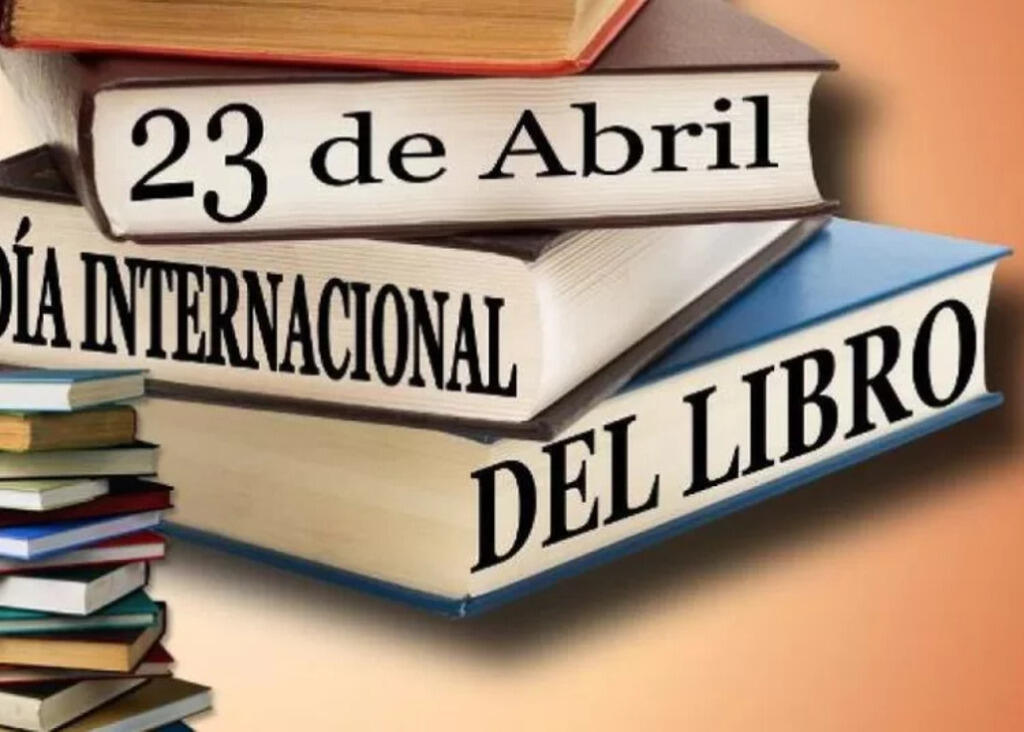
Imagen: tomada de Prensa Latina
The world commemorates today International Book and Copyright Day, an observance adopted by UNESCO to encourage reading, the publishing industry, and the protection of intellectual property.
This is a symbolic date for universal literature; on this day in 1616, greats such as William Shakespeare, Garcilaso de la Vega, and Miguel de Cervantes passed away—though the latter actually died on the 22nd and was buried on April 23.
Today also marks the 462nd anniversary of the birth of Shakespeare—only the record of his baptism three days later remains—who is considered by many critics the greatest writer and playwright of all time.
Born in Stratford-upon-Avon, he grew up in a middle-class family without a university education, a fact that would later fuel debates regarding the authorship of his texts. At 18, he married Anne Hathaway, eight years his senior, and had three children: Susanna and twins Hamnet and Judith. After a period without documentation—the so-called "lost years"—he reappeared in London around 1590 as an actor and playwright.
He soon became a partner in the Lord Chamberlain’s Men, a company that performed before Queen Elizabeth I and later James I. Under the reign of the latter, the company was renamed the King’s Men, and Shakespeare amassed a significant fortune. In 1599, the Globe Theatre opened, where the majority of his masterpieces were performed.
His body of work includes 37 plays, 154 sonnets, and two long narrative poems: Venus and Adonis and The Rape of Lucrece.
In his tragedies, he reached the pinnacle of psychological exploration: Hamlet reflects on doubt and revenge; Othello on pathological jealousy; King Lear on filial ingratitude and madness; and Macbeth on unchecked ambition.
His comedies, such as A Midsummer Night's Dream, Much Ado About Nothing, and The Taming of the Shrew, combine romantic entanglements, disguises, and a humor that never tires. His historical dramas—Richard III, Henry V—construct a complex vision of legitimate and tyrannical power.
He also wrote works of a melancholy or problematic tone, such as Troilus and Cressida or Measure for Measure, which defy classical categories. In his final years, he created tragic romances—Cymbeline, The Winter's Tale, The Tempest—where reconciliation and forgiveness dominate. The Tempest, likely the last play he wrote alone, has been interpreted as his farewell to the stage.
He died on April 23, 1616, leaving an invaluable influence on world literature: he invented or popularized more than 1,700 words and hundreds of phrases still in use today ("to be or not to be", "the end justifies the means").
His plots were rewritten by Goethe, Dostoevsky, Faulkner, and Borges. Chekhov, Ibsen, and Miller also drew from his method of constructing contradictory characters. In cinema, from Kurosawa (Throne of Blood as a version of Macbeth) to Vishal Bhardwaj (Omkara as Othello), his works have been adapted to all cultures. Latin American literature has reinterpreted him with fervor: Rulfo, Vargas Llosa, and Cortázar maintained a dialogue with his work.
In contemporary theater, directors like Peter Brook and Declan Donnellan continue to reread him with radical freedom. His ability to portray universal passions—love, jealousy, ambition, grief—renders him timeless.
No author has been translated, performed, or quoted more times in the history of humanity. Shakespeare is not just an English classic: he is a common heritage of the universal literary conscience. To read him is to witness the clearest and most ruthless mirror of our nature. For this reason, four centuries later, he remains the writer who best explains us to ourselves.
Add new comment