
Geopolitics: Why Does the Old World Refuse to Die?
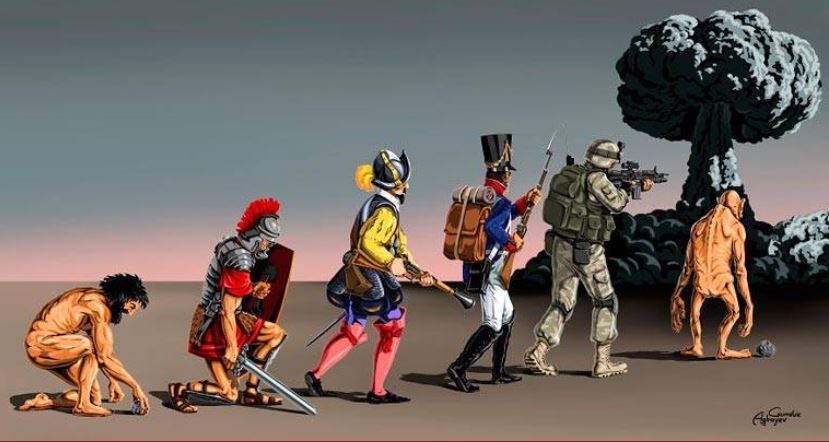
Russia has just signed a provision that allows its military to project power globally if there are threats to the security of its citizens. This means that Moscow can have military power wherever Western powers are willing to hinder or extort the flow of its trade. In recent weeks, threats from London to detain Russian oil tankers, as well as threats from Washington, have set off alarm bells around the world. Every ship on high seas is considered the territory of the nation in question, and a military coup is sufficient grounds for war. The level of confrontation from the West and Russophobia have led Putin's government to make this decision to protect its interests.
Now the question is: does Moscow have the capacity to project power across the globe? The former Soviet superpower of past decades is now a different country, with geopolitical interests, but with a different logic. Russia functions as a military counterweight to the West, a continental bulwark that prevents NATO from expanding further east and thus from fulfilling Anglo-Saxon predictions of sustaining the liberal capitalist empire without rivals. But Russia is a democratic republic, whose conservative values (religion, family, and homeland) should not be challenged by the dual power of the British and Americans. I mention the two Anglo-Saxon powers because, since World War II, it has been known that Europe's geopolitical dependence on both of them militarily is undeniable. The difference between Russians and Westerners lies in the projection of power. And that places Putin's decision in a very dangerous position. Russophobia was intended to contain the Russians, but it has had the opposite effect, pushing them beyond their borders.
And what has Russophobia been? Bringing Western cancelling culture to the geopolitical arena, wielding soft and intelligent power over an adversary.
Russia—and China—does not yet possess the level of cultural saturation that two centuries of British rule and almost one of American rule have created in the modern world. Emerging powers respond to a rhizomatic logic of power. They operate through market contamination. As Beijing expands, it’s able to replicate knowledge and transfer technologies, creating an area of influence and cooperation based on compartmentalizing politics. This means that Russia has a need to project hard power wherever its real and concrete interests are threatened. That includes the Americas. Especially since diplomacy has failed with the collapse of international treaties established after 1945. The old world order is crumbling as the United States fails to maintain its position as the sole global superpower with undeniable power.
The Russian willingness to defend its ships reminds me—though the situations are quite different—of the Lusitania incident, which led to the escalation and expansion of World War I. We recall how the attack on a ship, which resulted in injuries to Americans, brought about the end of US neutrality. These explosive scenarios represent a red line for Washington today, a Washington that has proven itself to be out of control. How far can the geopolitical rope be stretched? No one knows, but a scenario similar to the war against Iran is unthinkable with regard to Russia. Militarily, the United States would be overwhelmed by the military power of the world's leading nuclear power.
A scenario of World War III has unpredictable consequences, even the end of life on the planet. But that's precisely what liberal elites are playing on, pushing tensions to the brink of explosion. The wisdom of the old world no longer exists, because, as it crumbles, it has lost its purpose. Its rationality is dead or dysfunctional; it's an empty shell that only occasionally resonates within the outdated institutions of the international legal system. Russia has done nothing wrong in declaring this disposition; however, we should expect Western contraventions and that tensions will continue to escalate. One of the issues that demonstrates the bipartisan nature of American foreign policy lies in its treatment of Russia. The same mistakes are being made by both supposedly polarized factions. There are no nuances, no change of course, and meanwhile, the world pays the price for an Anglo-Saxon power that can no longer maintain its hegemony in this second quarter of a century, a period that already underscores the need for a new social global contract..
We still don't know what might happen in the coming years as the power of the United States declines. Perhaps a rational approach will be reached and humanity will avoid disaster, or perhaps not. The level of toxicity in the West has reached unprecedented levels. Hatred of migrants, racism, exclusionary rhetoric, and the dismantling of the welfare state point toward a dissolving logic. The world is heading toward the elimination of liberal gains and the imposition of pragmatic agendas based on hierarchical privilege. It’s a post-liberal world. The proposal being pursued by JD Vance is precisely that: to establish a new pact by continuing Trump's policies in his person. And the issue of immigration is just the tip of the iceberg of a total transformation of society.
While everything is built on the interests of the elites and the word "democracy" loses weight and meaning, the global pact weakens, and conflicts may erupt once again. Humanity requires a new code capable of rescuing the best of the old world and recreating a new world of agreements. Otherwise, we are on the brink of the abyss. The liberal universe, with its crises and clashes between elites and the people, is exporting its crisis, making others foot the bill. In fact, wars operate according to this logic; they are waged to seek resources without the toll of commercial competition and thus lower production costs. To what extent is this viable in the long term?
Post-liberalism has brought liberalism to its breaking point, and beyond this point, a coherent class struggle is not visible within the Western world. Alienated masses engaged in culture wars, polarization, senseless hatred, invented identities, a cult of the individual in its most mediocre form, declining birth rates and plans for family and growth, and the destruction of meritocracy, science, reason, and social mobility. Everything weighs heavily, everything has a consequence in the decline of a world that refuses to take its last breath.
Translated by Amilkal Labañino / CubaSí Translation Staff
Add new comment