
Galeano and a Memory of the Fire That Still Burns

Continental memory pauses every April 13th before the shelf of burning books, where words not only narrate, but breathe.
Eleven years after that definitive silence in Montevideo, the figure of Eduardo Galeano emerges not as a statue, but as a fire that still needs to be fed.
His passing in 2015 left a void in Latin American chronicles, but his style—that unclassifiable hybrid of essay, poetry, and journalism—remains a compass for those attempting to decipher this "realm of paradoxes" that is Latin America.
Galeano's mastery lay not in length, but in his capacity for synthesis, in that art of capturing the entire universe in the reflection of a dewdrop. He was a collector of "minimal stories," convinced that great changes are born from the small gestures of anonymous people.
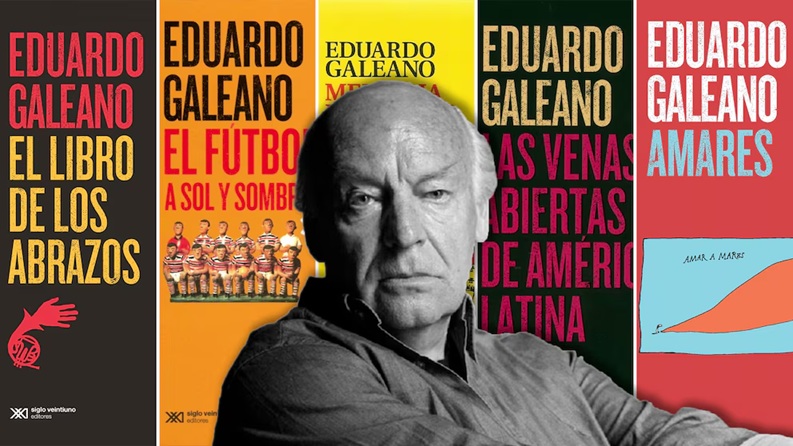
His work is an emotional map that ranges from outrage at colonial plunder to the most naive celebration of a last-minute goal.
Each of his texts embodied almost an act of civil disobedience in the face of injustice. He never accepted the rigid boundaries between literary genres, because for him, reality was too complex to be confined under a single label.
Galeano wrote like someone weaving a tapestry, joining threads of historical data with fibers of popular mythology, achieving a prose that, although laden with hard facts and necessary denunciations, never lost its warmth and sense of wonder.
Seeing the Invisible
That gift for seeing what others ignore transformed texts like *The Book of Embraces* into manuals of spiritual resistance. In it, Galeano demonstrated that tenderness can be a political tool as powerful as the most incendiary of speeches.
His language is grounded in the precision of the right word, the one that strikes and caresses at the same time. His narrative, as the newspaper *El País* noted, managed to transform official history into a living counter-history, rescuing the perennially vanquished from oblivion.
On each anniversary, rereading his trilogy *Memory of Fire* becomes almost obligatory to understand that the past is not a museum, but a root. Galeano understood that to know where we are going, it’s imperative to recognize what we are made of.
Intellectual honesty was his hallmark, which marked all his work and is particularly remembered in texts such as *Open Veins of Latin America*, a dialogue with the reality of a continent that still bleeds from its open veins.
It’s difficult to speak of this chronicler without mentioning his passion for football, that "religion without atheists" which he described with enviable lucidity in *Soccer in Sun and Shadow*. For Galeano, the stadium was a mirror of society, a place where the greatest glories and the lowest miseries of humankind.
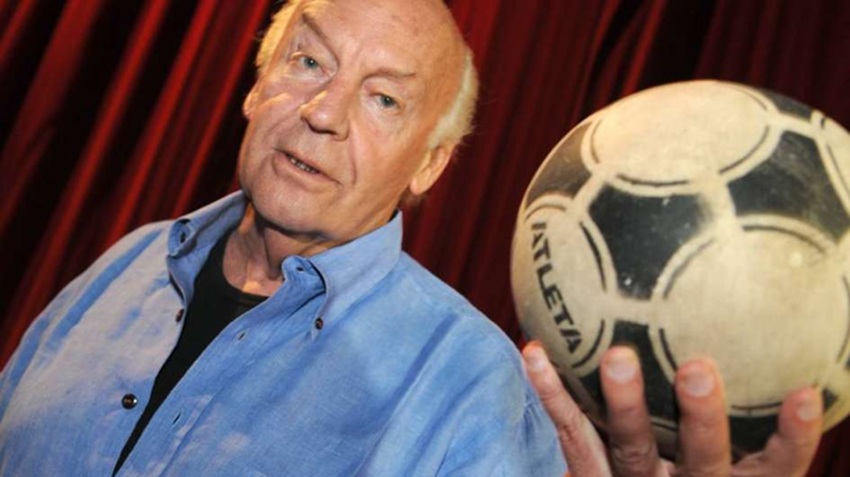
Thus, his approach transformed sports literature into a first-rate anthropological analysis, granting the ball a literary dignity that few have dared to claim.
This April 13th, the anniversary of his death invites us not to melancholy, but to open windows. Because his absence is felt in every injustice that goes unreported, in everyday beauty that no one stops to name.
However, as long as there are "sentipensantes"—a term he borrowed from Colombian fishermen to define those who do not separate reason from emotion—Eduardo Galeano's prose will continue to be the necessary fuel to keep the heart of Latin America burning.
Translated by Amilkal Labañino / CubaSí Translation Staff
Add new comment