
Deputy Minister of Public Health: The Blockade Impacts Every Level of Medical Care in Cuba
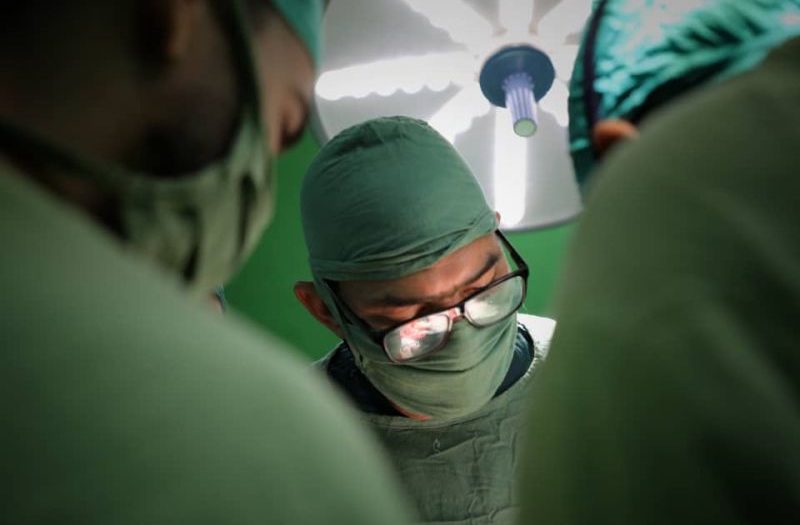
Más de 100 000 pacientes esperan por una cirugía
The Deputy Minister of Public Health, Dr. Carilda Peña García, stated Tuesday that the intensification of the U.S. blockade against Cuba, especially following the executive orders adopted by Donald Trump's administration in 2026, has aggravated the effects that the National Health System has faced for decades.
Speaking on the television program Mesa Redonda, the official noted that between March 2024 and February 2025, the sector's economic losses exceeded $288 million. That figure is part of the more than $4.183 billion accumulated by Cuba's national health system over more than six decades as a consequence of the U.S. blockade.
"These are figures that translate into hospitals without resources, canceled consultations, and treatments that do not reach those who need them most," she said.
According to her explanation, the limitations directly impact the application of medical protocols at different care levels. This affects the follow-up of patients with chronic diseases, diagnostic studies, specialized treatments, and rehabilitation processes.
"There is an impact on the medical protocols that are executed, which are approved for medical care at the primary, secondary, and tertiary levels, and the population feels it," she assured.
Numerous patients with chronic diseases today face difficulties in fully completing the care processes they require.
"Chronic patients have follow-up consultations, diagnostic studies, and rehabilitation processes. Today that is not possible for all our patients. Those treatments, which could be prolonged for a better quality of life, cannot be provided today," she lamented.
The official also referred to effects on the network of family doctor and nurse offices.
"It is evident that we will not be able to fulfill the medical care plan proposed for this semester," she admitted.
Among the main causes, she mentioned power outages, transportation problems, and difficulties in guaranteeing the transfer of supplies and basic resources to communities.
More than 100,000 patients await surgery
One of the most sensitive topics addressed during the program was the situation of surgical waiting lists. The deputy minister reported that as of the end of last week, 95,555 patients remained pending general surgery, while another 5,152 were waiting for oncological interventions.
"We really cannot say we are at zero because enormous efforts are being made, but all these patients are waiting for surgery," she commented.
She also acknowledged the human impact of this situation: "If I am sick and need surgery, I am first in line. It is a priority. It attacks the person's quality of life. It is truly desperate to know that we need access to a treatment and cannot get it."
Challenges in guaranteeing hemodialysis
Another particularly affected program is care for patients with chronic kidney failure. Currently, 2,888 Cubans receive hemodialysis treatment, a therapy highly dependent on supplies, water, and specialized equipment.
The deputy minister explained that one of the measures adopted to sustain the service has been increasing the reuse of dialyzers. However, she clarified that this is a complex procedure requiring additional resources and high technical preparation.
"That might sound easy, but it requires personnel, resources for decontamination and disinfection," she noted.
Added to supply limitations are effects caused by power outages and difficulties with water supply, essential elements for guaranteeing the operation of hemodialysis units.
According to Peña García, this situation has forced extraordinary measures to ensure treatment continuity. In some cases, it has even been necessary to hospitalize patients who live far from healthcare centers and lack transportation to travel regularly.
Vaccines and prevention programs under pressure
The deputy minister warned about the risks facing the national immunization program, considered one of the main achievements of Cuban public health. She recalled that thanks to systematic vaccination, the country has eliminated or kept under control numerous transmissible diseases.
"We all know that in Cuba there is a group of diseases that have been eliminated and another group that is controlled, and our vaccines play a role there," she stated.
Nevertheless, she explained that restrictions derived from the blockade increasingly hinder the acquisition of raw materials, equipment, and financial resources needed to sustain national vaccine production.
"To produce in Cuba, you need raw materials. To produce in Cuba, the industry needs energy, needs water, and needs workers," she noted.
Added to these difficulties are obstacles to making international payments and pressures exerted on suppliers and financial entities.
Referring to the complexity of guaranteeing access to these supplies, she summarized: "If the money doesn't jingle in the piggy bank, the vaccine isn't there."
According to her warning, these limitations jeopardize the country's ability to preserve results achieved in controlling and preventing transmissible diseases.
Limited diagnostics and infrastructure deterioration
Restrictions also impact early disease diagnosis programs and the daily functioning of health institutions.
Peña García explained that there are currently difficulties in producing various diagnostic tools developed by national industry, including essential tests for early cancer detection.
"Fecal occult blood tests, which are so important for colon cancer diagnosis, we do not have today," she reported.
The official also drew attention to problems related to hospital infrastructure and support services essential for medical care. According to her, some institutions have difficulties with elevators intended for transporting critical patients.
"It is a reality today that some of our institutions do not have elevators for critical patients," she affirmed.
Added to this are effects on laundry systems, furniture, medical equipment, and building maintenance. "It is evident that what you do not repair deteriorates," she commented.
Maternity homes and nursing homes
Economic limitations equally impact social institutions under the responsibility of the Ministry of Public Health, such as maternity homes and nursing homes.
Regarding maternity homes, the deputy minister acknowledged difficulties in guaranteeing the nutritional requirements of pregnant women staying in these centers.
"The nutrition of our pregnant women in maternity homes today is not what is really required," she expressed.
Likewise, she noted that nursing homes face limitations in developing activities aimed at preserving the cognitive and functional capacities of older adults.
According to her explanation, these deficiencies affect the quality of life of an increasingly aging population. "All of this works against the quality of life of an evidently aging population," she stated.
A "reengineering" to sustain services
Faced with this scenario, Peña García assured that the sector has had to undertake a profound reorganization of its processes and resources, which she defined as a true "reengineering of the National Health System."
"We constantly have to be finding solutions to emerging problems," she explained.
The deputy minister emphasized that all decisions adopted start from a fundamental premise: preserving the existing service network.
"These reengineering measures have a fundamental premise: not to close any unit," she stated. In that sense, she highlighted that "we have not closed any hospital or any polyclinic."
The reorganization includes the regionalization of certain services, optimization of available technologies, strengthening of natural and traditional medicine, and progressive development of telemedicine.
Regarding the latter modality, she noted that it allows expanding access to specialized consultations despite existing limitations.
"Cuban doctors learned by touching the patient. But today this possibility of exchanging knowledge is a reality," she noted.
Solidarity, cooperation, and worker commitment
The deputy minister highlighted support received from local governments, agencies, non-state management forms, cooperatives, and agricultural producers to sustain the functioning of health services.
Among the contributions, she mentioned support for health personnel transportation, donations of photovoltaic systems, and food supplies destined for hospitals, maternity homes, and nursing homes.
"Sometimes anonymously, peasants, producers, and cooperatives have taken charge of a group of necessary nutrients," she acknowledged.
Peña García also highlighted the response of sector workers, who have assumed multiple organizational transformations to guarantee the continuity of medical care.
"Our sector workers, every time we have proposed an adjustment, a movement, or a new way of facing service provision, have done so with interest, courage, and by offering solutions," she stated.
Summer alert and epidemiological risk
On Tuesday's Mesa Redonda, the deputy minister warned about epidemiological risks associated with the summer season, especially the seasonal increase in vector-borne diseases such as dengue and other arboviruses.
She also drew attention to various environmental problems that favor the proliferation of these diseases, including solid waste accumulation and water leaks.
According to her explanation, energy difficulties and changes in coexistence dynamics derived from the current situation may also increase health risks.
"Today the electricity problem forces us to find other ways of interacting, and that places us at high risk for disease transmission," she reflected.
The deputy minister updated the regional and national epidemiological scenario, with emphasis on the circulation of all four dengue serotypes, the reemergence of yellow fever, concerning hantavirus behavior, and the Ebola outbreak in Africa.
"Today the region has dengue. Dengue is an endemic disease in our country," the deputy minister stated, noting that although according to WHO and PAHO it should not be an epidemic year for the region, all four virus serotypes are circulating.
"If all four serotypes are circulating, evidently when one becomes predominant in our health picture, we could have localized outbreaks of the disease. If we do not take a group of actions, we could have an epidemic," she commented.
Regarding chikungunya, the deputy minister noted that Cuba has already experienced what the region is currently seeing: an increase in cases during the first half of the year, with epidemics that contradict historical behavior.
"There is one pathology we must watch very, very, very carefully: yellow fever," Peña García warned. She explained that it is a "very lethal" disease that, since 2024, has shown a reemergence in non-forested areas, with outbreaks and deaths in four countries with which Cuba maintains exchange: Bolivia, Peru, Brazil, and Venezuela.
Regarding hantavirus, the deputy minister recalled that following the cruise ship situation, the disease returned to the center of surveillance. Although the main rodent vector has not been detected in Cuba, PAHO and WHO report 240 cases worldwide so far in 2026, with 61 deaths (25% lethality) and active cases in 22 countries.
"To date we have not found, we have not detected the vector of this disease, the rodent that is its vector of choice," she clarified, though she emphasized that in the cruise ship case there was a different transmission method.
Dr. Peña García also referred to Ebola, a disease "Cubans know well" and against which, she recalled, "we performed feats with our brave health professionals" several years ago.
"Today this outbreak is the 17th outbreak under study. It has a total of 555 confirmed cases, 93 deaths, a lethality of 17%."
The case diagnosed in the Democratic Republic of Congo, added to the presence of the virus in Uganda and an imported case in Germany, have "revolutionized epidemiological surveillance once again."
Cuba activates surveillance systems at ports, airports, and primary care
Faced with this complex international panorama, the deputy minister reported that human resources have been deployed at ports, airports, and marinas for early detection of travelers from risk areas.
"Our system, which we have maintained since COVID, has allowed us to date — after this alert — to have identified four people who have somehow passed near the location. These people are being monitored," she detailed.
She also warned that primary health care is activated and called on the population to come forward with any symptoms: "At any sign or symptom of these diseases, go immediately to any doctor."
Domestic situation: dengue under control
Domestically, the deputy minister explained that acute diarrheal disease is behaving "normally for the period," though she drew attention to children under one year and the elderly, "who with just one diarrheal episode without adequate hydration can worsen and die."
"Regarding acute respiratory infections, we are far below previous years," she assured, though she insisted on maintaining vigilance given the circulation of multiple viruses.
Regarding unspecific febrile syndrome —the entry point to the epidemiological surveillance system— she specified that Cuba shows an endemic corridor in the safety and success zone, with a slight increase from weeks 19 and 20.
"We are not in an epidemic, we are not in an outbreak, we are not in a spike. There are two provinces, Santiago and Guantánamo, hot zones, with localized transmission. But Cuba will always have dengue cases because it is an endemic disease."
Currently, Guantánamo is the only province in the alarm zone within the endemic corridor. The rest of the country, and the nation as a whole, remains in safety, with a rate of suspected dengue cases "very low, in the success zone."
"We should not have a chikungunya epidemic," she concluded. "The population already knows the symptoms and differentiates them. We can have localized outbreaks because the virus is circulating, but we remain on surveillance."
Cuba maintains vector control efforts
The national director of Surveillance and Vector Control, Dr. Madelaine Rivera Sánchez, reported that despite economic difficulties and the intensification of the blockade, the country has sufficient larvicide and insecticide in all provinces to face the period of highest incidence of the Aedes aegypti mosquito, transmitter of dengue, Zika, and chikungunya. However, she acknowledged that indoor adulticide treatment —known as fumigation— has been affected by fuel shortages in several territories.
"As the deputy minister has already explained, our main problem is being able to lower the infestation levels of the dengue and Zika mosquito, which is the main transmitter," the specialist began, referring to Aedes aegypti.
The director explained that as of week 20 and during May, the arbovirus response plan is readjusted, establishing a level of control actions to reach the most complex period, which is not May or June, but "August, September, October."
"The most complex period — also due to vacations, heat, humidity — there are a series of influencing factors. We take a set of actions that allow us to reach that period in a somewhat more favorable situation," she detailed.
As the plan's first measure, she noted the need to reach all of the country's most complex urban areas with larvicide. A risk stratification by territory allows prioritizing the city blocks where this larvicide cannot be missing.
"We also decided in May-June to be able to reach all homes in the country with larvicide."
She specified that one ton of larvicide costs $1,556 and that Cuba uses approximately 900 tons per year. "Despite the economic difficulties and the country's situation, we have sufficient larvicide in all provinces and we have sufficient insecticide," she affirmed.
Larvicide, she explained, allows controlling the larval phase of the mosquito, "which is the easiest to control." It remains for three months in water containers and has even greater durability, so she asked the population to keep it in containers and not throw it away when changing water.
The national director revealed a striking figure: 67% of mosquito foci are detected in water storage containers. Of these, 47% are found in low tanks, those at ground level inside or outside homes.
"Elevated tanks also become mosquito-generating foci," she warned, and called on the population to eliminate all possible breeding sites: "Any little can we see on the street, we turn it over, because if it contains water after rain, that is one fewer larva, one fewer mosquito that reaches adulthood. And that adult mosquito is the dangerous one."
While larvicide is guaranteed, indoor adulticide treatment —what the population knows as "fumigation" — faces serious limitations.
"We planned to be able to reach all urban areas and the most complex city blocks in the country at least twice during May or June, since we have the equipment —the bazookas— and we have the insecticide, but it has not been possible to reach everywhere due to the situation we know about regarding fuel."
The official detailed that provinces such as Havana, Granma, and Pinar del Río have been able to maintain, to some extent, a level of equipment carrying out treatments in risk blocks or areas with febrile case movement. "Practically the rest of the country's territories have not been able to do so," she admitted.
Rivera Sánchez evidenced the impact of the blockade's intensification: one ton of larvicide costs $1,556, but one ton of insecticide costs $13,200. Additionally, each bazooka —the heavy fumigation equipment— has a value of $1,300.
"We use around 60 to 80 tons of insecticide per year to control a complex situation like the one we had last year with chikungunya and the year before with oropouche," she noted.
Despite these costs, she assured that today the country has all the resources to face the situation, and she highlighted the support of national industry, which has produced a highly effective insecticide for treatments in hospitals and priority centers, currently being distributed.
Amid the limitations, the director announced an innovation that could reduce costs and minimize environmental impact. Inspired by the president's and the Ministry of Public Health's indications, pilot studies are being conducted in all provinces to adapt the bazookas and substitute petroleum with water.
"We are doing this in pilot studies today in all provinces of the country. The intention is to be able to reach the entire universe. Tests so far have shown very high effectiveness, with very good acceptance by the population because there is no smoke, no oil on the floor, and it also reduces environmental pollution."
She added that new bazookas arriving this year are expected to already include this attachment.
Despite the difficulties —the blockade, lack of fuel, economic limitations— Dr. Rivera Sánchez insisted that the vector control team has not stopped.
"Despite all this situation and despite the fuel, we do not stop. We are seeking, as part of the president's and the Ministry of Health's indications, the incorporation of innovations that allow cost reduction."
Health promotion in times of blockade: self-care and hygiene as shields against an adverse context
The director of the National Unit for Health Promotion and Disease Prevention, Dr. Pablo Feal Cañizares, called Tuesday on Mesa Redonda to strengthen self-responsibility and self-care in Cuban homes as a fundamental tool to protect health, given a context marked by heat, rain, the socioeconomic crisis, blackouts, and the intensification of the blockade.
"We are daily suffering the consequences of being on an island, accustomed to this heat, rain, future cyclones that may appear, in addition to the problems of the current socioeconomic situation and the environmental situation this generates," the specialist stated.
But faced with this adverse reality, he emphasized, "we also have to protect our health." He explained that health is not only the result of all those external conditions but that "self-responsibility and self-care that people and families can contribute, despite this unfavorable context, have a lot to do with it."
"One of the main basic elements we should be working on is a key word: hygiene."
The director insisted that although there are environmental and structural factors beyond the family's control, each person can act on their home. "If we manage to have adequate hygiene in our homes, we are keeping those environmental problems outside," he stated.
Specifically, he pointed to two essential aspects of daily life closely linked to the diseases mentioned by the deputy minister —acute diarrheal diseases and illnesses affecting young children and older adults—: water and food.
Regarding water, Dr. Feal Cañizares was clear: one must achieve safe water. He acknowledged that water arriving at homes is chlorinated but recommended additional measures.
"If we have the possibility of purchasing hypochlorite at the pharmacy, because it is available, because we can obtain it, or we have conditions or possibilities to boil it if there is no other option. These are measures that at home, with the resources at hand, we can implement."
The specialist addressed one of the most sensitive problems for the current Cuban population: blackouts and the difficulty of preserving food.
"We suffer from blackouts, the situation of cooking. Therefore, cooking an adequate amount of food so that it can be properly preserved and used as quickly as possible would prevent food from spoiling and then affecting people's health."
In line with what Dr. Madelaine Rivera Sánchez stated, Dr. Feal insisted on the importance of orderly environments and the family self-check.
"Not only hygiene, but also keeping environments orderly," he explained. "If inside the home we have no mosquito breeding sites, then it is less likely that the mosquito will bite us and transmit a disease. That depends on the family, on the self-check functioning."
Although acute respiratory infections are not a problem today, the director warned that "they could accompany us at some point during the summer." Therefore, he called for returning to lessons learned during the COVID-19 pandemic.
"If we have respiratory symptoms, do not go out on the street, do not go to places where people gather, use a mask if we need to go out. These are elements we could continue applying at this time in life."
The doctor also warned about accidents, "one of the most frequent health problems in summer," related to beaches, rivers, cars, and motorcycles.
"Alcohol, tobacco consumption, and drugs in general are phenomena that must also be addressed," he warned. He listed concrete measures: "Helmet use for those riding motorcycles, seat belts, can prevent these events."
Finally, Dr. Feal Cañizares referred to summer dangers associated with the sun: intense solar radiation and dehydration.
"Staying hydrated, not being in the sun during certain hours, are also measures the population can take when going to the beach, rivers, hiking or walking, especially during peak sun hours."
"We are in a difficult context," he said, "but health also depends on what we do in our home, with our hands, with our responsibility. Hygiene, order, safe water, properly preserved food, avoiding mosquito breeding sites, protecting ourselves from the sun and accidents: all of this is within our reach. Let us not stop."
Add new comment