
Australian Lawmaker Loses Both Legs After Deliberate Vehicle Attack
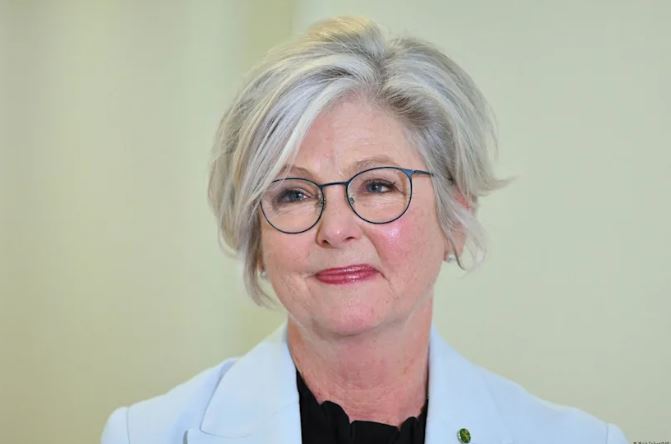
La diputada independiente australiana Helen Haines, de 65 años.Mick Tsikas/AAP Image/AP Photo/picture alliance
MELBOURNE — "We had hoped her right leg could be saved, but the surgeons had to amputate it as well," said Phil Haines, husband of independent Australian lawmaker Helen Haines, during a press appearance Wednesday (10.21.2026) outside Alfred Hospital in Melbourne, where his 65-year-old wife remains hospitalized.
Haines was gravely injured Monday when a vehicle struck her. According to testimony gathered by authorities, the driver allegedly turned around to hit her a second time, and Australian Prime Minister Anthony Albanese described the incident as a deliberate attack.
Alive and Stable
The husband said that despite the severity of her injuries, the lawmaker is alive and stable, which he considered the most important thing for the family. He also noted that, for now, both her heart and her intellectual capacity are fine, and warned that recovery will be long.
Phil Haines thanked the medical staff, emergency services, election office workers in Wangaratta in the state of Victoria (southern Australia), and neighbors who came to help her after the attack. The couple, who will celebrate their 40th wedding anniversary next month, have received numerous messages of support from Australia and other countries, he said.
Alleged Deliberate Attack
The alleged perpetrator of the attack, Brendan Nugent, 43, also appeared Wednesday before the Wangaratta Magistrates' Court on five charges, including dangerous driving causing serious injury, intentionally causing serious injury and causing damage to a Commonwealth public official, as well as cultivating and possessing cannabis.
During the hearing, his defense revealed that Nugent suffers from idiopathic transverse myelitis, a rare neurological disease affecting the spinal cord, and has suffered a concussion. However, the defense did not establish any link between these medical conditions and the acts he is accused of, nor did it state that they could have affected his ability to understand or control his actions. The accused did not request bail and must return to court on February 4.
"Devastating and Incomprehensible"
Victoria Police have not ruled out filing additional charges, including attempted murder, according to Chief Commissioner Mike Bush, who spoke at a press conference and characterized the attack as an alleged deliberate assault.
Authorities are still investigating what motivated the aggression and have not confirmed that it was related to Haines' political activity. Nugent's family said Tuesday that he had maintained a friendship with Haines for more than twenty years and described what happened as "devastating and incomprehensible."
Helen Haines, Independent Lawmaker from Rural Australia
Helen Haines built her political career on a three-decade trajectory dedicated to rural health care, advocacy for communities far from major cities, housing access, climate action and institutional transparency. One of her main initiatives was pushing for the creation of a national anti-corruption commission, established in 2023. She currently serves as vice chair of the parliamentary committee that oversees that body.
She was born in Colac, in the state of Victoria (south), and grew up on a family dairy farm. Before entering politics she worked as a nurse and midwife, and developed an academic career in public health and health research that included a doctorate in medical science from Uppsala University in Sweden. Her leap into politics came in 2019, when she won the seat of Indi, a rural constituency in northeastern Victoria, with the backing of the citizens' movement Voices for Indi.
Her independence from the major parties has allowed her to defend her constituency's priorities through agreements with different political forces, championing dialogue with local communities as the basis for designing policies that respond to the needs of rural areas.
Although Australia is one of the most urbanized countries in the world, regional and rural communities carry significant weight across its territory. According to the most recent data from the Australian Bureau of Statistics, some ten million people live in regional and remote Australia, 36.3 percent of the national population.
Add new comment