
White House: U.S. Policy Toward Cuba Unchanged
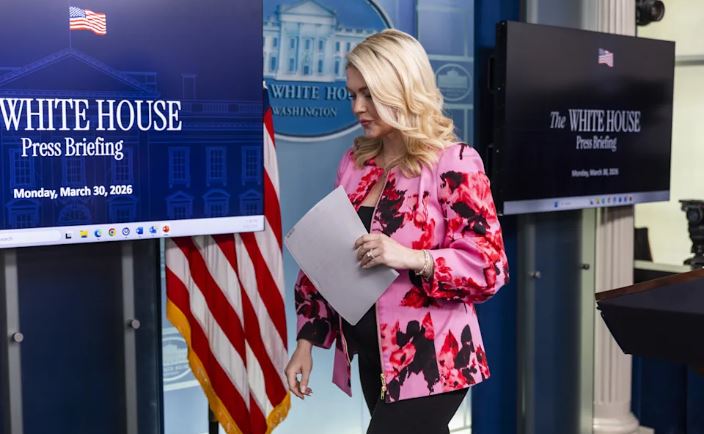
The White House clarified Monday that there has been no change to the United States' sanctions policy — known in Cuba as the blockade — toward the island, following President Donald Trump's announcement that he would permit a Russian oil tanker to enter Cuban waters.
"We continue to reserve the right to seize vessels — where legally appropriate — that are bound for Cuba and that violate United States sanctions policy," said White House Press Secretary Karoline Leavitt during her regular briefing with reporters.
"Of course," she added, "the president and the administration also reserve the right to grant exemptions from such seizures, on a case-by-case basis."
When a reporter pressed her on whether additional Russian oil tankers would be permitted to reach Cuba going forward, Leavitt sought to set the matter aside, responding: "No, that is not what I said," before reiterating that each situation "will be evaluated on a case-by-case basis" and yielding the floor to another member of the press.
The clarification came in the wake of remarks made by Trump the previous day, in which he stated that he would rather let the approaching Russian-flagged tanker pass and that he had no objections to Cuba receiving the fuel shipment.
"We have an oil tanker out there. It doesn't bother us that someone is getting a load of oil, because they have to survive," Trump said aboard Air Force One, in comments that some interpreted as a shift in posture. "If a country wants to send some oil to Cuba right now, I have no problem with that. I'd rather let it go through, whether it's Russia or another country," he added, noting that "people need heat" — despite Cuba being a tropical nation — "refrigeration, and all the other things that are needed."
On January 29, Trump signed an executive order declaring a "national emergency" with respect to Cuba, citing what Washington described as an "unusual and extraordinary threat" posed by the Caribbean nation to the United States. On that basis, his administration announced the imposition of tariffs on countries supplying oil to Cuba, alongside threats and coercive measures against any states that defied the order.
The Russian oil tanker did in fact reach Cuba. The Russian Ministry of Transport confirmed as much Monday on its official website. "The Russian tanker Anatoly Kolodkin, carrying a humanitarian cargo of 100,000 tons of crude oil, has arrived in Cuba. The vessel is at the port of Matanzas awaiting unloading," the ministry stated.
Trump downplayed criticism suggesting that allowing the tanker to proceed benefits Russian President Vladimir Putin. "If he wants to do that, and if other countries want to as well, it doesn't bother me in the least," he said.
It was Trump himself who intensified the situation on the island through his executive order. The resulting fuel shortage has made daily life even more difficult for the Cuban people, who for more than six decades have endured the effects of what stands as the longest-running economic, commercial, and financial blockade ever imposed against any nation.
Add new comment