
Trump Insists on Threatening Cuba While Tightening the Blockade
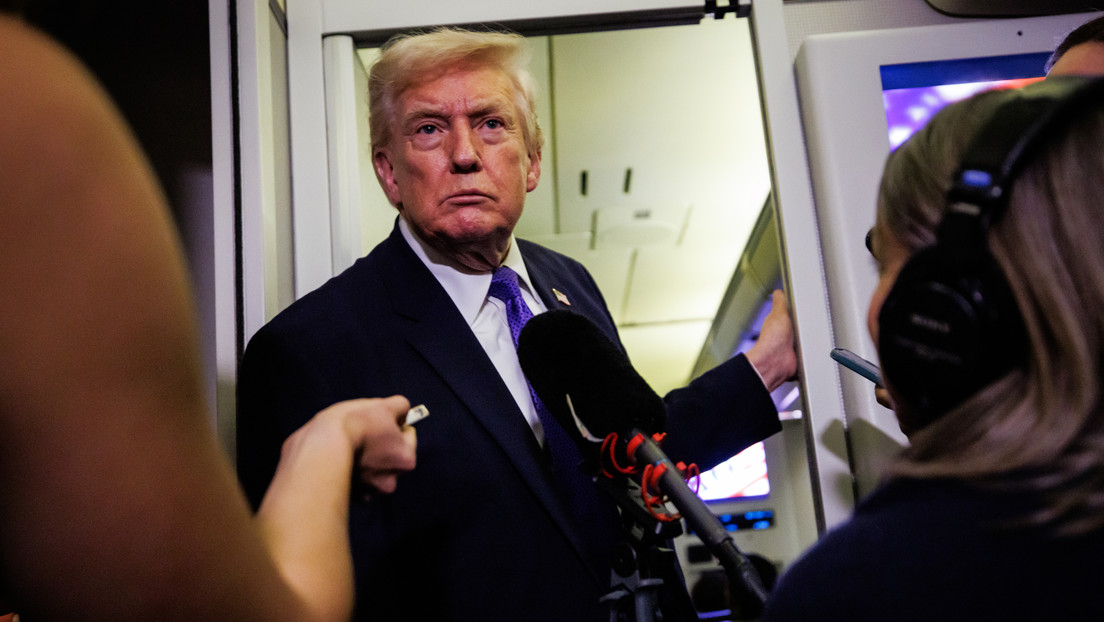
El presidente de EE.UU. vuelve a amenazar a Cuba con seguir intensificando el bloqueo si el país caribeño no se supedita a los planes de su gobierno.
Foto: Gettyimages.ru
U.S. President Donald Trump once again threatened Cuba this Monday, February 16, vowing to maintain the tightening of the blockade, while again making reference to alleged conversations he is holding with the island—communication channels that have been denied to date by Havana.
Speaking to journalists from Air Force One, the magnate stated that, in his opinion, Cuba is a "failed state," failing to mention that the country's internal situation is due to the unlawful blockade the U.S. has maintained for more than six decades and which has been tightened by Washington's policies.
Trump went so far as to say that Cuba "doesn't even have fuel for planes to take off," omitting that the difficulty with this supply is due to the executive order he signed at the end of January, which threatens a 25 percent tariff on any country that sends oil to the largest of the Antilles.
"We're talking to Cuba right now and they should absolutely reach a deal," the president warned, in clear language alluding to the imposition of the failed regime change policy that U.S. elites have orchestrated for decades against the sovereign peoples of Latin America.
Trump has been saying for weeks that he maintains negotiations with Havana—nonexistent communication channels to date, according to the Cuban government—though Havana has stated it is willing to establish dialogue without conditions and under the principles of equality and respect for sovereignty.
At the same time, the U.S. president has never shown the press any agreement detailing clear conditions of a potential negotiation, nor concrete objectives, nor has he put forward any proposal that supposedly would improve the lives of the Cuban people.
On the contrary, he adds that he will maintain measures that further aggravate the unlawful blockade, which violates the human rights of millions of Cubans.
"In the meantime, there's an embargo, there's no oil, there's no money, there's nothing," he said.
Several journalists asked the president whether it was "necessary" to carry out against Cuba a military invasion similar to the one perpetrated last January 3 against Venezuela—an illegal onslaught violating human rights and international legal framework, which ended with the kidnapping of Head of State Nicolás Maduro and his wife Cilia Flores, and in which one hundred people were killed, including military personnel and civilians.
Without referencing these violations, Trump considered that it "would not be necessary."
Brutal Suffocation
While thanking a resolution from the African Union in favor of Cuba, President Miguel Díaz-Canel ratified this Saturday, February 15, his condemnation of the U.S. "brutal attempt" to "energetically suffocate" the people of his country.
"We thank the approval by African leaders of the resolution condemning the United States blockade, which again demanded Cuba's exclusion from the unilateral List of States Sponsoring Terrorism," the president wrote on his X account.
"Its value is greater in these times of the brutal U.S. attempt to energetically suffocate all our people," he added.
Currently, Cuba is the target of an aggravated socioeconomic crisis—marked by blackouts—originating from Trump's escalation, who at the end of January signed the executive order, with which he also classifies this country as an alleged "unusual and extraordinary threat."
Nevertheless, the president's aggression has generated a wave of global solidarity from peoples, organizations, and governments unanimously clamoring for the cessation of the cruel blockade against Cuba.
This illegal siege has lasted more than six decades and has caused Cuba accumulated damages exceeding $2 trillion 103 billion 897 million dollars at current prices, with impacts amounting to $629 million monthly.
Add new comment