
SOCIAL MEDIA: Language Without Rigor
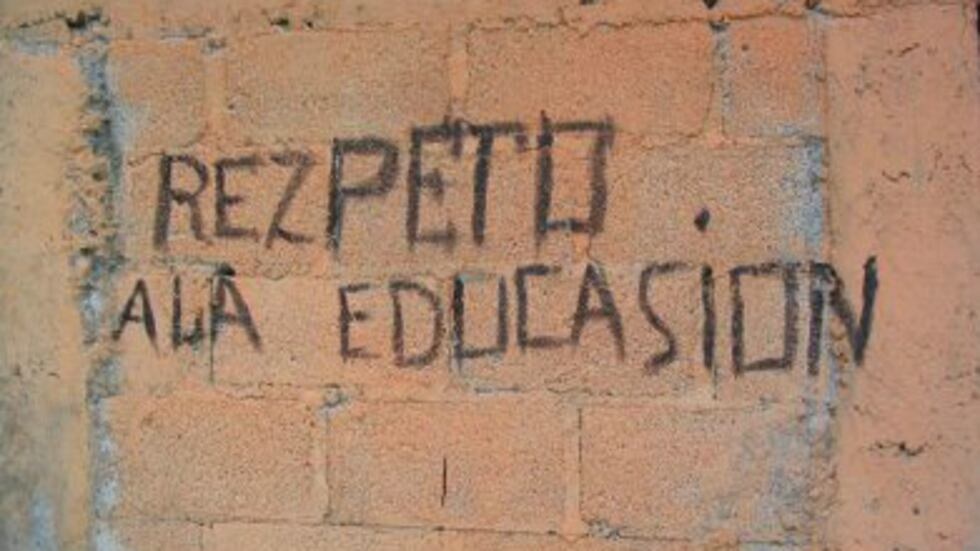
It's not new, but because it's persistent, almost globalized, we must return to the importance of good writing in the face of the broken mirror of social media because we live in an avalanche of words and we would like them to be used well. It's true, we don't have time, life moves fast, but never before has humanity written as much as it does now through text messages, posts, and comments on digital platforms that become endless threads.
In theory, this should be a sign of free expression and healthy communication; however, this democratization of writing hides an alarming phenomenon: the systematic distortion of language. We see it everywhere: in classified ads on the popular Revolico website and the countless social media pages dedicated to it, in teenage posters plastered on neighborhood walls, in the text messages we receive—in every corner of the virtual world.
It's quite unsettling that we've been observing a massive decline in writing for some time now, a widespread negligence that no longer stems from simple—if you can call it that—spelling mistakes due to ignorance or slip-up, but rather from a deliberate, almost fashionable, and in many cases, celebrated distortion.
Perhaps those who embrace this trend see it as cute, while some of us who read it cringe at the sheer absurdity of the discourse, its nonsensical and lack of grace. These aren't just errors induced by grammatical uncertainty, because there are words that are common knowledge, regardless of one's level of education, such as "que" and "quiero," which are sometimes written as "ke" and "kiero." Can anyone truly be unaware of their structure? If it's written this way, it's visually anachronistic. It's clear it's not right, that it doesn't reflect our language.
Therefore, few can argue with how it's written. And that's where the horror grows because we understand that the transformation doesn't stem from ignorance; it's premeditated.
I remember that in the early days of SMS, we shortened words, substituted sounds for letters and syllables to fit the message into a single text, used acronyms, and many other innovative approaches like writing without spaces between words. In this case, the more astute would capitalize the first letter of each word to make those surreal messages easier to read.
That's how I learned "salu2" for "saludos" (greetings), "÷Tnido" for "entretenido" (entertained), while "TQM" became popular for the well-known "te quiero mucho" (I love you so much). Among other varied and novel options. I admit that it was overused, and sometimes it was very difficult to decipher the message.

In this sense, there were numerous contributions with codes learned through practice or by agreement between sender and receiver, but not for everyone because there were different levels of proficiency, and this type of writing generally required a certain level of trust. Now it's different; the reasons are different, and the audacity is different. In the collective imagination of certain digital spaces, writing like this is associated with immediacy, even with a specific and popular aesthetic.
We consider the repeated initiative to reduce words to their most basic phonetic sound, whether for authenticity or to be a group thing, to be twisted. It's much worse when it's misspelled without any sense, like "tulla," "llo," or "voi," because writing like this can't be comfortable; it's unnatural, it requires effort, and this supposed seal of authenticity and identity they seek is illogical, as if correctness were a sign of coldness or distance.
As we can see, this phenomenon has already moved beyond the realm of familiarity, and that's the serious part. Anyone can write like that without fear of looking ridiculous, without respect for the context, while others join in, causing a massive deterioration of the language, a situation where no one cares about their writing.
We see this in many environments. We're not like the alternative commercial, where professionalism should be present, but instead, they write with chaotic syntax, a complete absence of accents and punctuation, unintelligible abbreviations, among other things that erase all clarity. The result is a careless text that conveys disinterest, distrust, and a lack of rigor, so necessary for communication, even in everyday interactions.
What's striking is that this is how most people understand it. What began driven by technical difficulties or urgency has become a perpetual, lazy habit because it's clearly no longer justified by character limits or haste; and this decline is no longer a superficial issue.
When imprecision becomes normalized, when we accept that rules are unnecessary and that good writing is "outdated," we are mutilating the language, completely impoverishing our ability to speak. It's not just that the lack of accent marks leads to confusion about verb tenses and a loss of vocabulary by shortening words; it also means losing shades, disrespecting syntax, and creating ambiguity.
This isn't a silly matter or a way of "being pretentious," as some would have us believe when we write full, well-formed sentences online. Promoting good language practices in all their forms and formats isn't elitism or outdated, much less a fight against digital evolution. Writing well ensures we are clearly understood.
Social media isn't the graveyard of spelling and grammar rules; it's not a wasteland. And even the wasteland isn't an excuse to relax communication, invent words, ignore all norms, or replicate distortions. We're not asking for academic perfection, but rather for the awareness to write responsibly, because doing it poorly isn't a sign of modernity when it's done out of inertia.
Let's not allow the most powerful social tool we have to wear down through neglect; let's not build our own contemporary Babel Tower and let's recover the pleasure of reading well-written texts, even if they are simple, because it’s not a luxury amidst the digital noise.
Translated by Amilkal Labañino / CubaSí Translation Staff
Add new comment