
Santiago Álvarez: Art and Testimony
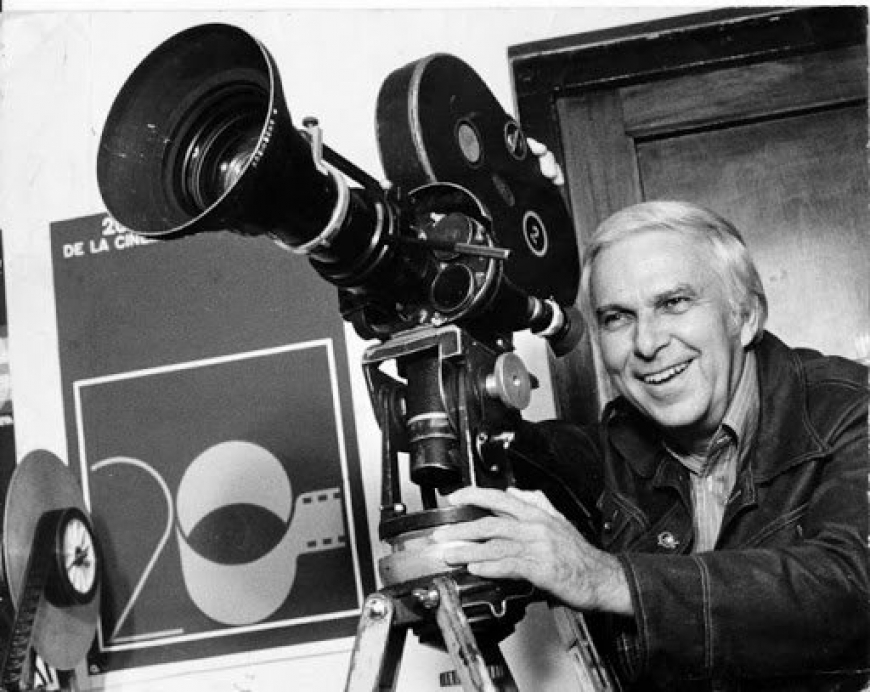
Santiago Álvarez (1919-1998) es referente imprescindible de la documentalística cubana.
With the opening of the Santiago Álvarez In Memoriam International Documentary Festival, it is fitting to revisit the legacy of one of Cuba's most emblematic filmmakers.
A single work — Now — would be sufficient to secure Álvarez a place among the great documentarians of the 20th century. Many film critics and historians regard the piece as a formal landmark; it has even been cited as a forerunner of the modern music video for its bold interplay between image and music.
Beyond any aesthetic classification, the work stood as a powerful indictment of deeply rooted racism in American society. It represented an ethical stance and a call to action that extended well beyond the realm of cinema and entered the political and social debates of its time.
That piece was no isolated achievement. Santiago Álvarez was the principal architect of one of the most singular documentary projects in the region and the world: the Noticiero ICAIC Latinoamericano.
This series of cinematic reports became an irreplaceable chronicle of its era — a vivid record of events and processes that often found no place in mainstream media outlets. It is no coincidence that this extraordinary audiovisual archive was inscribed by UNESCO in its Memory of the World program.
In the formative years of the Cuban Revolution, in war-torn Vietnam, in the communities of Latin America's most impoverished sectors, across Africa, and throughout the turbulent — and often painful — landscape of what was then called the Third World, a body of work of remarkable intensity took shape.
The goal was not merely to document events, but to interpret them through both artistic sensibility and political awareness — engaging with the spirit of the times.
Therein lies one of the keys to his enduring relevance: the effectiveness of a communicative model that resonated with the demands of an era defined by epic struggle. His work transcended the narrow conception of propaganda. There was artistry in its structure, in the way it reconstructed contexts, and in a lyricism — at times demanding — that pervaded numerous productions.
At the same time, these works functioned as documents and testimony: a perspective designed to move, motivate, and inspire.
Among the most revealing examples is the documentary Mi hermano Fidel (My Brother Fidel).
It captures a conversation between a humble peasant and the leader of a revolutionary process, Fidel Castro. The dialogue unfolds as a singular parable of historical continuity: the peasant had known José Martí and, decades later, came to meet another towering figure in national history.
The use of close-ups, the restraint of the soundtrack, and the dramatic structure of the narrative combine to produce an exemplary piece within the Cuban documentary tradition.
The ways in which journalism and documentary filmmaking are understood have evolved over time. Some of those newsreels may now read as products of another era. Yet a difficult-to-define charm endures — a mystery bound up with the creative spirit of a filmmaker who knew how to capture the intensity of his moment.
That capacity to build a legacy and project it toward future generations is one of the most notable qualities of Santiago Álvarez's work. Equally significant is the influence he exercised as a teacher and reference point for countless creators. Thanks to that collective effort and that talent, a significant portion of the audiovisual memory of his time has been preserved for history.
Translated by Sergio A. Paneque Díaz / CubaSí Translation Staff

Cartel de Now.

Fotograma de Mi hermano Fidel.
Add new comment