
Peru: How Much Longer?
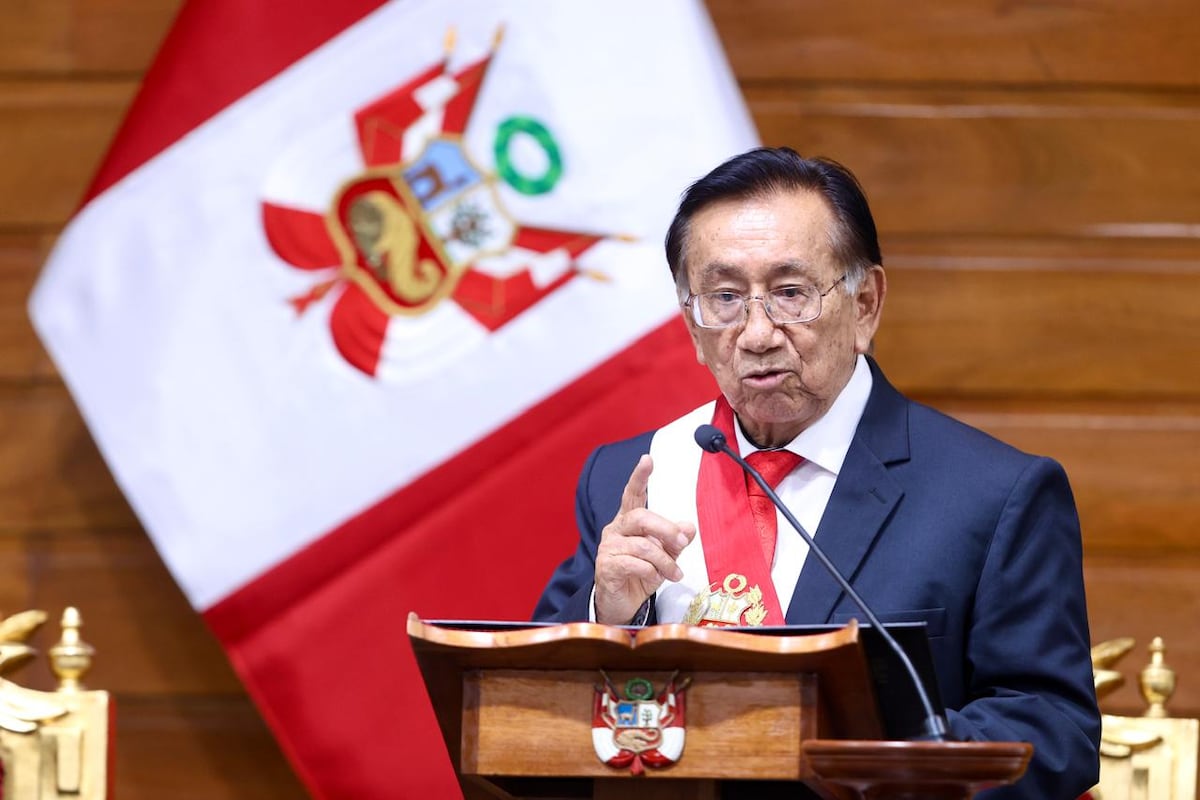
Newly sworn-in President José María Balcázar, 83, delivered his first address upon receiving the presidential sash with a call for unity: "We are no longer in a time for fighting — there are no right or left." Balcázar is the new interim head of state elected by the Peruvian Congress, where divisions within the conservative majority ultimately produced a leader widely regarded as belonging to the left.
The factions are now trading blame for the outcome, while media outlets aligned with the country's oligarchy have begun surfacing or fabricating damaging allegations against Balcázar — ranging from alleged financial impropriety to accusations as serious as pedophilia, the latter stemming from remarks he once made about child marriage that critics say have been taken out of context.
He has also been accused of potentially facilitating fraud in the upcoming presidential elections and of enacting sweeping legislation before his short mandate concludes in July.
Those same outlets have amplified — unusually for them — public expressions of outrage circulating on social media. Reactions ranged from "Now we are worse off" and "It has been a curse from God," to "What a disgrace — we are the laughingstock of the world." One commenter lamented: "I don't know what is happening with our government: every time we get a new president, he arrives with charges more serious than the last. When will we learn to choose well?"
Cynthia McClintock, a political science professor at George Washington University, told BBC Mundo that presidential removal can serve a constructive purpose when applied consistently and free of partisan motives, as a tool to promote transparency and accountability. "The problem is that in Peru it is misused," she said, adding that "less-than-noble motives come into play."
Notably absent from prior public outcry were similar criticisms of Balcázar's recent predecessors — including José Jerí, who had a troubled record, and Dina Boluarte, widely viewed as a traitor for her role as vice president to now-imprisoned former President Pedro Castillo.
Balcázar declared that the state will not spend a single cent on Boluarte's legal defense once she faces trial. He also stated his intention to pardon Castillo — sentenced to eleven years in prison on charges of attempting a coup — though he acknowledged he may be unable to fulfill that pledge, as the sentence has not yet been finalized. Both Castillo and Balcázar were members of the Somos Libres party, considered left-leaning.
Like a Revolving Door
Peru's political instability, however, cannot be explained solely by Congress's use of the presidential vacancy mechanism. Political parties have weakened considerably in recent years amid widespread public distrust, fueling a proliferation of parliamentary groups since 2016 and an unusually high number of candidates for elected office.
In this environment, two types of congressional blocs have gained strength: those pursuing political power — such as Fujimorismo, which retains the largest bloc despite some losses — and those seeking deregulation for private interests spanning education to informal mining. Broad political agreements have become increasingly elusive, and presidents have taken office with ever-smaller legislative support, leaving them more vulnerable.
It bears recalling that Castillo, a rural schoolteacher and farmer, advanced to the 2021 runoff with just 19 percent of the vote, while Keiko Fujimori received 13 percent.
For the April 12 elections, 36 presidential candidates have registered. Yet polls suggest none currently exceeds 15 percent of voting intentions, and most register below 1 percent. Distrust runs so deep that, according to Ipsos, three in five Peruvians — 61 percent — say they would not trust any of the presidential candidates with the keys to their home. A second round in June appears increasingly likely.
A Surprising Choice
No one had anticipated Balcázar's selection. All indicators had pointed to María del Carmen Alva, the spokeswoman for the right-wing Acción Popular party — a controversial figure with a history of heated verbal confrontations and even racially charged incidents with fellow legislators.
Why, then, did a markedly conservative Congress ultimately choose a figure from Peru's far left — even one who broke with his party two years ago and now presents himself as an independent?
The answer lies in the country's complex political fragmentation. The Fujimorista right, led by Keiko Fujimori, and the radical right of former Lima mayor Rafael López Aliaga each prioritized their own electoral strategies over institutional coherence — in short, betting on chaos and distancing themselves from a deeply discredited Congress.
As political consultant Giovanna Peñaflor of the Imasen firm explained: "Keiko is betting on Balcázar to generate chaos, while López Aliaga seeks to hold Keiko responsible and distance himself from the 'mafia pact' that has governed the country from Congress."
Keiko has denied that her legislators voted for Balcázar, though the vote was conducted by secret ballot — and her rival within the right is deeply unpopular among her own ranks.
The latest Ipsos poll shows López Aliaga leading with 12 percent of voting intentions, followed by Keiko Fujimori at just 8 percent — far too little to win outright in the first round, where a candidate must obtain an absolute majority. Observers increasingly suggest that a political outsider could emerge as a decisive force in the final stretch of the campaign.
Balcázar is Peru's eighth president in the last ten years. In July, the ninth will take office.
For now, the central question remains: can Balcázar survive under the sword of Damocles — a hostile Congress and a fierce battle among conservative forces for political power?
Translated by Sergio A. Paneque Díaz / CubaSí Translation Staff
Add new comment