
Mr. Rubio and Rhetorical Anti-Cubanism
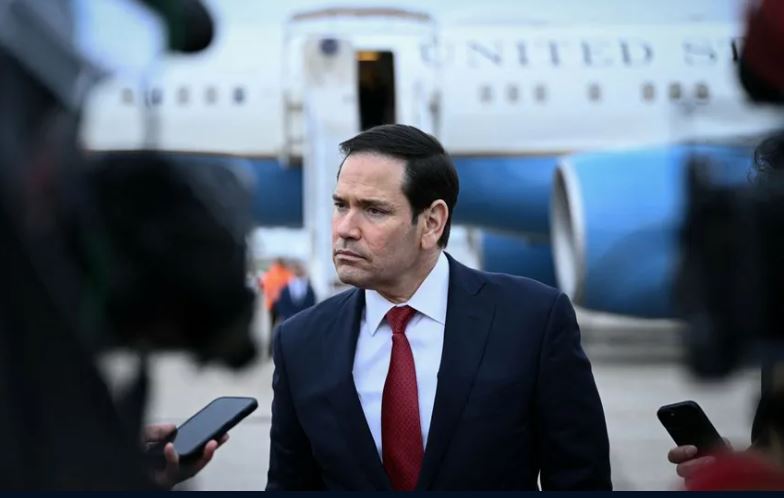
U.S. Secretary of State Marco Rubio spoke to the press after a meeting of G7 Foreign Ministers.
This past March 2026, the anti-Cuban rhetoric of President Trump and his advisor on international affairs, Mr. Rubio, was of particular interest. Amidst events that, strictly speaking, had little or nothing to do with Cuba, both figures, as usual, uttered a string of threats, some veiled, with enough ambiguity to be interpreted according to one's ideological perspective, and which can be summarized in several conclusions.
The first and most obvious is that both, the president and, in the background, merely repeating the same thing, Mr. Rubio, had promised their fervent anti-Cuban followers that after "expeditiously resolving the Iran issue," they would turn against Cuba.
The promise even included a timeframe, starting from the day the attacks against Iran began, February 28th, a "little war" that, at a tea party in Mar-e-Lago, they calculated would last, at most, 15 days. In other words, by March 16th, a "Venezuela-style" change in Havana should have been expected, whatever that might mean.
However, events have clearly unfolded differently. Not only is Iran still repelling the attack, but the debate has shifted, and now the discussion centers on whether it's possible to speak of a strategic defeat of the Epstein State coalition—as some call the Trump-Zionist alliance, for reasons that are already clear.
In short, the deadline wasn't met, not so much due to Cuba's capacity for resistance, but rather the heroic behavior of the Iranians, whose leaders aptly clarified that their struggle was not only for their country, but for all peoples threatened by the empire; and everything suggests that this is precisely the case.
Another obvious consideration, related to this one and to the overwhelming reality, is that, constantly navigating between bluster and a virtual detachment from reality, President Trump has had no choice but to proclaim supposed victories over his actions, celebrate crushing defeats of his opponents, scheduling and postponing deadlines, always under the pressure that every minute the conflict drags on represents a percentage drop in national and international support for the conflict and for him.
And this isn't a circumstantial matter; everyone knows that in a war there can be winners or losers who weren't anticipated; but Trump's role—for which he was elected, among other things—is to make the world believe that, even though there are practically no objective reasons left to keep the once-dominant US geopolitical hegemony, it's necessary to pretend otherwise.
As for Mr. Rubio, let's just say again what's already known. Getting Trump to announce that “Cuba is next,” amidst a narrative about the imminent collapse of the “Iranian regime,” is undoubtedly an extraordinary feat of appearances. It's no small thing; just put yourself in the shoes of the Secretary of State, who has been mandated to seize the moment and end the Cuban Revolution. And the problem is that the situation is becoming more complex, increasingly unfavorable for those goals.
Trump avoids being clear in his threats or announcing his plans against Cuba. It's true that this is somewhat his own style, designed to influence negotiations in his favor, which is paradoxical because then what's the point of boasting that he can invade his island neighbor whenever he wants, if he's driven by a spirit of negotiation, which, as we know, is another option the White House has considered regarding Cuba?
In this back-and-forth, Washington has kept only one unwavering stance, wielded as a kind of pretext for intervention: that Cuba is a failed state, on the verge of collapse, says the White House occupant, without going into so many “boring details,” he must think. Mr. Rubio echoes this sentiment, blaming the Cuban authorities for the effects of the very cruel measures they themselves implement. To this, the Cuban Foreign Minister responds: “An asymmetric, abusive, and ruthless aggression like this is not necessary against a government considered incompetent “, it’s just pure logic.
In any case Mr. Rubio responsible for Trump’s international policy is to blame as the main figure in the debacle they've plunged the US into on the international stage. Yes, Trump is certainly the boss, but Mr. Rubio has enough bureaucratic power to have influenced a different course of action. He's in the thick of it, in short.
The political and concrete value of the diplomatic and international environment shouldn't be underestimated. Certainly, authorities in Washington may believe that sitting on a "mountain" of deadly shrapnel is enough to prevail. But it doesn't work that way.
And this distinction isn't the result of an anti-Trump stance. No, even journalist Tucker Carlson, one of the ideologues of Trumpism/MAGA, admits that without negotiation, without diplomacy, all that remains is military might, recalling that with Trump it seemed to work until, well, the Iranians stopped him in his tracks, as they say.
Closely related to the above, the Trump administration now bears another extraordinary defeat: having lost the initiative in communication. So detached from reality has he become that if he ever had any credibility or capacity to exert political and ideological influence on the world, all of that is evaporating at the same pace as the Gulf War.
Added to this is the extraordinary rejection by growing segments of the American population, mobilized in numbers estimated at more than 8 million protesters in the "No King" demonstrations—that is, No Trump—on March 28, the day after the events mentioned here. And this is another crucial consideration that becomes evident as this troubled month of March 2026 draws to a close.
Regarding Cuba, nothing can be dismissed, and at the very least, preparations must continue to face the worst-case scenario: an armed attack of some kind. Certainly, the outlook for such a military option appears more difficult than, for example, after the treacherous attack on Venezuela. In any case, it’s still not entirely clear how Trump will extricate himself from the Iran quagmire, nor when; And the clock keeps ticking inexorably, still some seven months away, until the midterm elections on the second Tuesday of November, when, those in the know assure us, Trump's power will be seriously damaged.
Ultimately, speculating about enemy plans against Cuba only benefits them; some, with a dry palate, demand transparency, that Cuban authorities clarify things, underestimating the importance of timely and accurate denunciation, and also of prudent silence.
The history of Cuban heroism speaks for itself, and it never needed media spectacles or debates on social media; ultimately, those who fought with Che in Bolivia didn't appear on television programs of the time, those who fell defending the sovereign rights of Africa, in Angola or Ethiopia, probably never even spoke into a microphone, and more recently, the 32 comrades who died in Caracas on January 3rd did everything under Martí's maxim that "it had to be in silence."
Translated by Amilkal Labañino / CubaSí Translation Staff
Add new comment