
The Genius of Benny Moré
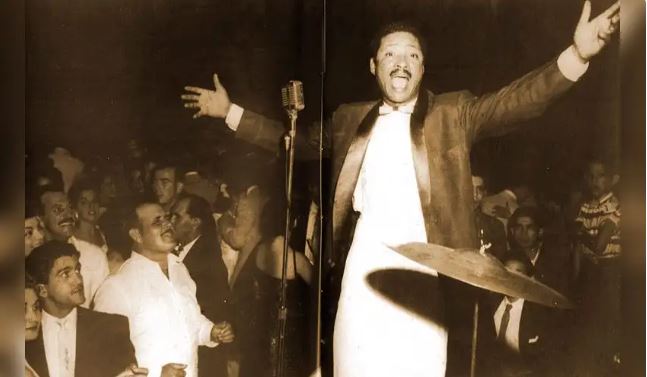
Benny Moré was a genius who emerged from the Cuban countryside without any of his fellow residents in Pueblo Nuevo—his birthplace in the town of Santa Isabel de las Lajas, former Las Villas province—being able to foresee that in a humble bohío on August 24, 1919, the most brilliant popular musician of Cuba would come into the world.
Thin, undernourished, with outlandish attire, and ill from the mid-1940s with an ailment that led to his death on February 19, 1963, the future "Bárbaro del Ritmo" was not impressive in any way.
His origins trace back to an ancestor from the Congo named Gundo, son of a king, whom slave traders kidnapped and enslaved, becoming the first of the Moré line in Cuba. Although that surname came later from one of the sugar mill owners where his ancestors worked.
From a young age, Bartolomé Maximiliano Moré showed musical inclination and made himself a guitar from a board and spool thread, while singing songs whose lyrics he memorized very quickly.
His mother Virginia Moré recounts, in the biography written by Amin E. Naser, that the music came to him through her, because in her adolescence she liked to give serenades and sing at her friends' parties.
One night, Virginia relates, Benny—not yet 10 years old—ran away from home upon hearing the musical compás of a nearby party. Worried, she arrived at the place and found him on top of a table in the middle of the living room, while those present listened to the improvisations of that child.
In mid-1936, he decided to go to Havana to try his luck, but it went badly; he returned to his homeland and went back to the capital in 1939 when he recognized his potential as a singer and tried to leave the tasks that had sustained him until then: cutting sugarcane, working as a cart driver at a sugar mill, or selling vegetables and fruits on the street. He wanted to prove himself as a performer.
Thus he began oscillating between occasional jobs and performances in low-level venues until he began to shine with his own light at radio station Mil Diez, after winning a contest on his second try. On the first, they "rang the bells" for him—that is, they eliminated him.
A coincidence with the Trío Matamoros and their need for a voice turned Benny into the singer of the famous Santiago group during the 1940s.
He traveled to Mexico with Miguel (Matamoros), Siro (Rodríguez), and Rafael (Cueto), members of the ensemble, and in the neighboring nation his definitive takeoff occurred, where he changed his name to Benny.
The director of the Aragón Orchestra, Rafael Lay, coined the term "musical genius" for the first time to refer to the Bárbaro del Ritmo.
Thus Amin E. Naser reproduced in his biography Lay's encounter with Bartolomé: "I met him in 1952. I came from Cienfuegos for a recording at RCA Víctor. We went to Humara y Lastra and there were [the Mexican] Pedro Vargas, Cabrerita, and Benny Moré. They introduced us and we chatted.
"He says to Cabrerita: 'We have to work' and begins to hum a melody to him, while saying: 'The trombones have to make this figure and the saxophones this, here the chorus comes in and the trombones this other design.' Thus he dictated the entire instrumentation of the work. It was an inconceivable arrangement.
"I took him aside and said to Cabrerita: 'Old man, how do you think that can sound?' Cabrerita explained to me that he had always done it that way, that this was his working method. He left and told me: 'Tomorrow we record.'
"I postponed my return to the Pearl of the South to listen to it. The next day the orchestra rehearsed the arrangement. In the montuno, Cabrerita missed a detail. Benny stopped the recording and right there, purely by ear, found the desired chords. From that moment on, I considered him a genius."
Another valuable testimony was offered by singer and composer Marta Valdés:
"No possible praise is needed, it's unnecessary. Time has taken care of making his value grow more and more. His relevance increases, it does not diminish.
"He sang at the top of his lungs about Manzanillo, Maracaibo, Santa Isabel de las Lajas, without caring what an Englishman or a Frenchman would think of it—and the Englishman had to look at him and listen to him, and the Frenchman had to as well.
"I could continue filling pages with my thoughts," said the author faithful to the Feeling movement, and concluded: "I wish all artists, from the most intuitive to the most academic, would seriously think about trying to achieve his lucidity. I believe, in summary, that Benny is that, an extraordinary phenomenon of lucidity."
His insistence on staying in Cuba and rejecting lucrative contracts to perform in the United States also made him a consummate patriot.
"I'm not leaving Cuba," repeated the Bárbaro del Ritmo ad nauseam, and his beloved corner (San José de las Lajas) still, 63 years after his physical departure, pays tribute to him—to whom El Indio Naborí dedicated a poem: "He is not dead, the nightingale Benny Moré lives and sings."
Translated by Sergio A. Paneque Díaz / CubaSí Translation Staff
Add new comment