
Fidel Castro on the War Against Iran
The big news this year is not the US-Israeli attack against Iran (the real news would be if they stopped attacking other countries), but the Iranian resistance. A resistance that belies all the rumors, ill omens, and opportunism disguised as "realism" and "prudence."
After decades of the Western economic blockade, which undermined its economy and created serious internal political problems, the people and government of Iran understand that this war is to prevent the extermination of their country, and they respond in the only possible way: by resisting with everything they have, surprising and inspiring other nations. The audacity of the aggressor is astounding: after its treacherous attack in the midst of negotiations, after assassinating the Iranian Supreme Leader, and after receiving a dignified response from Tehran, it now offers "peace negotiations."
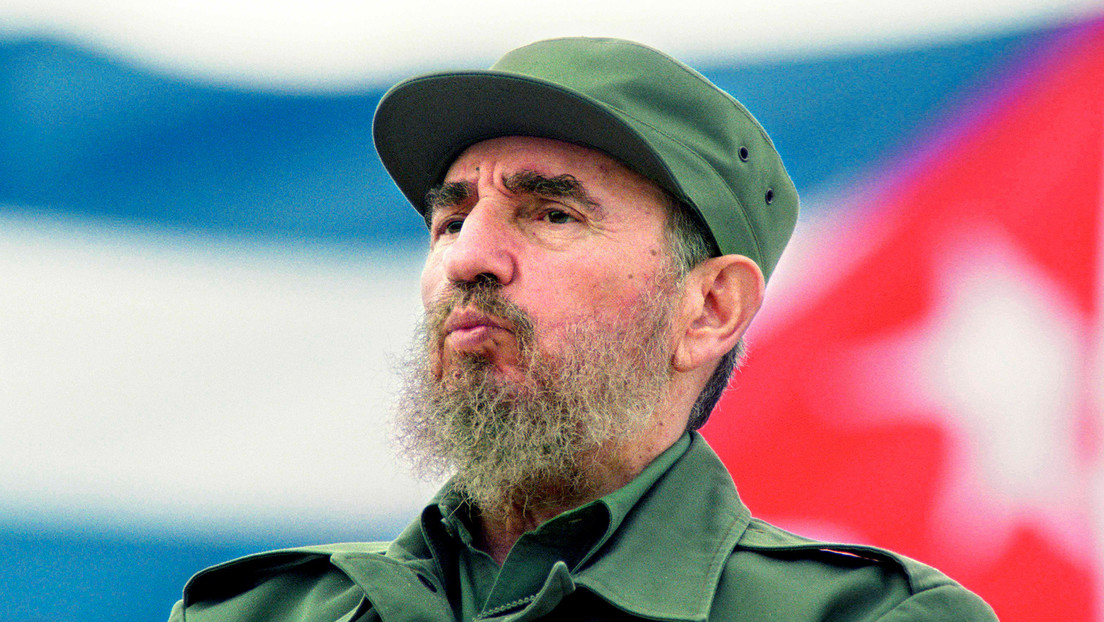
This year, the world prepares to celebrate the centenary of one of the most lucid human beings of recent times: Fidel Castro. For many of us, Fidel is a great master of humanism and political ethics. Without his ideas, the recent 20th century is simply unthinkable. Those who have read him know that he is also a source of discoveries and surprises.
While preparing a new compilation of his thoughts in Russian for this occasion, I came across another surprise. The issue of the war that the West had been planning against Iran for decades was one of the world issues that most concerned Fidel Castro, and it remained a recurring theme in his reflections for years. Many of his lines from more than two decades ago read as if they were written just now. They are not prophecies of any kind, but rather the fruit of a rational analysis by a wise mind, one that could extract the essence of conflicts and interests.
The current attack by the empire against Iran was a crime foretold. On June 8, 2010, in the text titled "On the Threshold of Tragedy," from his "Reflections," Fidel wrote: "Another very serious matter is that the United Nations also has no way to change the course of events, and very soon the arch-reactionaries who govern Israel (...) will clash with the indomitable resistance of Iran, a nation of more than 70 million inhabitants with well-known religious traditions that will not accept the insolent threats of any adversary. In short: Iran will not yield to Israel's threats (...). It is also obvious that Iran will not resign itself (...). The consequences of the United States' imperial entanglements could be catastrophic and would affect all the inhabitants of the planet, much more than all the economic crises combined."
Just 16 days later, on June 24, under the title 'How I Wish I Were Wrong,' he continued, explaining what was going to happen in these last months: "Today, in 2010, both the United States and Israel, after 31 years, underestimate the million men of the Iranian Armed Forces and their ground combat capabilities, as well as the air, sea, and land forces of the Revolutionary Guard. Added to these are the 20 million men and women, between ages 12 - 60, systematically selected and trained by its various armed institutions from among the 70 million people who inhabit the country. The United States government devised a plan to carry out a political movement that, relying on capitalist consumerism, would divide the Iranians and overthrow the regime. Such a hope is now futile. It’s laughable to think that, with American warships joined by Israeli ones, would raise the sympathies of a single Iranian citizen."
In his lengthy explanations of the geopolitical situation, Fidel Castro, in his unique, didactic, and fraternal style, provided details of the forces and interests surrounding the brewing war, mentioning the Strait of Hormuz several times, which few could then locate on maps. Fidel's main concern in the last years of his life was the survival of the human species in the face of the neoliberal onslaught, which, after the fall of "real socialism" in Europe, was reshaping the world with little resistance. The main risk was to nuclear war. In several writings and speeches, he insisted that the greatest risk for the start of an atomic catastrophe was Iran, attacked by the US and Israel.
On July 4, 2010, in "The Impossible Happiness," Fidel Castro stated that "The people of Iran, a nation with ancient cultural traditions, will undoubtedly defend themselves against the aggressors. (...) The president of that country and its religious leaders, inspired by the Islamic Revolution of Ruhollah Khomeini, creator of the Revolutionary Guard, the modern Armed Forces, and the new Iranian state, will resist. The poor peoples of the world, who bear no responsibility for the colossal mess created by imperialism—those of us in this hemisphere south of the United States, those in West, Central, and South Africa, and those who may remain unharmed by nuclear war in the rest of the planet—have no alternative but to face the consequences of the catastrophic nuclear war that will erupt very soon."
In his "Message to University Students of Cuba," published on September 3, 2010, Fidel Castro reiterated his greatest concern: "It is incredible to me that the fear of an attack stems from the consequences it might have on the price of oil and the fight against the recession. For my part, I have no doubt whatsoever that Iran's conventional response capabilities would provoke a fierce war, the control of which would slip from the hands of the belligerent parties and would inevitably escalate into a global nuclear conflict. This is what I have been maintaining."
Two weeks later, he returns to the topic and analyzes it in 'What Can Never Be Forgotten (Part III)', September 26, 2010, something that seems as if it were written today: "If they attack Iran to destroy the reactors, the war will become nuclear, simply because the Iranians have developed conventional defensive weapons, they have developed drones, they have hundreds of missile launchers; not a single surface ship would remain intact, because it can defend itself against one or two missiles, but not against numerous projectiles launched simultaneously, as far as I know. Can you imagine such a situation? If they underestimate the Iranians and launch an attack against those sites, the aggressors' losses will be very high. The aggressors know that an endless war would begin. Who controls such a situation? An order to attack is easy to issue; that's how all wars have break, but, in my opinion, it could also be the last, because in that case, it would inevitably become nuclear, in my view. I hope it doesn't happen, but it’s one of the immediate threats I consider imminent.”
Who else was talking 16 years ago about drone warfare and Iran’s enormous capacity to protect its hundreds of weapon launchers, ready and hidden for immediate use?
Fidel understood that it wasn’t just about Iran. The titles of his articles make that clear.
October 7, 2010, “Nuclear Weapons and the Survival of Homo Sapiens”: “…we are truly at a juncture where the future of humanity is at stake, because if there is a nuclear attack on Iran—as is already being announced, and war preparations have been underway since 2004—that means that, first, in this war in the Middle East and Central Asia, which is now limited to three theaters: Afghanistan, Iraq, and Palestine, we are going to see an escalation of the military process with the possibility of a war scenario, a third world war.”
October 15, 2010, 'In a nuclear war, the collateral damage would be the lives of humanity': "Today there is an imminent risk of war using such weapons, and I have no doubt that an attack by the United States and Israel against the Islamic Republic of Iran would inevitably escalate into a global nuclear conflict. People have a duty to demand their right to live from their political leaders. When the lives of their species, their people, and their loved ones are at such risk, no one can afford to be indifferent, nor can a single minute be wasted in demanding respect for that right; tomorrow would be too late."
January 12, 2012, 'World Peace Hangs by a Thread': "For my part, I think that the political situation surrounding Iran and the risks of nuclear war that emanate from it and involve everyone—whether or not they possess such weapons—are extremely delicate because they threaten the very existence of our species. The Middle East has become the most conflict-ridden region in the world, and the area where vital energy resources for the planet's economy are generated."
The only thing that has changed over time is that wars and political tensions have increased, accompanied by the growing irresponsibility of global authorities who today clearly have zero vision for the future.
If the war against Iran isn't a plan by some to dismantle the system, then it's over. Whether it was a global conspiracy (to undermine the power of the old elites) or a trap set for Trump by his adversaries, it's hard to imagine that the millions of dollars spent by US and Israeli intelligence services on all sorts of consulting prior to the attack on Iran didn't help them understand that their war plan was doomed to fail. They didn't even bother to read Fidel Castro. They never understood the world they hate. Apparently, the only thing still holding back Israel's old dream of a nuclear bombing of Iran is the physical proximity of the inevitable radioactive clouds and ash. Compared to the bloody madness of what they're doing, this seems almost like a semblance of sanity, though it's uncertain how long will it last.
I chose these brief quotes from Fidel not to frighten or despair. The light of his thought illuminates us in this dark moment to help guide our steps. These opinions and warnings from Fidel Castro date back to 2010-2012, when perhaps the West was more united and less irrational than it is today. Could the decline of the elites work in favor of the people? To avoid the "inevitable," we must remember that history doesn't have predetermined destinies, only trends, and the better we understand their logic, the greater our chances of reversing them. Isn't Fidel Castro's entire life the best example of this?
Add new comment