
Cuban Scientists Continue to Deliver Good News
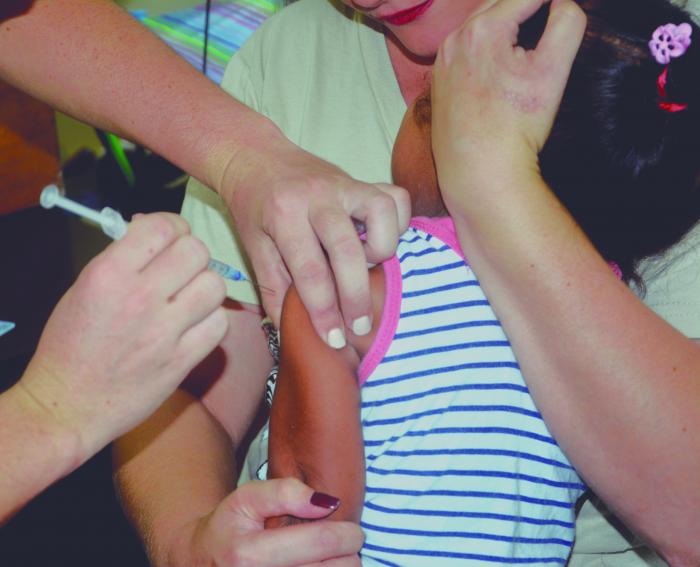
Después de conducir la vacunación en niños, a partir del año 2019 las tasas de incidencia entre infantes, entre uno y cuatro años bajaron a cero. Foto: Juvenal Balán / Granma
In the intangible—in what we call knowledge—Cuba holds one of its greatest strengths. That is why on Tuesday afternoon, during the traditional meeting of experts and scientists on health issues held at the Palace of the Revolution, the President of the Republic of Cuba, Miguel Díaz-Canel Bermúdez, reasoned that despite these difficult times, there is good news.
The Head of State said this after listening to a group of prestigious scientists who discussed advances in clinical trials of new vaccine candidates, which, by their nature, will have notable impacts on the quality of life of Cubans.
During a session also presided over by Politburo member and Prime Minister of the Republic of Cuba, Manuel Marrero Cruz, the topic was introduced by Dr. Dagmar García Rivera, Deputy Director of Research and Development at the Finlay Vaccine Institute (IFV). She expressed gratitude for "the opportunity to provide an update on the development program for conjugated pneumococcal vaccines that we have been developing for several years now at the Finlay Vaccine Institute."
The first thing the scientist wanted to explain concerned the bacterium Streptococcus pneumoniae, which "is the leading cause of bacterial infectious diseases in early childhood—in children under five years of age." She stated that worldwide, despite high vaccination coverage, millions of people still die from pneumonia and from diseases caused by this bacterium.
The diseases it strikes, she detailed, are primarily invasive illnesses such as bacteremia, sepsis, and meningitis, as well as mucosal diseases—including otitis media, pneumonia, sinusitis, and conjunctivitis. Such ailments impact early childhood most severely, as well as older adults.
Dagmar noted that "there are more than 100 different pneumococcal serotypes; of these, between 23 and 25 are the most relevant for causing disease in humans." Therefore, she said, any vaccine approach to prevent the damage caused by the bacterium requires a multivalent vaccine strategy. The expert affirmed that these are "projects of high scientific and technological complexity."
History of a Great Vaccine
Dagmar García Rivera provided an explanation of the "pneumococcal vaccine program we are developing at the Finlay Institute." She then discussed "a first vaccine with seven serotypes," which took over a decade to develop and was registered and introduced into the National Health System in 2024 for a population of two-year-old children.
The scientist subsequently mentioned an *"11-serotype vaccine"*—which added four serotypes to the previous seven and "is currently in the clinical phase." Likewise, Dagmar referred to *"a 16-serotype candidate, which adds another five in terms of their epidemiological relevance, currently in the preclinical phase, being evaluated in laboratory animals."*
The expert spoke of sovereignty and greater agility in processes. Returning to the 11-serotype vaccine—the central topic of the presentation—she reported that researchers deemed it appropriate for the target "population niche" to include not only infants but also older adults, among whom pneumococcal pneumonia has a high incidence.
A precedent-setting approach, based on everything learned during COVID-19, along with the knowledge that the 11-serotype vaccine shares the same technology as the seven-serotype vaccine, led to the decision to advance the candidate—given that safety conditions were also sufficient—directly to phase 2-3 clinical trials without needing to go through phase one. Thus reflected Dagmar, who added that such steps were approved by CEDMED (the Center for State Control of Medicines, Equipment, and Medical Devices). That was the prelude—the expert recalled—that paved the way for clinical trials.
The Clinical Trial
During the meeting, Dr. Dagmar García Rivera, Deputy Director of Research and Development at the Finlay Vaccine Institute (IFV), displayed an illustrative map showing "where the clinical evaluation activity" for the vaccine candidate is taking place.
*"We are conducting the phase 2-3 clinical trial in adults over 50 years of age,"* expressed Dagmar, who also referred to the procedure with infants; regarding the latter, she emphasized "the complexity of conducting a clinical trial on practically newborn babies," which undoubtedly involves, as she said, "very precise logistics, well-coordinated with the National Health System."
The General Director of the IFV, Yury Valdés Balbín, reflected during the meeting: *"If you notice, the Pentavalent vaccine has five components. And here we are talking about an 11-valent vaccine."* The scientist did not overlook the significance that soon there will be another with even more components.
"There is growth in the Cuban vaccine industry that is not exclusive to the Finlay Institute. And that growth is a consequence of this project," Valdés Balbín assessed, emphasizing that "a project of this kind is only carried out in a country like ours," and that vaccines like these, he said, are only available from multinational corporations.*
"We are talking about this being a trial, like all the trials we conduct, in primary health care," the expert highlighted. And he stressed: "This is not done in hospitals. It is among the most advanced things there are."
Doing everything within the primary health system, he commented, "implies a very significant challenge. And with two-month-old infants, with babies, only a political system like ours has the capacity to bring together all the actors."
The scientist wished to recognize the efforts of those working in municipalities, in neighborhoods, in settings such as Havana, Cienfuegos, and Santiago de Cuba.
The researcher shared an essential concept, expressing that "clinical trials generate quality-of-life standards for our people."
"One life we have saved," he said, "is sufficient for all the effort we have made. That is what the Revolution has taught us. And I believe that must be stated."
Highly Eloquent Figures
María Eugenia Toledo Romaní, project leader, emphasized that the research "has been tasked with accumulating the evidence needed to demonstrate the impact on populations."
Among colleagues, and in dialogue with the country's leadership, she argued "why it is important that we have the vaccine for our children very soon: Between 2017 and 2019, we conducted a vaccination campaign, where we vaccinated all children in the province of Cienfuegos, between one and five years old, with coverage above 90 percent. If we use the indicator of invasive disease, which kills our children—mainly related to meningitis—it must be said that rates ranged between 3.1 and 9.1 per 10,000 children in that age group."
*"After conducting vaccination among children, starting in 2019—and note that COVID-19 occurred in the interim—incidence rates in children between one and four years old dropped to zero, and in all age groups they remained near one percent. All children who became ill after 2019 in Cienfuegos were unvaccinated children."*
Pneumococcal disease—the expert explained—also produces high hospitalization rates due to severe pneumonia in our intensive care units: *"And look, today we have data from the follow-up through this sentinel surveillance network and the very important work of the IPK reference laboratory: The rate of severe pneumonia in vaccinated children admitted to intensive care units in Cienfuegos is 3.14. But do you know what it is for unvaccinated children? 123.67. Therefore, each unvaccinated child has a 3.48 times higher risk of being admitted to an intensive care unit."*
For his part, the President of Finlay Vaccines S.A., Vicente Vérez Bencomo, commented in clear reference to challenges ahead: *"We cannot settle even for this 16-serotype vaccine, which seems like a technological monster. To be able to go beyond 16, we need to make technological leaps."*
The executive returned to a Fidelista concept, one that has always marked the path of Cuban science: "We must compete with the best."
Add new comment