
In Cuba: Art for the Community… and From the Community
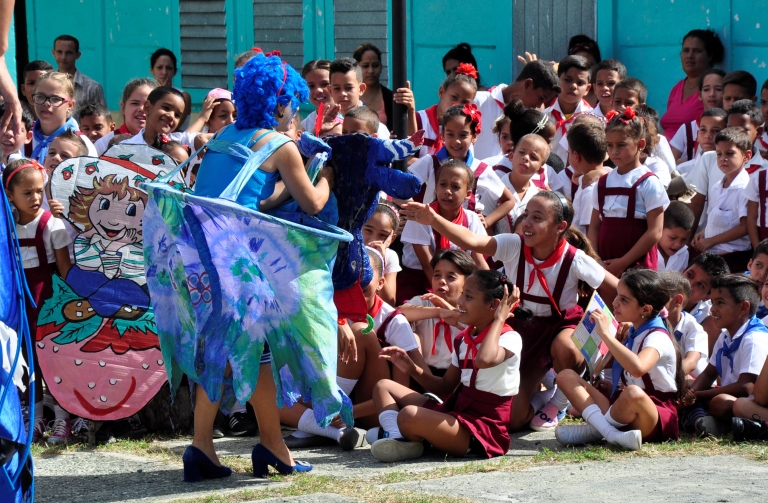
When material hardships intensify, the symbolic fabric of society takes on even greater relevance. Culture sustains, articulates, gives meaning, and strengthens a community's capacity for spiritual resilience. It is not a luxury or an ornament, but a tool for cohesion and human growth. In neighborhoods, in rural spaces, and in local institutions, cultural work can become an engine of participation and dialogue.
It is worth drawing a distinction between cultural work within the community and community culture itself. The former refers, in large part, to the organized action of institutions, cultural promoters, arts educators, and projects that arrive in a given territory with educational or artistic programming.
The latter, by contrast, emerges organically from within the community itself — its traditions, its knowledge, its symbolic practices, its ways of celebrating and narrating its own identity. While cultural work implies an intervention, often planned through public policy, community culture is the living, everyday expression of collective identity.
Yet these two dimensions are not mutually exclusive — they nourish and complement each other. Cultural work within a community can offer tools, visibility, and professional support to help community culture strengthen and project itself outward. At the same time, community culture lends meaning and relevance to institutional work, preventing it from becoming a formal or decontextualized exercise. When genuine dialogue exists, cultural projects do not impose models — they stimulate creative processes rooted in the memory, conflicts, and aspirations of the community itself.
Democratizing culture is one of the central tenets of the nation's cultural policy. But democratization does not simply mean bringing performances or exhibitions to every corner of the country. Above all, it means creating the conditions for each community to become the protagonist of its own cultural development — not merely a passive recipient of culture delivered from the outside, but an active participant in the construction of a shared symbolic horizon, with its creative capacity recognized and its right to self-expression affirmed.
Translated by Sergio A. Paneque Díaz / CubaSí Translation Staff
Add new comment