
Cash in Cuba: A Problem With Many Layers
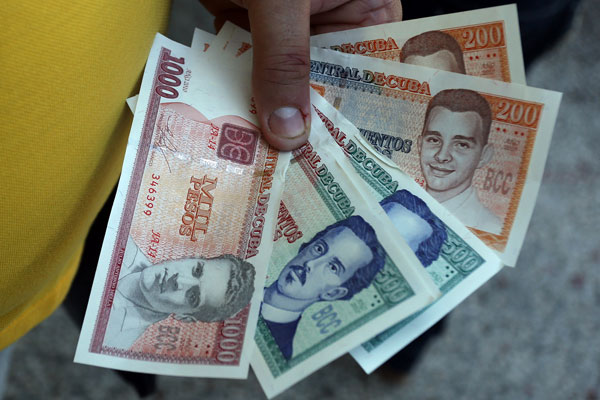
Foto: Archivo IPS-Cuba
Paying for utilities such as water, telephone, electricity, and gas has become more accessible for Cuban consumers. It is no longer necessary to travel to payment centers or wait in long lines — bank transfers, transaction histories, and other operations can now be handled from a mobile phone. More than a decade ago, the idea of paying at a store with a cellphone seemed unthinkable in Cuba. Yet with Transfermóvil, introduced roughly ten years ago, and Enzona, available for about five, digital payments at businesses and banking operations have become a reality thanks to advances in domestic technology.
The same applies in commerce. Both state-owned entities and private sector businesses are required by law to accept digital payments. Yet this is precisely where daily frustrations begin. On the state side, operations at gas stations and shopping centers are frequently disrupted by unstable or failed internet connectivity.
On the private side, self-employed workers and small businesses do not always display their QR codes, which would allow customers to pay securely and receive the six percent discount offered by the Banco Nacional de Cuba — a measure designed to ensure transactions are properly recorded and subject to taxation. It goes without saying that not everyone is acting in bad faith. Establishments that readily accept digital payments tend to attract repeat customers. However, some businesses cap online payments at 1,000 pesos, while others only accept bank transfers rather than the standard digital payment methods.
The reality is that amid so many daily hardships, people have come to accept whatever partial solution is available — even if it falls short of what the law stipulates. When someone leaves home in search of something as basic as rice, cooking oil, or soap, the priority is simply to resolve the need as efficiently and civilly as possible.
Where Has Physical Cash Gone?
The supply of goods in Cuba has diversified and expanded as never before. There is hardly a city block without small private markets, food stalls, delicatessens, bakeries, confectioneries, cafeterias, restaurants, party supply shops, personal care and beauty stores, or new agricultural market points. The variety is genuinely unprecedented, and prices at private businesses — though denominated in Cuban pesos — often offer a better exchange rate than state-run stores, which largely price goods in hard currency. This proliferation of private commerce has, in its own way, helped Cubans who can afford it access products in their own currency, since the state supply network has been reduced almost entirely to hard-currency transactions.
The dilemma, however, is that virtually all private vendors demand cash — and no one quite knows where that cash goes or where it hides. The impact of the new exchange rate cannot be overlooked. What once amounted to a small fortune — say, 500 pesos — is now worth barely one U.S. dollar. A basic purchase of vegetables or root crops at an agricultural market rarely comes in under 2,000 pesos.
Workers receive their salaries via magnetic debit cards, but ATMs lack sufficient liquidity to operate around the clock, or even during regular business hours. Power outages render many machines completely inoperable, and inside the banks, the teller lines are extraordinarily long. A person may work, get paid, and still have no practical way to withdraw their own money.
Meanwhile, the small market vendor faces no easier a situation. To stock their shelves, suppliers demand payment in dollars or euros, and to obtain that hard currency, the informal seller in turn demands Cuban pesos — in cash. So how does one untangle this knot? As the author puts it, not even a magic eight ball would know what to say.
Translated by Sergio A. Paneque Díaz / CubaSí Translation Staff
Add new comment