
Terrorism Against Cuba Showed Its Aggression in March
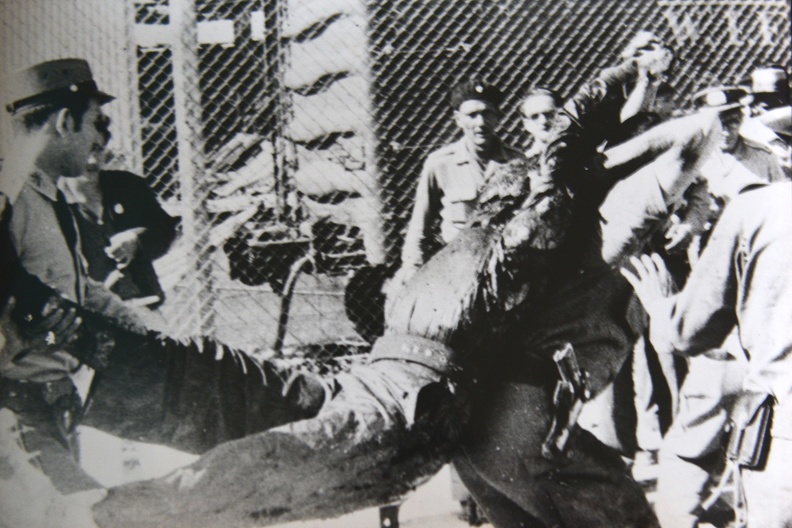
Unas 100 personas encontraron la muerte en la explosión del vapor francés La Coubre, , un acto terrorista de la Agencia Central de Inteligencia (CIA) para impedir que la Revolución naciente se fortaleciera militarmente. 3 de marzo de 2026. ACN FOTO/Archvos de Bohemia/ogm
March ranks among the calendar months most severely struck by state terrorism against Cuba — a policy established by the United States from the founding years of the Revolution, encompassing attacks, infiltrations, sabotages, assassinations, and other acts of varying scale that have wounded the soul of the nation, claiming lives and inflicting damage on the economy.
Some of these events remain less known to the Cuban public, yet all of them demonstrated U.S. hostility toward a free and sovereign country from January 1, 1959 onward — a nation entitled to forge its own destiny.
On the first day of March 1960, aware of the critical importance of the sugar industry to the island, sugarcane plantations were set ablaze at the Delicias (Antonio Guiteras) and Chaparra (Jesús Menéndez) mills in Las Tunas, and at the Washington (George Washington) mill in the municipality of Santo Domingo, Las Villas — incendiary materials having been dropped from an aircraft originating in North American territory.
On March 2, 1995, two terrorists arriving from Miami infiltrated the coast of Puerto Padre, Las Tunas, smuggling 51 pounds of C-4 explosives and other war materials into the country. After placing a bomb at the Sol Palmeras Hotel — which was successfully defused — they were subsequently arrested. Both individuals had been trained by the notorious criminals Guillermo Novo Sampoll and Gaspar Jiménez Escobedo.
One of the most widely resonant incidents occurred on March 4, 1960, when the French steamer La Coubre exploded in the port of Havana as the result of a criminal terrorist act, carried out while munitions transported from Belgium were being unloaded. The explosion killed 101 people, wounded more than 200, left numerous others missing, and caused damages estimated at 17 million 500 thousand pesos.
On the same date in 1998, Guatemalan terrorists Nader Kamal Musalam Barakat and María Elena González Meza were discovered and detained upon arrival at José Martí International Airport. Explosive-making materials found in their possession were seized, foiling their plans to target tourist centers and public venues in the capital. They were acting under orders from terrorist Luis Posada Carriles.
On March 6, 1961, a fuel tanker truck was destroyed, five other vehicles were damaged, and the warehouse where they were parked was leveled by the explosion of a device planted at the former Belot oil refinery — today known as Ñico López — in Havana.
Thirteen passengers were wounded aboard an AN-24 aircraft on Cubana de Aviación flight 706, operating the Havana–Nueva Gerona, Isle of Youth route, when a grenade was detonated on March 10, 1987, by a group of terrorists attempting to hijack the plane. The attempt was thwarted by the intervention of several passengers.
Miami figured prominently in these reprehensible acts. On March 11, 1994, a group of terrorists from that city opened fire on the Guitart-Cayo Coco Hotel, located on the cay of the same name off the northern coast of Ciego de Ávila. It marked the beginning of a campaign of aggression against hotel properties intended to instill fear among tourists visiting the country — a sector upon which Cuba had pinned its hopes of overcoming the economic crisis.
On March 12, 1966, the vessels Lambda 17 and Lambda 2, belonging to the Gulf Fleet, were sunk in international waters by the U.S. ship Santa Marina, north of Cabo Catoche off the Yucatán coast. Four days later, on March 16, the commander and second-in-command of Revolutionary Navy launch LC-274 were assassinated by individuals who attempted to seize the vessel and steer it toward U.S. territory.
Continuing the aggressive policy against Cuba, on March 17, 1963, the Soviet cargo ship L'Vov, anchored in the port of Isabela de Sagua, Las Villas, was fired upon by a speedboat originating from U.S. territory and belonging to the terrorist organization Alpha 66, striking the vessel's smokestack and one of its ventilators.
Another episode firmly embedded in the memory of a people that does not forget took place on March 20, 1995, when terrorists Santos Armando Martínez Rueda and José Enríquez Ramírez Oro — U.S. residents who had entered the country using false Costa Rican tourist passports — were detained at José Martí International Airport. On a prior occasion, the pair had infiltrated through the coast of Puerto Padre in Las Tunas, introducing explosive materials that were subsequently used to plant a dangerous charge at a hotel in Varadero. Both were operating under orders from the Cuban American National Foundation, an organization with an extensive record of criminal acts.
Near the end of that same month, on March 26, 1963, the Soviet vessel Bakú, loaded with Cuban sugar, was attacked by a boat in the port of Caibarién, Las Villas, sustaining multiple hits from a 20mm cannon and .30 and .50 caliber machine guns. The detonation of a magnetic mine tore open a crack four meters long and half a meter wide in the ship's hull. The attack was carried out by the terrorist organization Comandos L, based in the United States.
On March 27, 1966, the attempted hijacking of an IL-18 aircraft — registration CUT-831, traveling between Santiago de Cuba and Havana — was foiled, though not without tragic consequences: the security escort and the captain were killed, and the co-pilot was wounded. Their heroic resistance prevented the hijacking from being completed.
In sum, 45 Marches of terrorism against Cuba have brought pain and destruction — yet they have not prevented the Revolution, in the homeland of José Martí and Fidel Castro, from marking 67 years of undefeated existence, in spite of aggressions, infiltrations, sabotages, and assassinations that have never broken the spirit of a resolute and heroic people on this unyielding island.
Translated by Sergio A. Paneque Díaz / CubaSí Translation Staff
Add new comment