
Peru: Fragmented Politics
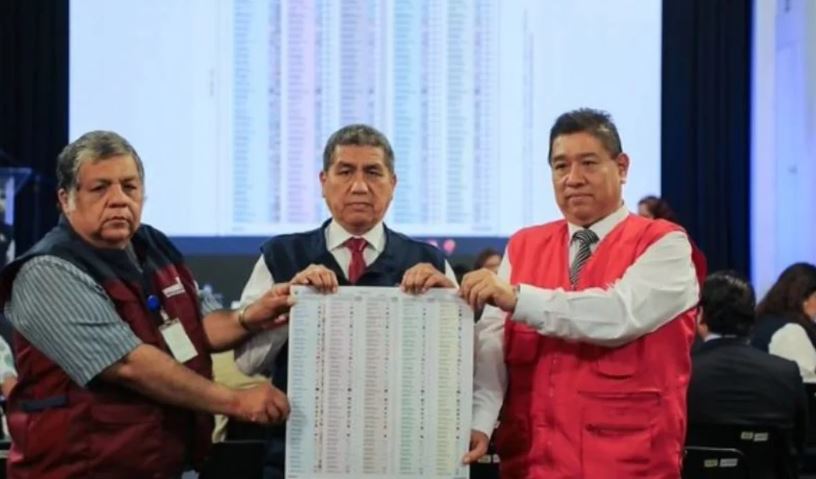
I don't usually write about an upcoming election, but the presidential elections on Sunday, April 12, in Peru revealed the fragmented nature of a political system that has yet to take root and is not aligned with sustained economic development, regardless of the fact that this development continues to favor the privileged class that, ultimately, has always dominated the South American nation.
These elections are being held amidst factors that have influenced the current political situation in Peru: corruption, economic instability, and social polarization. Corruption has undermined trust in institutions, with scandals involving high-ranking officials. Economic instability has generated discontent among the population, affecting employment and quality of life. Social polarization has led to deep divisions between different groups, hindering dialogue and governance. These elements have created a tense and conflictive political environment, reflected in protests and citizen demands.
Thirty-five presidential candidates—the 36th died in a car accident—will compete for the presidency in the first round, although the fragmentation suggests that the fight will be for the top two spots in the runoff, under the presidency of a left-wing leader elected by a right-wing and highly discredited Congress.
José María Balcázar will be managing the presidency during these troubled times, with the positive endorsement that he did not attend the meeting Trump convened with leaders of right-wing regimes, although his replacement, José Jerí, was present, despite not being eligible.
He promised that his main task would be to ensure clean, untainted elections, something difficult in times when imperialism is blatantly pressuring to impose its puppets. He also stated that he would confront citizen insecurity and maintain economic stability.
For the past 20 years, Peru has experienced a persistent and complex political crisis, reflected in the large number of presidential candidates for the April 12 elections. In Peru, the ballot is called a "cédula sábana" (sheet ballot) because it lists 35 candidates, an unprecedented number.
This crisis, which has already led to the removal of presidents (six have left office since 2018) and congresses disapproved of by the people, is rooted in a weakened, fragmented political party system that is increasingly disconnected from citizens' needs.
This fragmentation is also evident in the fact that none of the 35 candidates is polling at least 20% in the electoral surveys. This already poses a significant problem: it is likely that the two candidates with the most votes who advance to the second round will do so with a minuscule percentage (perhaps less than 15%). This means that the future president will govern Peru with the rejection or indifference of 85% of the population from day one.
Presidential fragmentation inevitably extends to the legislative branch. A Congress divided into 15 or 20 small blocs makes it nearly impossible to reach consensus on passing laws or reforms, but it facilitates temporary alliances for presidential impeachment proceedings.
However, Peruvians have no choice but to vote, hoping to elect a president who can achieve the political stability needed to finish their term.
THESE ARE THE PRESIDENTIAL CANDIDATES
In order of support in the polls:
Keiko Fujimori. Born in Lima in 1975. She leads the Fuerza Popular party (conservative) and is notable for her participation in three presidential elections, in which she always reached the second round. Daughter of dictator Alberto Fujimori, she is one of the most influential and politically powerful figures in the country.
Carlos Álvarez Loayza. Born in Lima in 1964, he has been a popular comedian and impersonator of Peruvian and international personalities. Television gave him a wide platform, which, since 2024, he has been trying to turn into political capital to become president. He is running for País para Todos (right-wing populism).
Rafael López Aliaga. Born in Lima in 1961, he is a Peruvian businessman and politician who leads the far-right Popular Renewal party. He served as mayor of Lima from January 1, 2023, to October 13, 2025. He doesn't mind the nickname 'Porky' and uses it during campaigns.
Roberto Sánchez, born in Huaral in 1969, is a psychologist. He served as Minister of Foreign Trade and Tourism during Pedro Castillo's administration (he was one of the few officials who remained in the cabinet for almost the entire term) and is currently a congressman. He also heads the social democratic and indigenous party Together for Peru.
Jorge Nieto. Born in Arequipa in 1951, he is a sociologist who, during Pedro Pablo Kuczynski's administration, held two cabinet positions: first as Minister of Culture (July to December 2016) and later as Minister of Defense, a post he resigned from in response to the pardon granted by the then-president to former president Alberto Fujimori. He is running for office with the Good Government Party, a centrist party with anti-Fujimori leanings.
César Acuña. Born in Cajamarca in 1952, he is a chemical engineer, influential educational entrepreneur, and Peruvian politician. He is the founder and leader of the center-right Alliance for Progress (APP) party, and also the owner of César Vallejo University. This is his third presidential bid.
Further down in the polls are the following candidates: Alfonso López-Chau, Now Nation (center-left); Wolfgang Grozo, Democratic Integrity (right-wing); Yonhy Lescano, Popular Cooperation (center); Mario Vizcarra, Peru First (progressive); Vladimir Cerrón, Free Peru (Marxist); José Luna, We Can Peru (conservative); George Forsyth, We Are Peru (center-right); Roberto Chiabra, National Unity (conservative); Enrique Valderrama, APRA (center-right); José Williams, Go Forward Country (conservative); Fiorella Molinelli, Modern Force (center); Ricardo Belmont, Civic Works Party (right-wing); Fernando Olivera, Hope Front 2021 (center); and Carlos Espá, Yes I Believe (liberal).
Also running are Rafael Belaúnde, Popular Liberty (center-right); Mesías Guevara, Purple Party (progressive); Marisol Pérez Tello, People First (social democracy); Carlos Jaico, Modern Peru (center); Ronald Atencio, We Will Win (left-wing coalition); Álvaro Paz de la Barra, Faith in Peru (center-right); Francisco Diez Canseco Távara, Peru Action (right-wing); Alex Gonzales, Green Democratic Party (environmentalism); Charlie Carrasco, United Democratic Party of Peru (center); Armando Massé, Federal Democratic Party (federalist); Herbert Caller, Patriotic Party of Peru (nationalist); Walter Chirinos, PRIN (left-wing); Rosario Fernández Bazán, Esperanza, Regional Front (left-wing); and Antonio Ortiz Villano, Civic Party OBRAS (right-wing).
WILL THERE BE AN OUTSIDER?
This candidate, or outsider, emerges from outside the margins of the political system, launches attacks against traditional parties or the outgoing government, and, above all, claims to be different and untainted like the rest. Such was Pedro Castillo, now unjustly imprisoned, a poor peasant teacher, like Arévalo in Guatemala, who has the distinction of not having been praised by Marco Rubio and is not, to date, on the list of Donald Trump's trusted and subservient servants.
With the first round of voting underway, some political actors are calling for strategic voting in the presidential elections and urging voters to prevent, at all costs, the reelection of the parties currently in Parliament.
In March 2024, when the country was still governed by Dina Boluarte and unaware that it would have two more presidents, journalist Rosa María Palacios published an opinion column titled with a hashtag: #NotThesePeople. It was a critique of the Congress's management, one of Peru's most discredited institutions, which at the time was accused of interfering with the independence of the judiciary and passing harmful laws. The text urged the population to deny them their vote—and repudiate them—in the April 2026 general elections. "Nothing guarantees that what comes next will be better, but it can be different," it said.
Those candidates without a parliamentary bloc have emphasized the existence of a "mafia pact" that governs Peru from the Legislative Branch.
"On election day, we must remember how these congressmen have behaved. The popular vote must hold them accountable. It's unlikely that any of the ten parties in Congress will be re-elected, but they deserve it, because the vote rewards or punishes a government's performance," says Rosa María Palacios.
A survey by the Institute of Peruvian Studies (IEP) revealed that 87% of Peruvians disapprove of Parliament. But at the same time, another poll by the same firm, published in mid-March, revealed that 48% still do not have a Senate candidate. Disappointment has not yet triumphed over indecision.
To secure a seat in the next legislature, political parties must obtain more than 5% of the valid votes. Given the complexity of the ballot—five columns for electing the new representatives to the Executive branch, Senate, Chamber of Deputies, and Andean Parliament—it is unlikely that the electorate will use the ballot or cross-party (marking various political groups), but will vote uniformly in all boxes for fear of spoiling the ballot. “The presidential candidate pulls the congressional vote along. Normally, the candidates who reach the second round are those with the largest blocs. With the six candidates so close, it's difficult to say for sure,” comments Rosa María Palacios.
The frontrunners throughout the process, although with low percentages, are López Aliaga and Fujimori. Both belong to the same political spectrum (popular right) and, therefore, are vying for the votes of the same sectors of the population. They also lead the blocs with the most decision-making power. The daughter, former first lady, and political heir of Alberto Fujimori has not only been the “piñata” of the debates—she is blamed for causing the political instability that has plagued the country for a decade—but in her attempt to improve her standing, she confirmed the existence of a parliamentary coalition. Or, as the masses say, a mafia pact.
“I haven’t come here to fight you, because the enemies are over there (she pointed to the other candidates), and they are the left. The majority of Peruvians want us to go to a second round, so I wish you the best of luck,” Keiko Fujimori told Rafael López Aliaga. The businessman, under investigation for indebting the Municipality of Lima by 4 billion soles (US$1.142 billion) when he was mayor, responded politely: “You had an absolute majority in Congress to implement all the reforms, not the mess we have now.”
BALCÁZAR DOESN’T BACK DOWN
José María Balcázar, the longest-serving president in Peruvian history at 83, stated a few hours ago that there’s a solution to Peru’s dilemma. He seeks to “maintain true peace” and for his country to have “ministries capable of confronting citizen insecurity,” which is the main demand of Peruvians.
The president, who in addition to being a legislator also served as a judge on Peru's Supreme Court, asserted that "it is indeed possible to build a new democracy." "We must rewrite Peru's history," he emphasized before stating that "Peru has a debt to repay" to the Quechua and Aymara indigenous populations, and he considered that his country is no longer "in a time for fighting."
He also said that he will not seek to "change the course" of public security policy, which has focused on fighting the onslaught of organized crime, and reiterated that he will "work to ensure that these are the cleanest elections in history."
Translated by Amilkal Labañino / CubaSí Translation Staff
Add new comment