
Exercise in Imagination: What Do the Yankees Want?
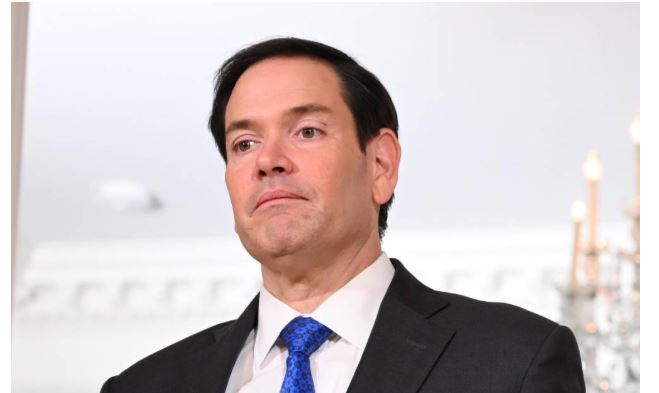
As part of an exponential escalation of the media war, particularly on digital social networks but not exclusively there, there is insistence on "secret" negotiations between Mr. Rubio and certain individuals in Cuba, who are granted hidden powers, never with the government. They say they are secret, which in itself is a contradiction in the narrative because, if they are secret, how does anyone know about them?
It goes without saying that any type of conversation whose purpose is to reach certain agreements depends on various factors, and in the case of Cuba/U.S., based on recent history, it is evident that maximum discretion is not only important but unavoidable; in short, a first consideration, if these hypothetical exchanges were leaked, it is either because they do not actually exist, or because one of the parties is sabotaging them. All evidence points to them not taking place, given the Cuban government's insistence on the matter, and in both variants, this story leads nowhere.
Some of the many reasons Mr. Rubio and his cohorts might have for generating this type of hoax have already been addressed. And always applying common sense, one concludes that on the contrary, he absolutely does not want to talk to "the Cuban communists"; it's true, they've put the guy in conversations with the "worst" of the universe like Russians, Chinese, Iranians, Martians, etc. But with Cuba, it might be a kind of red line for him.
In other words, if Trump finally forces his Secretary of State to negotiate with Cuba, nothing can be ruled out in the case of the U.S. president either, because "poor" Rubio would probably be left with no political future and might even have to move from his native land, South Florida. Or perhaps, it would be a way to annihilate him however he reacts; they say horrors will be seen.
Ah, but there might be one condition, one variant that allows the super secretary of state to come out unscathed: what? That he tries to obtain from these supposed negotiations what they have not achieved in these 67 years: dismantling the Cuban Revolution and taking the country back to December 1958.
Based on this premise, imagination—which could be classified as post-traumatic, in the sense of the trauma that Neo-Batistianos and associates have carried in their souls for six decades of defeats—has been unleashed on social networks, or rather, coldly propagated.
Thus, speculation arises that Trump might admit a kind of "Chinese or Vietnamese-style" capitalism, according to this thesis, even if a communist party governs; they assure they are just as capitalist, if not more so, than any other; only that nearby, 90 miles away, could be a "paradise under the stars" for the expansion of U.S. transnational corporations, remember, the ones that call the shots there. What could go wrong? The Revolution ended without firing a single pea, which also translates into the cancellation, from now on, of the development of any other emancipatory process in Our America.
Scholars of the intricacies present in each U.S. government identify, in the case of Trump 2.0, at least three groups representing different political positions, occasionally clashing behind the scenes, which can be identified with the figures who lead them.
For example, the "hawks" with Mr. Rubio at the forefront, the "isolationists" with Vice President Vance as their figurehead, and in the middle, Trump—neither one nor the other, although he's the one in charge, as we know—whom specialists label as the "realists," not because Trump is a monarch, something he believes in his inner self, but because of a greater dose of pragmatism.
If this approach is true and returning to the Cuban case, what to do with Cuba? It's likely that the White House occupant's idea imagines or admits a "Chinese or Vietnamese variant," given that all evidence points—and this is the easiest thing to verify—that a radical or chaotic exit in the political sense is not convenient for the Empire, since it is very costly, overly protracted, and of very uncertain outcome.
Remembering that this is an exercise in imagination, then what might the solution "to the Cuban problem" suppose, one that is quick, eventually convenient for all "Cuban-Americans," the Neo-Batistianos and other less belligerent interested parties, and of course for those who call the shots in that country, as already mentioned, the transnational corporations. One detail: in no case is what is convenient for the Cuban people taken into account, seen as a group of several million people, without the right to sovereignly choose their government or socio-economic system.
The obvious, which follows from any logic if one understands the motivations of capital: to achieve control, via privatization/foreignization, of basic services—those that everyone consumes no matter what—such as those provided by energy companies, i.e., UNE, CUPET, etc., ETECSA services, and water; of course, why not, Biocubafarma, the partial or total privatization of health services, hospitals, polyclinics, and of course, let's not forget the conquerors, universities and other mass education and culture institutions.
Incidentally, once things are sorted out, the collaboration of the DEA would come—that is, the world's proven main drug cartel—to take care of what it does best: organizing or turning a blind eye to the trafficking of narcotics to the U.S.; the ideal world, they would think; imagine that Cuba, located right in the middle of the Florida Strait, ceases to be the formidable containment wall against drug trafficking that it is today.
There could always be someone clueless who believes that with these changes, Cubans will improve, massively and definitively. Frankly, the term clueless is diplomatic; it would deserve a somewhat harsher qualifier.
Because the capitalism subordinate to the U.S. that "befalls" Cuba is third-world, underdeveloped capitalism—to be specific, although strictly speaking, in U.S. capitalism there are no less than 30 or 40 million super-poor and a middle-class mass of hundreds of millions, always walking a tightrope. Not relevant here, but the official data on this is available; that reality is not an ideological matter.
With a little patience, comparisons can be made, reviewing how third-world capitalism works in Our America, even where there are more natural resources and some economic development. In no case, except when some of these countries have been governed by progressive forces, prone to greater state protagonism, has the problem of poverty, indigence, growing and overwhelming inequality, and other "weeds" of this system been resolved.
As for the myth that privatizing equals improved services, stop and investigate how customers of basic services like telephony, electricity, water, transportation, and others fared when neoliberal policies literally devastated entire countries south of the Rio Grande, and ultimately provoked the social crises that contributed to the so-called progressive wave at the beginning of the 21st century in Our America. It wasn't the holy spirit, no; it was privatizations sold as an indisputable dogma.
Currently, it is no better. Some examples of countries with a strong presence of U.S. capital in basic services like electricity and telecommunications show a permanent upward trend in rates; for example, see the cases of Chile and Puerto Rico where the cost of this type of service represents around 18/20% of an average family's total income. This does not count other inevitable expenses like water service, health, transportation, and the most vital: food.
It is true that today in Cuba many hardships are faced, including the deterioration of some of the mentioned services, which contributes to the illusion that any other variant is better. But no, imported fuel must be paid for; blackouts are abundant in Puerto Rico, and in any case, the dividends from Cuban exports, logically privatized and managed according to the logic of every man for himself, would serve above all to increase the income of the 1% super-rich in the U.S., leaving crumbs for Cubans.
But there would also be, above all, other losses, less tangible, such as full sovereignty and independence, the proverbial solidarity of Cubans, their sense of belonging and pride of being. What would happen to the achievements that in Cuba are taken as natural, even with problems, if after waiting so long the dream of the Neo-Batistianos and their U.S. associates to recover their privileges finally materializes—yes, those that provoked a radical revolution, remember "history will absolve me," where it is very well explained what it's all about.
No, Mr. Rubio, we do not understand each other if you come with arrogance and anti-historical nostalgia; in such a case, you only get that gesture, the one made with the middle finger of the hand, raised to the unconquerable blue sky of Cuba—digitus impudicus, as the Romans called it.
Translated by Sergio A. Paneque Díaz / CubaSí Translation Staff
Add new comment