
Defending Cuba Against Intensified U.S. Pressure
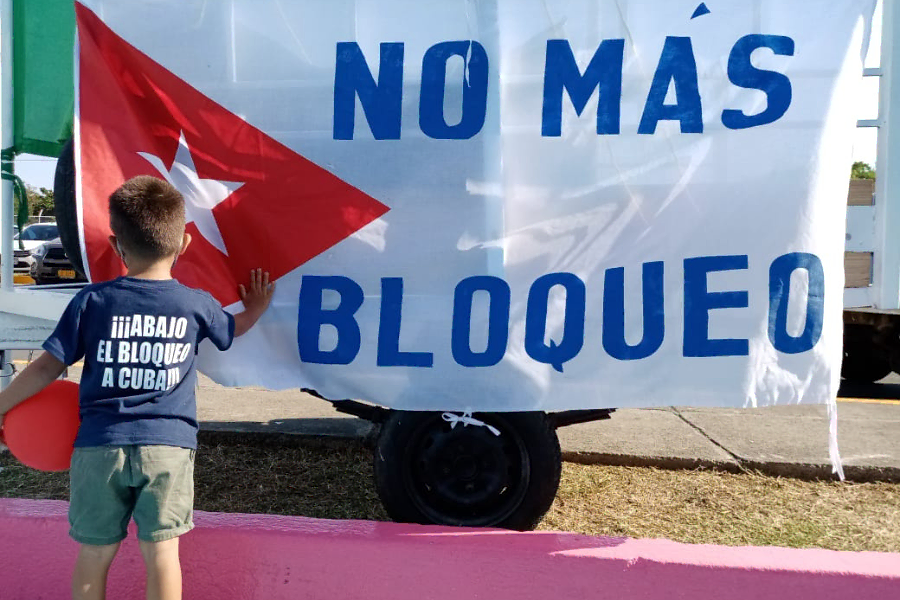
The United States government, under President Donald Trump and Secretary of State Marco Rubio, has intensified its long-standing economic blockade of Cuba, with measures that critics argue are designed to create conditions of severe deprivation and institutional collapse.
A January 2025 executive order threatening tariffs on countries supplying oil to Cuba has already had far-reaching consequences. The policy has contributed to widespread disruptions in electricity generation, healthcare services, education systems, and access to food and clean water. Despite repeated predictions of Cuba’s imminent collapse, the island has demonstrated notable resilience, including efforts to expand renewable energy and maintain its longstanding commitments to public health, education, and international cooperation.
Trump has openly supported the idea of restoring Cuba’s former elite and has suggested the possibility of a “friendly takeover” of the island. After years of attributing Cuba’s economic struggles to internal governance issues, he has acknowledged the direct impact of U.S. sanctions, stating that “there’s no oil, there’s no money, there’s no anything.” Critics argue that such statements contradict longstanding claims that Cuba’s system alone is responsible for its economic challenges.
On January 29, Trump signed an executive order declaring Cuba “an unusual and extraordinary threat” to U.S. national security, authorizing tariffs targeting countries that supply oil to the island. This followed earlier actions, including the seizure of Venezuelan oil shipments. Even without full implementation, the threat of tariffs has effectively halted critical fuel deliveries.
The consequences have been immediate. The United Nations Human Rights Office warned that essential services are at risk, noting that intensive care units, vaccine storage, and water systems are all compromised due to power shortages. Fuel scarcity has disrupted transportation, food distribution, and public services, disproportionately affecting vulnerable populations.
Hospitals have postponed nonurgent procedures, schools have closed, and public transportation has been drastically reduced. Food production and refrigeration have been severely impacted, contributing to shortages and rising prices. Prolonged blackouts have further complicated daily life, while reduced tourism and canceled flights have deepened economic strain.
Economist Mark Weisbrot has argued that the situation illustrates how sanctions can translate into loss of life in real time, emphasizing the humanitarian implications of restricting essential resources.
Cuban leadership has responded by reiterating its willingness to engage in dialogue, but only under conditions of mutual respect and sovereignty. President Miguel Díaz-Canel emphasized that any negotiations must occur “on the basis of equality and respect for the political systems of both states.”
These recent developments build upon nearly seven decades of economic restrictions. The U.S. embargo represents one of the longest-running sanctions regimes in modern history, with cumulative costs estimated by Cuba at over $170 billion. A 1960 U.S. memorandum outlined the strategic intent to use economic pressure to provoke “hunger, desperation and overthrow of government,” a framework critics argue remains relevant today.
During Trump’s first administration, more than 240 additional sanctions were introduced, further isolating Cuba from global markets and financial systems. These measures coincided with the COVID-19 pandemic, exacerbating shortages, inflation, and economic instability.
Despite these challenges, Cuba has pursued strategies to adapt, including investments in renewable energy. Plans announced in 2024 aim to install dozens of solar parks, with partial progress already contributing to the national grid. However, significant obstacles remain, including infrastructure limitations and continued dependence on imported fuel.
Beyond the immediate crisis, the article argues that Cuba represents an alternative development model, particularly for countries in the Global South. It highlights achievements in healthcare, education, and biotechnology, including vaccine development and international medical assistance programs.
Cuba’s global role has included sending hundreds of thousands of medical professionals abroad, providing care in underserved regions. Critics of U.S. policy contend that efforts to curtail these programs have broader humanitarian consequences beyond Cuba’s borders.
The article concludes that calls for Cuba to negotiate under current conditions risk undermining its sovereignty. Instead, it urges international actors and civil society to oppose coercive measures and support humanitarian initiatives. Emphasizing Cuba’s history of international solidarity, it argues that the global community now faces a moral imperative to respond in kind.
Add new comment