
Compliant Subservience in Bolivia
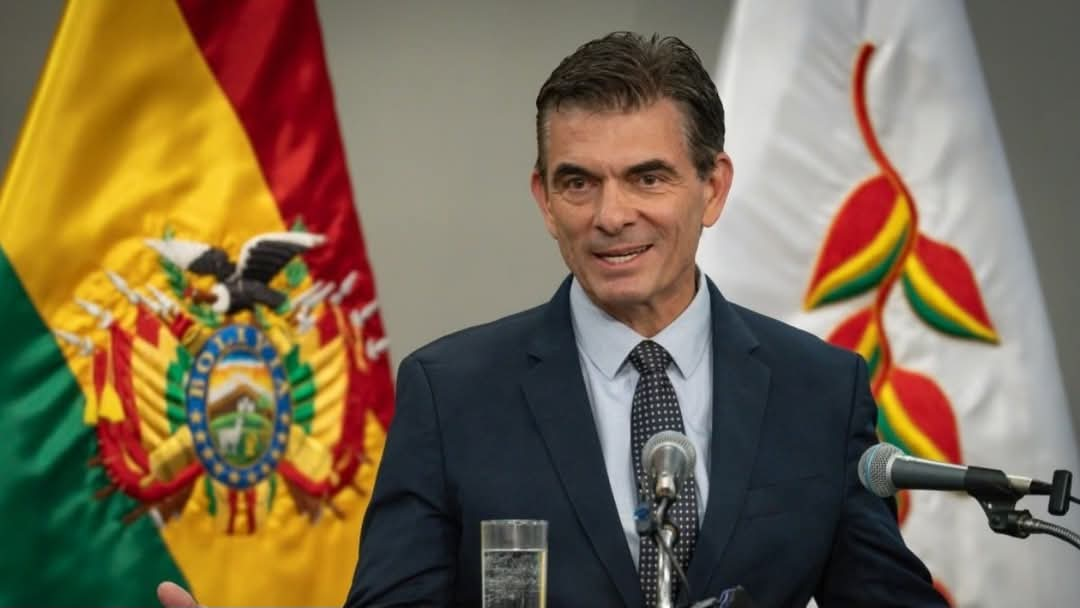
For the past twenty years, Bolivia has been one of the epicenters of the leftward shift in Latin America. The arrival of Evo Morales in 2006, his project to nationalize resources, and his pro-indigenous rhetoric set the course for a period that combined economic growth with a strong state presence. However, the fall in gas prices, the inflationary crisis of recent years, and allegations of corruption eroded the social consensus that had sustained this model. Evo's disagreements with Lucho, as he calls former president Luis Arce, helped open the doors of the political elite to a right wing that claimed to be centrist, but is anything but.
Paz Pereira, son of the historic Social democratic leader Jaime Paz Zamora capitalized on this erosion of support with a pragmatic message of change. His proposal combined macroeconomic stability, incentives for private investment, and an explicit commitment to democratic institutions. “The country needs to leave confrontation behind and return to growth based on productive and federal principles,” he declared in his first speech as president-elect.
But in just over three months, his governance has become very fragile because he has integrated the oligarchy into the state apparatus, and this is very difficult to control given their strategic positions in the Executive and Legislative branches, marking a return to the model of direct control of economic power, as promoted by the traditional Martinovic and Justiniano family clans.
The aforementioned disagreements with his vice president, Edmund Lara, intensified when Lara denounced corrupt practices, falsehoods in the president's statements, and the rise of drug trafficking.
Furthermore, there are discrepancies between rhetoric and practice. The slogan "governing with the truth" contrasts sharply with verifiable inaccuracies in presidential statements.
Furthermore, structural solutions are being postponed, as no measures have been implemented to address inflation, unemployment, corruption, insecurity, judicial reform, education, and healthcare.
Paz's discourse of a "government without ideologies" constitutes a classic ideological operation of neoliberal thought, concealing the adoption of a particular vision of social order under the guise of pragmatism.
The emerging "new model" can be characterized as a restoration of the subservient neoliberal paradigm, but under substantially different geopolitical conditions than those of its original implementation.
In short, it represents a complete neoliberal orientation: price liberalization, external openness, fiscal discipline, and a reduction in the role of the state, within a paradoxical international context of resurgent protectionism in the major powers. Added to this are modifications to mining, hydrocarbon, and investment laws, opening a debate on privatizations with international consultants linked to multilateral organizations.
His geopolitical alignment with the United States is glaringly obvious. Subservient to the "Monroe Doctrine," it will go to Washington on March 7th, summoned by his Messiah, along with other right-wing presidential figures who are enemies of the people, as obsequious as possible.
CORRUPTION
Amid this poor governance, the specter of corruption looms, manifesting itself, for example, in the unchecked exploitation of gold. With the international price exceeding $4,600 an ounce, the cooperatives (which account for 99.5% of production) operate under a tax regime exempt from profit taxes and contribute less than 2.5% in royalties. A former manager was arrested for embezzling 89 million bolivian pesos.
The echoes of the "garbage gasoline" scandal continue to reverberate, revealing a corruption network within Yacimientos Petrolíferos Fiscales Bolivianos (YPFB) amidst rising prices.
There’s the sale of public offices and the illegal auctioning of projects that have been systematically rejected. Bolivia scores 28 out of 100 on the Corruption Perceptions Index; it’s the third most corrupt country in South America.
Driven by Branko Marinkovic's clan, there’s an attempt to amend the Constitution to liberalize the land market, which would lead to accumulation by dispossession, ecocide in the Amazon through gold mining, delegitimization of the State, and the commodification of public office.
And Paz, true to his name, avoids any conflict with such a dangerous guest at the neoliberal coven.
Lackey: someone who favors foreign interests at the expense of those of their own country.
Translated by Amilkal Labañino / Cubasi Translation Staff
Add new comment