
 English
 Español
ALBA-TCP: An Effort to Leave Behind the Age of Selfishness
especiales

"Who among us doesn’t remember that December 14th, 2004, when at Carl Marx Theater, Fidel awarding the "Carlos Manuel de Céspedes Order" to Chávez?" That precise and beautiful evocation was shared on December 14th, 2018 by the current First Secretary of the Central Committee of the Communist Party and President of the Republic of Cuba, Miguel Díaz-Canel Bermúdez.
In his speech – the former President of the Councils of State and Ministers of the Republic of Cuba -, during the opening of the XVI ALBA-TCP Summit (Bolivarian Alliance for the Peoples of Our America-Peoples' Trade Treaty ), in the Protocol Hall of Cubanacán, in Havana, said that on that founding day of December 14th, “Fidel reminded what Céspedes said:“ Venezuela, which opened the path to independence for Spanish America and traveled it magnificently until closing its march in Ayacucho, it’s our memorable teacher of freedom (…) ”».
"That December 14th ALBA was born and Cuba was a party", emphasized Miguel Díaz-Canel Bermúdez, following two essentially affirmative questions: "Who of us can forget the joys of that day in which Chávez and Fidel signed the birth certificate of the new integration project between equals? Those who experienced it are moved by the memory of the brotherhood of those men who, not only had huge dreams, but also gave them poetic names and turned them into realities? "
It was the president of the Bolivarian Republic of Venezuela, Hugo Rafael Chávez Frías, who formulated the ALBA proposal for the first time. He did it publicly, in 2001, during the III Summit of Heads of State and Government of the Association of Caribbean States. "It’s another way," the exceptional revolutionary had affirmed; it’s a quest, because certainly integration is vital for us: it’s either swim or sink. So let’s choose the alternatives ».
From the turmoil in the hemisphere in the 90’s of the twentieth century - from that stage of crisis that in 2017 was described by Bolivarian President Nicolás Maduro Moros as "a decade called lost," of social disaster on the American continent - was born the struggle that gave birth to ALBA.
El Alba, Nicolás Maduro expressed back then, was born from a historical birth at the beginning of the XXI century; and was rich soil to carry out the ideas defended by the left movements of the planet against the imperial attempt to recolonize the countries of Our America. The birth, he said, always had Cuba as a beacon, like the North in a compass, and it was the possibility of articulating a new thought: new because it belongs to the 21st century; at the time of having ideas of centuries, but current, like those of the Liberator Simón Bolívar.
In the hours of the XIV Extraordinary Summit of ALBA-TCP —held in 2017 in Caracas, from the Simón Bolívar Ward in the Presidential Palace of Miraflores—, Army General Raúl Castro Ruz, then President of the Councils of State and of Ministers of Cuba, stated when referring to ALBA that the birth of this integration body would have been impossible at the time when the Cuban Revolution triumphed: it had to happen, said Raúl, on February 4th, 1992 (civic-military uprising led by Hugo Chávez), and the triumph of the Bolivarian Revolution, so that a unity initiative like that could move forward.
On that occasion, reflecting on Chávez and on the complex circumstances of the Revolution undertaken by him, Raúl highlighted an idea that’s also valid for entities like ALBA: the Bolivarian leader understood the importance of unity for the profound transformations undertaken in the nation of South America; "The construction of unity is the most important task any true Revolution faces," said Raúl, who recalled that revolutionaries tend to have many ideas and visions about what the paths may be, but one must know how to put aside, with modesty, everything that divides and disperses us.
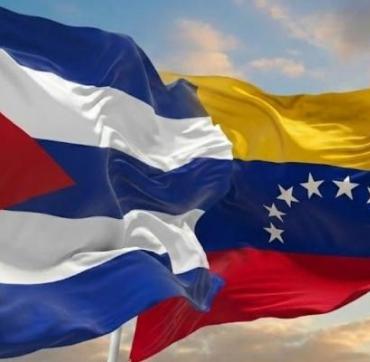
For the future, signed by Fidel and Chávez, were defined the essences of the Joint Declaration, foundational of ALBA, - the result of a meeting of the two leaders in Cuba, who signed the text precisely “on the fourteenth day of December of two thousand and four ».
Both presidents underlined in that moment of births and threats that “the Free Trade Area for the Americas (FTAA) is the most complete expression of the appetites for domination over the region and that, if it came into force, it would deepen neoliberalism and it would create unprecedented levels of dependency and subordination. '
Likewise, they made “clear that although integration is, for the Latin America and the Caribbean countries, an essential condition to seek development amid the growing formation of large regional blocks that occupy predominant positions in the world’s economy, only an integration based on cooperation, solidarity and the common will to advance (…) towards higher levels of development can truly satisfy the needs and desires of the Latin American and Caribbean countries and, at the same time, preserve their independence, sovereignty, and identity".
«(…) We affirm that the main principle ALBA should guide is the broadest solidarity among the peoples of Latin America and the Caribbean. (…) In this regard, we fully agree that ALBA won’t come true with mercantilist criteria or selfish interests of corporate profit or national benefit to the detriment of other peoples. Only a broad Latin American vision, which recognizes the impossibility for our countries to develop and be truly independent in isolation, will be able to attain what Bolívar called “(…) see the formation of the largest nation in the world in America, except for its extension and wealth that for its freedom and glory”, and that Martí thought as “Our America”, to differentiate it from the other America, expansionist and with imperial hunger».
It’s hard to believe - said Díaz-Canel Bermúdez in his speech on December 14, 2018 - that everything came from the mind of the Bolivarian leader in December 2001, with Venezuela amidst a strike that preluded the coup of the following year:
«After a long night thinking about what alternative to oppose the imperial project of the FTAA, the light of dawn came and with it the idea of ALBA. A meeting of the Association of Caribbean States was taking place on Isla Margarita, and Chávez announced his project. Fidel, who is there, not only applauds enthusiastically, but on his return to Havana, he writes asking for details.
«Chávez confesses that it’s only the idea. Three intense years later - facing blows, blockade, and all sort of aggressions - the two will sign the Declaration that gave birth to ALBA.
«Bolivarian Alternative for the Peoples of Our America was its first name, because it was an integration project against the Free Trade Agreement.
«Eleven months later, at the Summit of the Americas, in Mar del Plata, Argentina, the proposed imperial alliance, FTAA, was buried by the peoples of the region, in an act of rebellion and solidarity, led by Chávez, who is already part of the continental history.
«In its first five years, in 2009, he changed the meaning of his first letter. It was still ALBA but it was no longer an alternative, but an alliance and with the contributions of Bolivia it became ALBA-TCP ».
"Besides the two founding states, one of which I’m honored to represent, have joined Antigua and Barbuda, Bolivia, Dominica, Ecuador, Nicaragua, Saint Lucia, Saint Vincent and the Grenadines, Saint Kitts and Nevis, and Grenada."
It’s necessary to defend, against all odds, the full validity of the Alliance as a space of resistance, dialogue and struggle of which we are an unbreakable part, Díaz-Canel Bermúdez said then, who also stressed that “not for a second can we forget the most important and vital of the tasks we share: to permanently engage in the construction, strengthening, and defense of unity. That is our most precious asset. The debt to our heroes and the commitment to our children. As Fidel said, "the age of selfishness must pass."
Our America - dreamed as a Homeland that goes beyond any specific border – still has, in the redeeming, unitary, and anti-imperialist light of ALBA-TCP, a historical need. It has shown over time that it can achieve a lot as a genuinely Latin American and Caribbean mechanism, as an effective space for consultation, unity, defense of the fairest causes, integration, cooperation, and solidarity.
(1) Expression of the President of the Bolivarian Republic of Venezuela, Nicolás Maduro Moros, in his opening speech of the XIV Extraordinary Summit of ALBA-TCP, held in Caracas, in March 2017.






Add new comment